

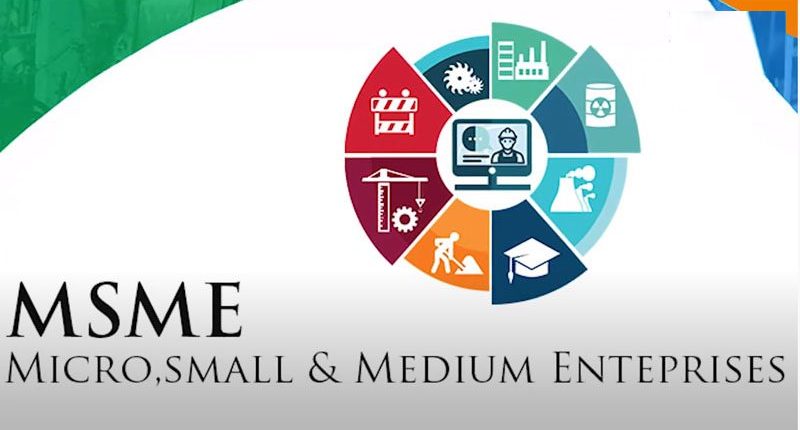
Micro, Small, and Medium Enterprises (MSMEs) are widely regarded as the backbone of the Indian economy. These enterprises contribute substantially to industrial production, exports, employment generation, and regional development. From small manufacturing units and service providers to emerging technology-driven firms, MSMEs operate across diverse sectors and geographies. To formally recognize and support this vital segment, the Government of India introduced MSME Registration, a structured system designed to classify enterprises and integrate them into the formal economic framework.
Over the years, MSME Registration has undergone significant changes to align with economic reforms, digital transformation, and the need for greater transparency. One of the most notable reforms is the transition from Udyog to Udyam, which reshaped how MSMEs are identified, classified, and monitored.
MSME Registration is an official process through which eligible enterprises are recognized as micro, small, or medium enterprises based on defined financial parameters. This registration acts as a formal identity for businesses operating in manufacturing, processing, or service sectors. The classification helps policymakers tailor schemes and initiatives according to the size and capacity of enterprises.
The primary objective of MSME Registration is not merely record-keeping but enabling structured growth of small businesses. It ensures that enterprises receive policy attention proportionate to their scale while maintaining ease of compliance.
India’s MSME registration framework has evolved through multiple stages. Initially, businesses registered under the Small Scale Industries (SSI) system. This was followed by the introduction of Udyog Aadhaar, which simplified registration through a self-declaration-based approach. Udyog Aadhaar significantly reduced procedural barriers and encouraged many informal enterprises to enter the formal sector.
However, over time, limitations of self-declared data became evident. To address issues related to data accuracy, duplication, and integration with other regulatory systems, the government introduced Udyam Registration. This marked the formal transition from Udyog to Udyam, creating a more robust and digitally integrated framework.
The shift from Udyog Aadhaar to Udyam Registration was not merely a change in name but a structural reform. Under the Udyam system, enterprise data is linked with PAN and GST databases. This allows automatic verification of investment and turnover figures, ensuring that classification is based on reliable and up-to-date information.
This integration enhances transparency and reduces manual intervention. It also helps the government maintain a centralized and accurate MSME database, which is essential for effective policy planning and economic analysis.
MSME Registration is open to a wide range of entities involved in economic activities. Eligible entities include proprietorships, Hindu Undivided Families (HUFs), partnership firms, limited liability partnerships (LLPs), private limited companies, cooperative societies, and trusts engaged in manufacturing or service activities.
The system does not restrict registration based on location or sector, provided the enterprise meets the financial criteria. Both new and existing businesses can apply, making MSME Registration inclusive and accessible.
The classification of enterprises under MSME Registration is based on two key parameters: investment in plant and machinery or equipment, and annual turnover. This dual-criteria approach provides a balanced assessment of an enterprise’s operational scale.
Enterprises are categorized into:
Micro Enterprises, which operate at a smaller scale with limited investment and turnover
Small Enterprises, which represent growing businesses with moderate financial capacity
Medium Enterprises, which are larger entities but still below the threshold of large corporations
This classification is dynamic. As enterprises grow or downsize, their category is updated automatically based on revised financial data, ensuring continuity and fairness.
MSME Registration plays a crucial role in integrating enterprises into the formal economy. Registered businesses are officially recognized by government authorities, financial institutions, and other stakeholders. This recognition enhances credibility and helps enterprises participate in structured economic activities.
From a policy perspective, MSME Registration allows the government to design sector-specific initiatives, monitor performance, and address challenges faced by small businesses. It also enables better targeting of resources and support mechanisms.
One of the defining features of the current MSME Registration framework is its emphasis on digital governance. The Udyam platform is entirely online, eliminating the need for physical paperwork. Entrepreneurs can register, update details, and access information through a centralized digital system.
Digital integration reduces processing time, minimizes errors, and improves accessibility, especially for businesses in remote or semi-urban areas. It also aligns MSME Registration with India’s broader digital transformation initiatives.
While MSME Registration is designed to be simple, maintaining accurate and up-to-date information is essential. Since classification depends on data sourced from PAN and GST filings, enterprises must ensure timely compliance with applicable tax and regulatory requirements.
Any discrepancy in turnover or investment details can affect enterprise classification. Regular monitoring and updating of financial records help businesses remain aligned with MSME norms and avoid reclassification issues.
MSME Registration also plays a significant role in strengthening the financial ecosystem. Banks and financial institutions use MSME data to assess creditworthiness, understand sectoral risks, and design financial products suited to small enterprises.
A structured MSME database improves transparency and reduces information asymmetry between lenders and borrowers. This contributes to better financial inclusion and more efficient credit delivery.
MSMEs are instrumental in promoting inclusive growth. They create employment opportunities across skill levels and contribute to balanced regional development by operating in urban, semi-urban, and rural areas. MSMEs also support innovation by enabling entrepreneurs to experiment with new ideas and business models.
Formal MSME Registration enhances these contributions by integrating enterprises into national supply chains and institutional frameworks. The transition from Udyog to Udyam strengthens this integration through improved data quality and governance.
The modernization of MSME Registration reflects the government’s long-term vision for sustainable economic growth. By simplifying procedures while ensuring data accuracy, the Udyam framework balances ease of doing business with regulatory accountability.
These reforms also enable quicker policy responses during economic disruptions, as accurate MSME data helps identify affected sectors and regions more effectively.
MSME Registration is a foundational element of India’s small business ecosystem. It provides formal recognition, supports policy planning, and promotes financial inclusion. The evolution of the registration system, particularly the transition from Udyog to Udyam, highlights the government’s focus on transparency, digital integration, and ease of compliance.
For entrepreneurs, understanding MSME Registration goes beyond procedural awareness. It represents participation in a structured economic framework that supports growth, stability, and long-term sustainability. As MSMEs continue to drive employment, innovation, and regional development, a strong and reliable registration system remains essential to India’s economic progress.

© 2025 Crivva - Hosted by Airy Hosting Managed Website Hosting.