

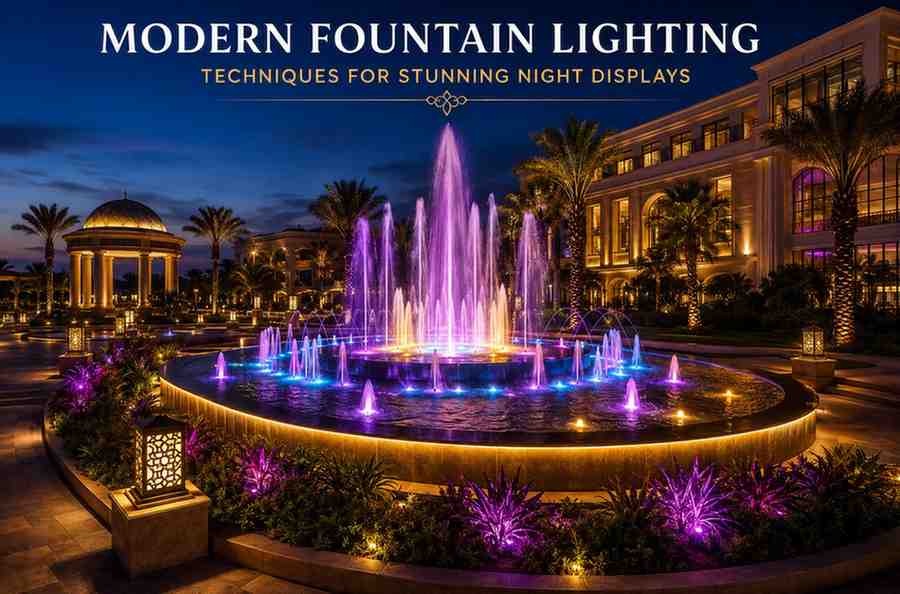
A fountain looks entirely different after sunset. During the day, the design, stonework, and water flow attract attention. At night, however, lighting determines whether the fountain becomes a memorable visual centerpiece or fades into the background. That is why property owners, architects, and developers now prioritize lighting design from the earliest planning stage. A professional fountain construction company understands that modern fountain lighting is not just decorative. It improves visibility, highlights water movement, and strengthens the overall ambiance of a property.
For hotels, resorts, commercial plazas, residential communities, and public landscapes, the right lighting technique transforms a standard water feature into an immersive night display. It also supports branding, improves guest experience, and extends the visual value of the fountain beyond daylight hours. In markets where premium landscape design matters, lighting has become a core part of fountain planning rather than an optional add-on.
For properties seeking long-term visual impact, working with a fountain construction company in kolkata offers a practical advantage. Local climate, power conditions, water quality, and site layout all influence lighting performance. Therefore, a location-specific approach helps property owners choose systems that deliver both durability and design consistency.
The short answer is simple: lighting controls how people experience a fountain after dark. Without proper illumination, even a large water feature can appear flat and underwhelming. In contrast, a well-lit fountain creates depth, movement, and architectural drama.
According to energy-efficient landscape lighting studies, LED-based outdoor lighting can reduce energy use significantly compared to traditional systems while offering better control and color consistency. This matters because modern fountain lighting now combines aesthetics with performance.
Well-planned fountain lighting can:
As a result, lighting now plays a direct role in guest perception and property branding.
Different lighting methods produce different visual effects. The best approach depends on fountain size, nozzle design, water pressure, and surrounding architecture.
Underwater LED fixtures remain the most widely used option for modern fountains. These lights sit below the waterline and illuminate the jets, ripples, and splash patterns from within.
Industry data shows that LED fixtures can last far longer than halogen alternatives under proper installation conditions, which makes them suitable for high-use commercial properties.
RGB lighting allows fountain operators to change colors for different moods, festivals, and events. This technique works especially well in public plazas, luxury resorts, and entertainment venues.
For example, a resort can shift from warm amber tones during dinner service to vibrant multi-color effects for a live evening event.
Not every lighting effect needs to come from underwater fixtures. External spotlights positioned around the basin or surrounding landscape can add dimension and improve contrast.
Spotlights are useful for:
This approach works particularly well when a fountain sits in a landscaped entrance court or luxury driveway.
The table below helps property owners match lighting methods with project goals.
| Lighting Technique | Best For | Key Visual Effect | Ideal Property Type |
|---|---|---|---|
| Underwater LED Lights | Jet fountains, cascades, pools | Illuminates water from within | Hotels, resorts, residences |
| RGB Color-Changing Lights | Musical fountains, event displays | Dynamic color transitions | Commercial plazas, event venues |
| Perimeter Spotlights | Sculptural or architectural fountains | Adds depth and structure | Luxury properties, office parks |
| Linear LED Strips | Water walls, step fountains | Clean modern edge lighting | Boutique hotels, modern resorts |
Lighting technology has moved beyond simple on-and-off systems. Today, many premium properties use smart fountain lighting that integrates with automation controls, music programming, and scheduling software.
This matters because consistency is essential in hospitality and commercial spaces. A luxury hotel cannot afford uneven lighting performance across guest-facing areas. Smart controls reduce manual intervention and improve presentation quality every evening.
Not every fountain should use bright multicolor lighting. In many luxury settings, subtle white or warm-toned illumination creates a more refined result.
| Color Temperature | Appearance | Best Use Case |
| Warm White | Soft and elegant | Courtyard fountains, heritage hotels |
| Neutral White | Balanced and clear | Residential complexes, public landscapes |
| Cool White | Crisp and modern | Corporate campuses, contemporary resorts |
| RGB Dynamic | Bold and dramatic | Musical fountains, event zones |
For luxury properties, lighting should complement the architecture rather than overpower it. Therefore, the right color temperature often matters as much as the fixture type.
Lighting works best when it is planned alongside fountain engineering, not after the fountain is complete. This is where a reliable fountain construction company in kolkata adds real value. Electrical routing, waterproof fixture placement, maintenance access, and water nozzle positioning must all align from the start.
When these elements are coordinated early, the fountain performs better visually and technically.
Yes, modern lighting systems can support both sustainability and operational efficiency. LED lighting consumes less energy than older lighting technologies, and smart controls reduce unnecessary operating hours.
For developers focused on environmentally conscious design, fountain lighting can also align with broader landscape sustainability strategies. Concepts such as energy-efficient lighting and integrated site planning often overlap with principles of sustainable architecture.
In practice, sustainable fountain lighting usually includes:
Even a premium fountain can underperform if the lighting design is poorly executed.
Common mistakes include:
These issues often reduce visual quality and create avoidable operational challenges. Therefore, lighting should be treated as a structural part of fountain design, not a decorative afterthought.
Modern fountain lighting techniques do far more than brighten a water feature. They shape mood, define architectural character, and extend the visual value of a property well into the evening. Underwater LED lights, RGB systems, perimeter spotlights, and smart automation all offer distinct advantages when selected carefully.
For hotels, resorts, luxury residences, and commercial developments, the goal is not simply to light a fountain. The goal is to create a striking night display that feels intentional, elegant, and reliable. A knowledgeable fountain construction company can align lighting design with fountain engineering from the beginning, while a site-aware fountain construction company in kolkata can tailor the system to local environmental and operational conditions. That combination leads to a fountain that performs beautifully every night, not just on opening day.
Underwater LED lighting is usually the best choice for modern fountains because it highlights water movement clearly, uses less energy, and supports long operating hours.
Yes, RGB lights work well for luxury hotel fountains when used strategically. They help create mood-based lighting scenes, event themes, and brand-focused displays.
Operation time depends on property type, guest activity, and energy planning. Most commercial and hospitality properties schedule fountain lighting during peak evening hours rather than keeping it active all night.
Yes, modern fountain lighting can be automated with timers, controllers, and synchronized systems that manage color changes, music integration, and operating schedules.
Early planning ensures better wiring, waterproofing, fixture placement, and maintenance access. It also improves the final visual result and reduces design conflicts later.

© 2025 Crivva - Hosted by Airy Hosting Managed Website Hosting.