Ever feel like your internet speed sounds fast but doesn’t feel fast?
You’re not alone. You might see a plan advertised as “100 Mbps” or “1 Gbps” and think that the higher number automatically means better performance. But when your video buffers, downloads take forever, or your Zoom call freezes, it raises a simple question:
What do Mbps and Gbps mean, and do you really need gigabit speeds?
Let’s break it down in a simple way so you can choose the right internet speed for your needs with confidence.
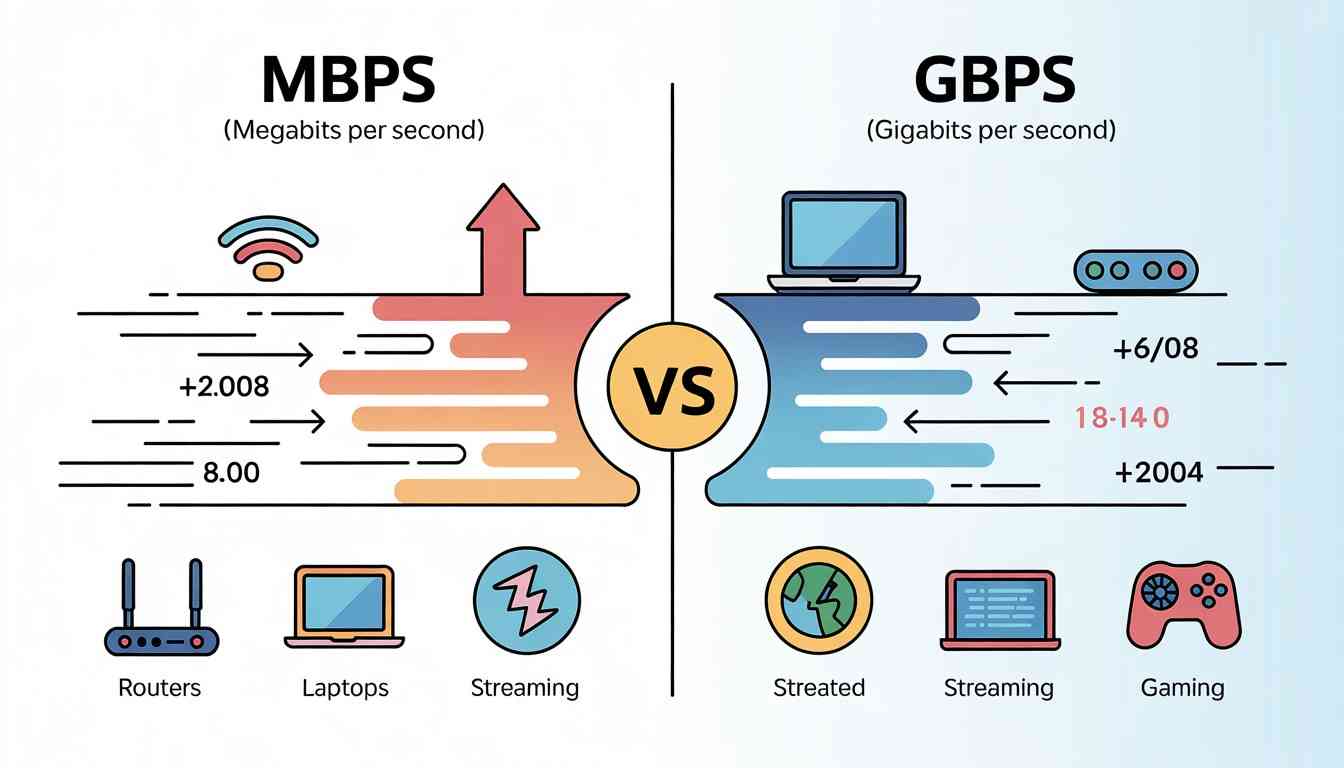
Mbps stands for Megabits per second. It measures how much data your internet connection can transfer each second.
Think of Mbps as the speed limit of your internet connection. The higher the Mbps, the more data can flow at once. This means faster loading times, smoother streaming, and improved overall performance.
Here’s how different Mbps speeds translate into everyday usage:
If your current internet plan is within these ranges, you’re most likely using Mbps-based speeds, which are ideal for everyday online activities.
Gbps (Gigabits per second) is a unit for measuring internet speed and indicates a much higher level of performance than Mbps.
To put it simply:
This means gigabit internet is 10 times faster than a typical 100 Mbps connection, making it ideal for heavy, modern internet usage.
Gigabit speeds are designed for users with high demands and connected households. Here’s what you can expect:
Let’s simplify it. When comparing Mbps and Gbps, it’s not about which one is better; it’s about what’s right for you.
|
Feature |
Mbps |
Gbps |
|
Full Form |
Megabits per second |
Gigabits per second |
|
Speed Scale |
Smaller unit |
1,000x larger than Mbps |
|
Typical Use |
Everyday internet users |
Heavy and advanced usage |
|
Performance Level |
Moderate to fast |
Ultra-fast |
The main point is that Gbps isn’t just faster; it can handle more data at once without slowing down.
Here’s something most internet providers don’t always mention:
Upgrading from Mbps to Gbps doesn’t guarantee a noticeably better experience unless your usage really needs that level of speed.
For many users, the bottleneck isn’t the internet plan; it’s other factors affecting performance.
So, even if you’re on a 1 Gbps plan, it won’t automatically solve slow internet if your router is old or your Wi-Fi setup isn’t optimized.
The main point is that speed matters, but only when your whole setup can support and use it effectively.
Let’s look at common activities:
Even 100 Mbps can handle multiple streams.
Mbps is usually enough for most gamers.
100–300 Mbps works great for most professionals.
Let’s keep it practical. Not everyone needs super-fast gigabit speeds. Choosing the right internet plan depends on how you actually use the internet at home.
In most cases, a 100 to 300 Mbps plan is enough for smooth performance without overspending.
In some situations, gigabit (1 Gbps) internet makes sense. It provides faster speeds, less buffering, and better performance for multiple devices.
Imagine your internet like a highway:
If your household traffic is light, you don’t need a huge highway. However, if everyone is online at the same time, having more lanes is helpful.
Gigabit plans usually cost more. Before upgrading, consider this:
Sometimes optimizing your setup is better than upgrading your plan.
As technology evolves:
Gbps speeds are becoming more important, but they aren’t necessary for everyone right now.
Mbps vs Gbps isn’t about which one is better; it’s about what’s right for you. For most households and everyday activities like browsing, streaming, and video calls, Mbps speeds are more than enough. Gbps speeds are meant for high-demand environments, where multiple users, smart devices, and heavy tasks run at the same time.
Instead of chasing bigger numbers, focus on what truly matters: your usage habits, number of connected devices, and performance expectations. The best internet speed isn’t the fastest one; it’s the one that fits your lifestyle perfectly.
It’s worth it if you have many users, heavy downloads, or run a smart home. Otherwise, Mbps speeds are usually sufficient.
For most households, 100 to 300 Mbps is ideal for streaming, gaming, and work.
Yes, 1 Gbps equals 1,000 Mbps, making it significantly faster.
Only if your usage demands it, like large downloads or multiple heavy users.
Yes, but only if speed is the bottleneck. Router quality and network issues also play a big role.

© 2025 Crivva - Hosted by Airy Hosting Managed Website Hosting.