


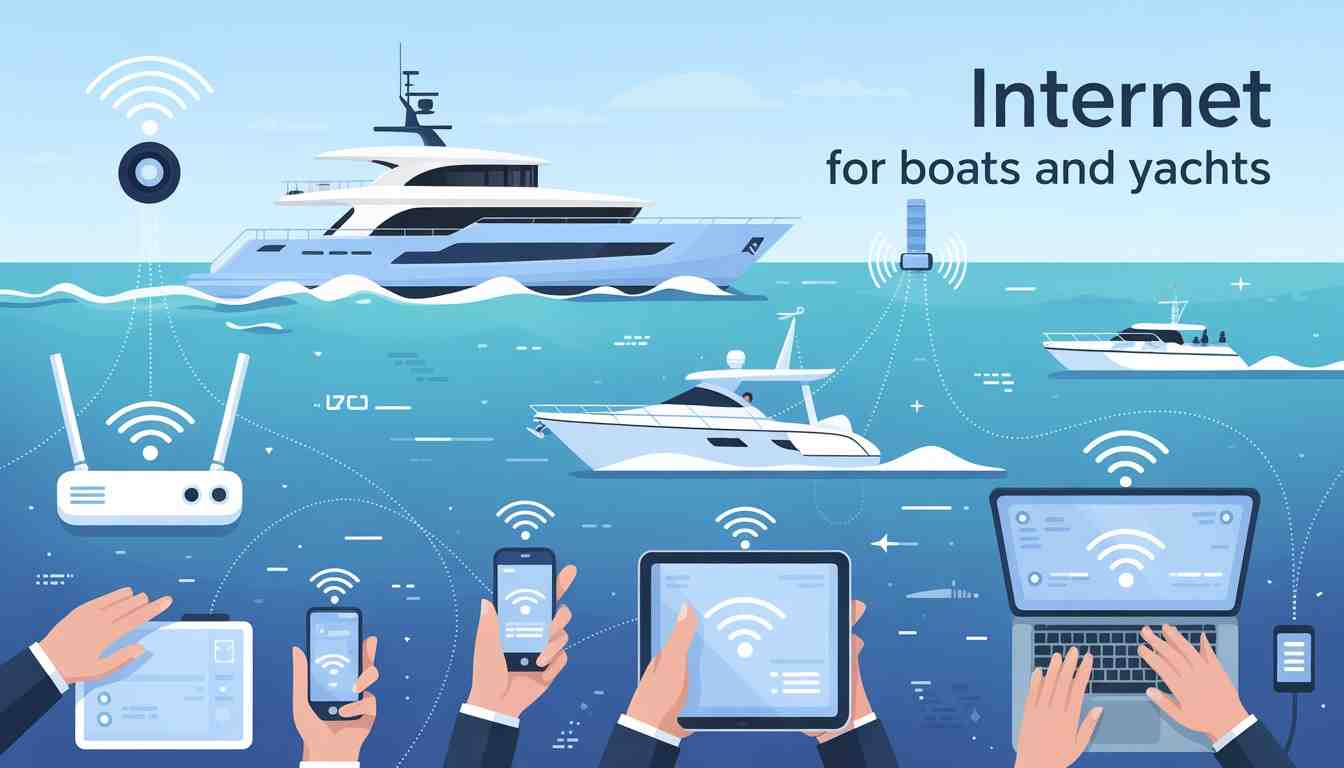
You’re miles offshore. The coastline has vanished. Your phone says “No Service.” You can’t check the weather, respond to work emails, stream a movie, or even send a simple message home. Sound familiar?
Reliable marine internet for boats and yachts is no longer a luxury; it’s crucial for navigation, safety, business, and entertainment. Whether you’re a weekend cruiser, full-time liveaboard, charter operator, or yacht owner, staying connected offshore is now part of modern boating life.
This guide explains everything you need to know about boat internet options, how they work, what they cost, and how to pick the right setup for your needs.
Marine connectivity isn’t as simple as plugging in a router. At sea, you’re dealing with:
Unlike land-based internet, marine internet solutions must deal with unstable conditions while providing consistent speeds and low latency. This is why choosing the right system is important.
There’s no one-size-fits-all solution. The best option depends on how far offshore you travel and how you use the internet.
Best for: Coastal cruising (within 10–20 miles offshore)
Cellular-based marine internet relies on mobile networks close to shore. By using a marine-grade antenna and a signal booster, you can extend your range and enhance performance.
Pros:
Cons:
For boaters who stay close to land, cellular is often the most cost-effective solution.
Best for: Offshore and open ocean travel
Satellite internet for boats works almost anywhere with a clear view of the sky. Modern low-earth orbit (LEO) satellites provide faster speeds and lower latency than older systems.
Pros:
Cons:
For long-distance sailors and yacht owners crossing oceans, satellite internet is often essential.
Best for: Flexible cruising lifestyles
Many experienced boaters opt for a hybrid setup, using cellular internet near shore and satellite offshore. A dual-WAN router can automatically switch between networks based on availability.
This setup ensures:
If connectivity is mission-critical (for charter businesses or remote work), hybrid systems provide peace of mind.
The right hardware makes all the difference. A basic marine internet setup may include:
For offshore satellite systems, you may also need:
Marine conditions demand waterproof, corrosion-resistant equipment designed specifically for boats and yachts.
Coverage depends entirely on the technology used:
If you regularly sail beyond coastal waters, cellular alone won’t be enough.
Speed depends on:
Typical ranges:
Latency (delay) is also important. Lower latency improves video calls, online gaming, and real-time navigation tools.
Costs vary widely based on setup and usage.
For occasional weekend boaters, cellular plans may be enough. For offshore yachts, satellite is a larger investment but often necessary.
Before investing, ask yourself:
Weekend coastal boaters may only need LTE with a high-gain antenna. Full-time cruisers crossing international waters will likely need satellites. The key is matching your connectivity needs to your cruising lifestyle.
More people are living and working from their boats. For liveaboards, reliable internet isn’t optional; it’s essential.
Remote workers need:
Investing in the right marine WiFi system can turn your yacht into a floating office.
Even with a strong internet source, onboard WiFi can be weak without proper setup.
Tips to improve onboard WiFi:
On larger yachts, mesh systems can help distribute signals evenly throughout cabins and decks.
Marine internet isn’t just about entertainment.
It improves:
When conditions change quickly at sea, access to updated data can be lifesaving.
Marine connectivity is evolving rapidly.
Low-earth orbit satellite networks are cutting down latency. 5G expansion is increasing the coastal range. Hybrid systems are becoming more integrated.
In the next few years, marine internet for boats and yachts will probably become faster, cheaper, and easier to access—even for smaller vessels.
Being offline at sea used to be part of the adventure. Today, having reliable marine internet for boats and yachts is essential for safety, work, and staying in touch with family.
If you stay close to shore, a cellular-based marine internet system might be enough. If you travel offshore or cross oceans, satellite internet for boats provides global coverage. For many boaters, a combination of both solutions offers the best balance.
The right setup depends on your cruising style, how often you sail, and how important staying connected is to your lifestyle.
Choose wisely and enjoy the freedom of the sea while still being connected to the world.
The best option depends on where you are. Cellular internet works well near the shore. Satellite internet is better for offshore use and long trips.
Cellular internet typically functions up to 10 to 20 miles offshore. Satellite internet can offer coverage almost anywhere in the world.
If you regularly travel offshore or need reliable global coverage, satellite internet is worth the investment.
Yes, with strong LTE or modern satellite systems, streaming is possible, though performance depends on signal strength and data plans.
Monthly costs range from $50 for basic cellular plans to $1,000 or more for high-end satellite services.
Yes. The marine internet needs weather-resistant antennas, routers, and mounting systems made for movement and tough conditions.

© 2025 Crivva - Hosted by Airy Hosting Managed Website Hosting.