

Transport can make or break the experience at a big event. Whether it’s a sports tournament, business summit, or festival, how smoothly people get from place to place matters more than you think.
Let’s say you’re organizing a global sports tournament spread across multiple venues in a city. With a manual system, your transport team juggles WhatsApp groups, spreadsheets, and constant calls to coordinate hundreds of vehicle movements. One missed update leads to a VIP arriving late, while drivers assigned to the wrong venue lose valuable time backtracking. Confusion builds and stress levels rise.
Now contrast that with an automated event transportation system at events. Drivers receive real-time route updates via their app. Dispatchers can view all vehicle locations on a single dashboard. Attendees get timely SMS or WhatsApp notifications about vehicle arrivals. Instead of reacting to issues, your team focuses on running the event smoothly.
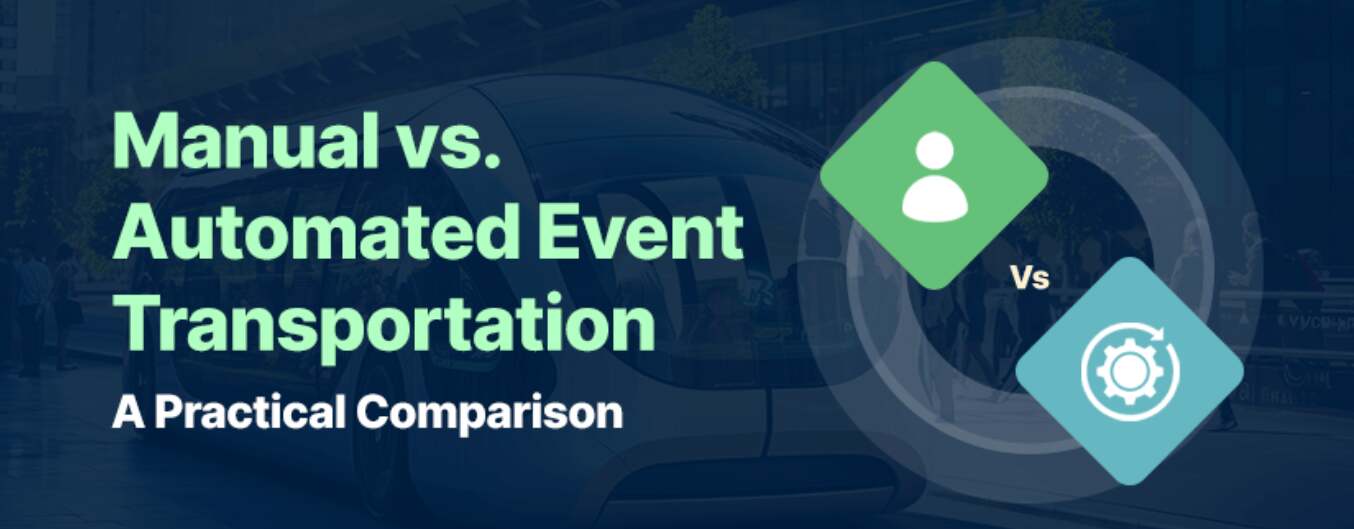
So which setup is right for your event? Let’s take a closer look at manual vs automated event transportation.
Manual event transportation planning depends heavily on human coordination. Teams often use spreadsheets, printed schedules, radio calls, and phone communication to assign vehicles, track routes, and respond to changes. While this method may work for small or straightforward events, the cracks start to appear as the scale or complexity increases.
Even tasks like managing pickups for VIPs, assigning the right vehicle types, or adapting to last-minute changes can feel like firefighting when done manually.
Automated event transportation systems bring structure, speed, and scalability to event logistics. Instead of juggling phone calls and spreadsheets, event teams use a central platform to manage everything from vehicle assignments to route changes and live tracking.
For multi-day, multi-venue events, especially, automated transportation solutions provide the level of control and efficiency that manual methods simply can’t match.
Cost Savings: Companies adopting automated fleet management services have reported cost savings of up to 50% when implemented strategically.
Key Differences: Manual vs Automated Event Transport
Understanding the nuances between manual and automated event transportation solutions is crucial for making an informed decision. In this section, we’ll break down the key differences in areas like efficiency, scalability, and cost-effectiveness, providing a clear comparison of how these two systems stack up in real-world event scenarios.
Key Differences: Manual vs Automated Event Transport
Understanding the nuances between manual and automated event transportation solutions is crucial for making an informed decision. In this section, we’ll break down the key differences in areas like efficiency, scalability, and cost-effectiveness, providing a clear comparison of how these two systems stack up in real-world event scenarios.
Data-Driven Decision Making
Manual processes rarely offer reliable insights after an event.
Automated platforms
Provide clear reports on vehicles, drivers, vendors, timelines, and passenger feedback. These insights help organizers spot issues, improve operations, and plan better for future events.
Scalability
Manual systems are hard to scale for large events. Without real-time tracking, managing hundreds of trips across multiple venues often leads to delays, confusion, and traffic issues.
Automated systems
Handle large crowds with ease. They adjust in real time and scale effortlessly, whether it’s a multi-day conference or a city-wide event, all while keeping operations smooth and organized.
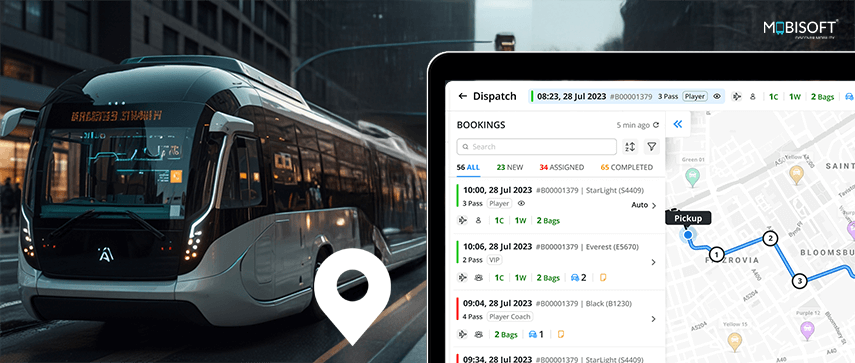
Automated transport solutions offer more than just cost savings. They help event organizers plan smarter, move people faster, and make better decisions using real-time data.
Read More: Manual vs Automated Event Transportation Systems: A Practical Guide

© 2025 Crivva - Hosted by Airy Hosting Managed Website Hosting.