


Selecting the right projection screen is a foundational decision that shapes the entire viewing experience. Many buyers focus heavily on projector specifications—resolution, brightness, and color accuracy, while overlooking the surface that ultimately displays the image. The screen is not a passive accessory; it is an active component of the visual system. Among the most debated options are manual pull-down screens and fixed frame screens. Each represents a different philosophy of design, balancing convenience, performance, permanence, and visual precision. Understanding how these differences translate into everyday use helps create a setup that feels intentional rather than improvised.
Modern projection environments demand more from screens than ever before. With ultra-high-definition projectors and advanced color processing, even small surface inconsistencies become visible. The screen must manage light evenly, maintain structural integrity, and preserve clarity across its entire surface. The decision between retractable and fixed solutions is therefore less about preference and more about aligning technical performance with real-world needs.
How Manual Pull-Down Screens Fit Dynamic Environments
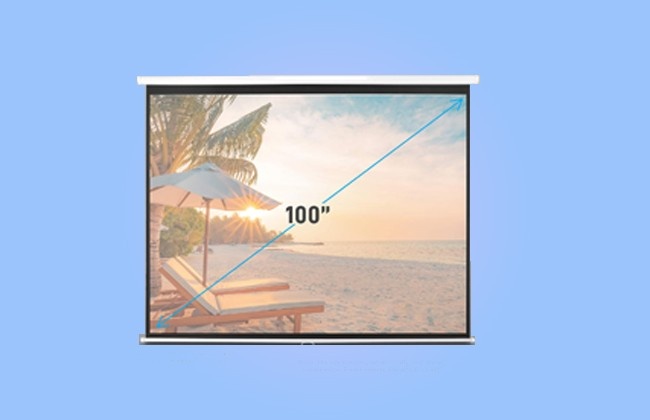
A manual pull-down projection screen is built around adaptability. It stores inside a protective casing when not in use and extends only when projection is needed. This design makes it ideal for shared spaces where projection is occasional rather than constant. Conference rooms, classrooms, and multi-purpose living areas benefit from the ability to transform quickly without committing the room permanently to a theater layout.
The practicality of a retractable screen lies in its space efficiency. When rolled up, it disappears visually, preserving wall aesthetics and maintaining a clean environment. This matters in professional settings where presentation equipment should remain unobtrusive. It also protects the viewing surface from dust, sunlight, and accidental contact, extending its lifespan under moderate use.
However, mechanical convenience introduces structural compromises. Repeated rolling places stress on the material, and over time the surface may develop minor waves or edge curling. Even premium models cannot completely eliminate the physics of tension loss. These imperfections are subtle but noticeable when displaying sharp graphics or text-heavy presentations. High-definition images can expose inconsistencies that casual viewers might ignore but professionals may find distracting.
Alignment consistency is another consideration. Each deployment introduces slight positional variation, requiring occasional recalibration. In environments where presentations demand precision framing, this extra step can slow workflow. Despite these limitations, retractable screens remain highly attractive because they deliver a strong balance between affordability and functionality. They are especially valuable for users who prioritize flexibility and occasional projection over cinematic perfection.
Fixed Frame Screens and the Pursuit of Optical Accuracy
A Fixed Frame Projection Screen embraces permanence to achieve performance. The material is stretched tightly across a rigid frame, eliminating wrinkles and ensuring a consistently flat surface. This tension is the defining advantage. A perfectly smooth screen reflects light evenly, preserving sharpness, color fidelity, and contrast.
The visual difference becomes apparent with high-resolution projectors. Fine details remain crisp because there are no surface distortions competing with the image. Text appears cleaner, edges look sharper, and motion remains stable. For viewers seeking an immersive, theater-like experience, the improvement is immediately noticeable.
The surrounding frame also enhances perception. A dark border absorbs excess light and defines the image boundaries, making colors appear more vibrant and blacks deeper. This framing effect increases perceived contrast and focuses attention on the content itself. In dedicated viewing environments, this psychological enhancement adds to the sense of immersion.
Permanence, however, demands commitment. A fixed screen becomes part of the room’s architecture. It requires deliberate placement and design planning, especially in shared spaces. Installation is more involved than hanging a retractable unit, and relocation is not trivial. For environments where projection is not central to daily activity, this permanence may feel excessive.
Yet in dedicated theaters, training rooms, or simulation environments, fixed screens deliver unmatched consistency. Once installed, they require minimal maintenance and provide stable performance year after year.
Practical Differences That Shape User Experience
The contrast between these screen types reflects different priorities. Some users value versatility, while others demand uncompromising visual accuracy. The practical distinctions include:
These differences show that the decision is not about superiority but suitability.
Everyday Performance and Environmental Factors
Real-world usage patterns heavily influence satisfaction. In homes where projection is occasional entertainment, a retractable solution integrates smoothly without dominating the space. The ability to hide the screen maintains aesthetic flexibility and prevents the room from feeling like a permanent theater.
Professional environments also benefit from this adaptability. Meeting rooms often serve multiple purposes, and a visible permanent screen may conflict with design goals. Retractable units allow the space to transform on demand.
In contrast, enthusiasts who rely on projection as a primary viewing medium notice every detail. Surface flatness becomes critical when watching high-resolution films or delivering visually complex presentations. Fixed installations reward this attention to detail by preserving image integrity.
Lighting conditions further influence performance. Dedicated rooms with controlled ambient light maximize the benefits of tensioned screens. Shared spaces with variable lighting may prioritize convenience because projection is not the sole function of the room. In these cases, usability outweighs marginal visual gains.
Maintenance patterns also differ. Fixed screens remain stationary and require little intervention beyond cleaning. Retractable screens involve moving components that may eventually require servicing. While modern mechanisms are durable, mechanical wear is inevitable over extended use.
Cost, Longevity, and Design Integration
Initial cost comparisons do not tell the full story. A retractable screen may appear more economical upfront, but long-term value depends on usage intensity. Frequent rolling can accelerate material fatigue, potentially shortening lifespan. A well-built fixed screen often maintains its surface quality for many years, making it a strong investment for heavy users.
Design integration plays a psychological role as well. Some interiors embrace the aesthetic of a permanent viewing area, where the screen becomes a focal point. Others prioritize visual neutrality, favoring equipment that disappears when idle. Neither approach is inherently better; each reflects how projection fits into the identity of the space.
Technology trends also matter. As projectors continue to improve, the demand for perfectly flat surfaces will grow. Future upgrades may reveal imperfections that were previously invisible. Choosing a screen that supports long-term performance ensures compatibility with evolving equipment.
Choosing Based on Lifestyle Rather Than Specs
The most effective decision framework focuses on lifestyle alignment. Buyers should consider how often projection is used, how the room functions outside of viewing sessions, and how much visual precision matters to them personally. A casual user watching occasional movies may never notice the subtle distortions that concern a dedicated enthusiast.
The environment should guide the choice. Spaces that must remain flexible benefit from retractable solutions. Rooms designed specifically for projection reward permanent installations. When the screen supports the natural rhythm of the space, it feels intuitive rather than intrusive.
Conclusion
The comparison between manual pull-down and fixed frame projection screens ultimately reflects a balance between practicality and performance. Retractable designs excel in adaptability, protecting space aesthetics and supporting multi-purpose environments. Fixed frames deliver superior surface tension, consistent alignment, and enhanced image quality that appeals to serious viewers.
Neither option is universally better; each serves a different purpose. The ideal screen is the one that complements how the room is used and how projection fits into daily life. When chosen thoughtfully, the screen becomes an invisible partner to the projector, enhancing every image without drawing attention to itself. The result is a viewing experience that feels deliberate, polished, and perfectly suited to its environment.

© 2025 Crivva - Hosted by Airy Hosting Managed Website Hosting.