

It’s a question that comes up every time a tall batsman walks into a cricket equipment store, or every time a parent isn’t sure what size bat to buy their growing teenager. The debate around long handle vs short handle cricket bat is more nuanced than most people realise, and the wrong choice can affect your technique, comfort, and even your injury risk.
Let’s settle this properly, from the basics right through to how professionals make this decision.
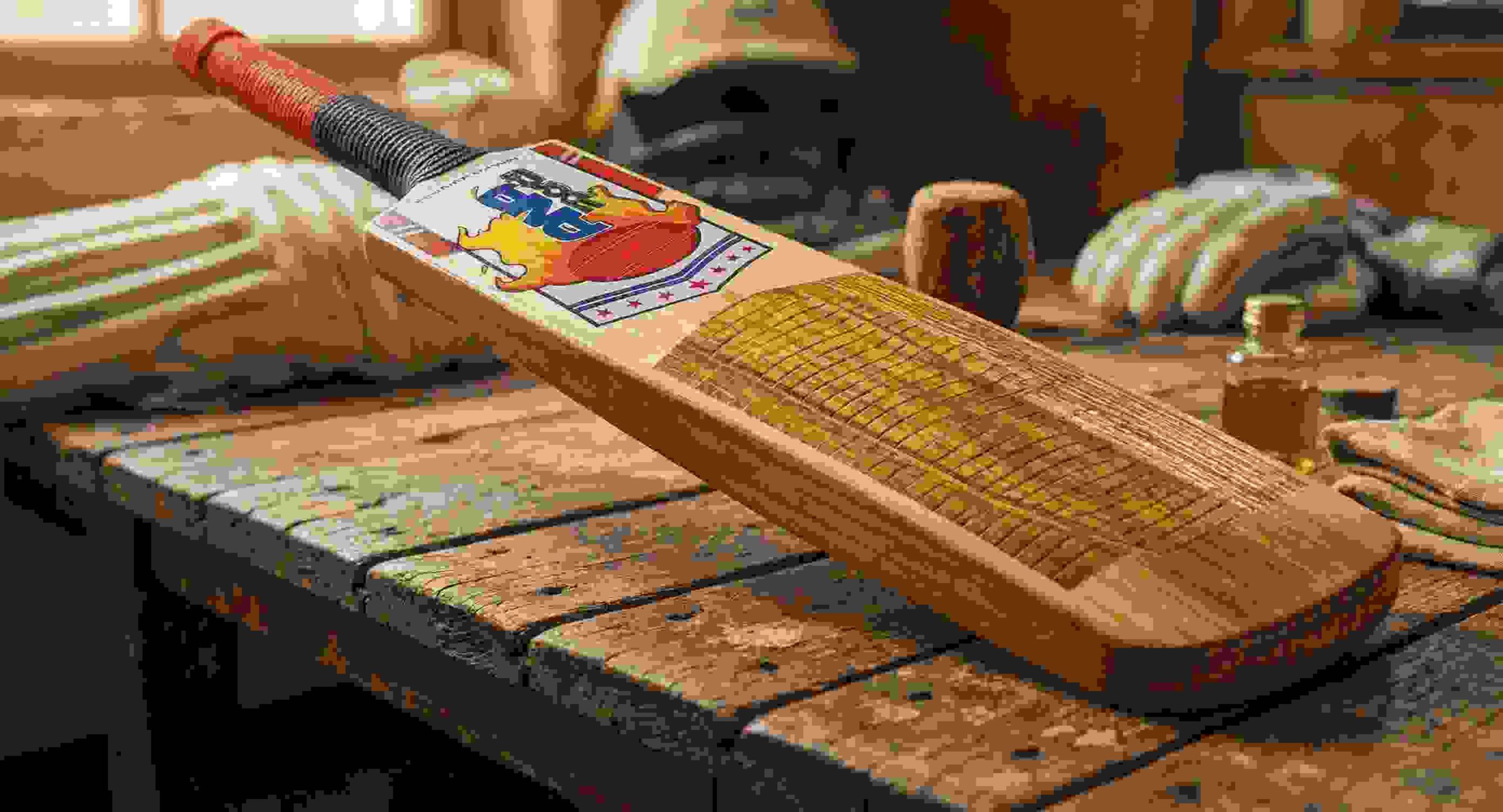
A cricket bat’s overall length is fixed within the Laws of Cricket — the maximum permissible length is 965mm (38 inches). Within this constraint, how that length is divided between the handle and the blade is where handle size comes in.
A longer handle means a shorter blade. A shorter handle allows for a longer blade. This trade-off has real, practical consequences.
Standard (Short) Handle:
Long Handle:
Long Blade (Short Handle Variant):
Despite the name, “short handle” is actually the standard adult bat configuration. The vast majority of professional and recreational cricketers — regardless of height — use short handle bats.
Why short handle works for most players:
It’s worth noting that players like Virat Kohli and Steve Smith — both around the 175–180cm mark — use standard short handle bats without any issue whatsoever.
A long handle bat has a legitimate purpose. For players significantly over six feet tall, using a short handle bat can cause a crouching or reaching stance at the crease — neither of which is ideal for technique or balance.
Where a long handle excels:
Tall players — say, those over 190cm — often find that a long handle bat simply feels more natural. The bat doesn’t feel like it’s “disappearing” into their body at address.
Here’s something the equipment guides don’t always say clearly: handle choice is personal, and height is only one part of the equation.
Other factors to consider:
Arm length. Two players of identical height can have quite different arm spans. A player with longer arms may find a standard handle cramped even at moderate height.
Stance width. A wider stance lowers your body relative to the pitch. A batsman with a very wide stance may need a longer handle to compensate.
Grip style. Top-hand-dominant players who hold the bat higher up the handle may find a long handle gives them room to adjust; those who grip near the bottom of the handle may find it irrelevant.
Playing format. Some T20 specialists choose long handle bats specifically to position their grip higher — creating a “choke-up” option when needed for improvised shots.
|
Factor |
Short Handle |
Long Handle |
|
Blade length |
Longer |
Shorter |
|
Suitable height |
Up to ~183cm |
183cm and above |
|
Sweet spot position |
Lower |
Higher |
|
Ball of the bat area |
Larger |
Slightly smaller |
|
Availability |
Very wide |
Limited selection |
|
Common use |
Standard adult cricket |
Tall players, specialists |
|
Weight distribution |
Lower/balanced |
Slightly handle-heavy |
This is one of the most common misconceptions. Handle length doesn’t directly translate to more power. Power comes from blade weight, bat speed, timing, and technique.
What the handle does affect is leverage. A longer handle, gripped higher up, can theoretically create a longer arc of swing — which may help some players generate more bat speed. But this only applies if the bat is correctly matched to the batsman in the first place.
Using a long handle bat when you don’t need one doesn’t give you extra power. It simply makes the bat harder to control.
For junior players, handle size is even more important because poor bat fit in early development embeds bad habits that are hard to unlearn.
Junior cricket bats come in sizes 0 through 6, followed by Harrow and then full adult sizes. Each size is calibrated for both height and appropriate handle proportions. A child using an adult bat — even a short handle — will struggle with weight, reach, and control.
The general rule: buy the correct size for the child’s current height, not the size they might grow into. Technique built on an ill-fitting bat rarely transfers cleanly to a better-matched one later.
Most international cricketers use standard (short) handle bats. Even very tall players — like Ben Stokes at around 188cm — often use standard handles, compensating instead through stance width or grip position.
Long handle bats are more common in domestic cricket, particularly among club players who prioritise comfort over optimising every dimension of bat performance.
Some players use “Long Blade” variants — a short handle paired with an extended blade — to get extra hitting area without changing how the bat sits in the hands. This can be a useful middle ground for taller players who still prefer the grip feel of a standard handle.
Q1. Is a long handle bat heavier than a short handle bat?
Not necessarily. Overall bat weight depends on the blade wood grade and profile, not just the handle. However, a longer handle can affect the perceived balance — making the bat feel slightly more handle-heavy and harder to wield quickly.
Q2. Can a shorter player use a long handle bat?
Technically yes, but it’s generally inadvisable. A long handle on a shorter player tends to push the grip too high, creating an awkward, tense stance and reducing effective blade control.
Q3. What height is a long handle bat recommended for?
Most manufacturers recommend long handle bats for players 183cm (6 feet) and above. However, stance, arm length, and grip style also play a role — so use height as a starting guide, not a hard rule.
Q4. Does the handle length affect the bat’s sweet spot?
Indirectly, yes. Since a longer handle comes with a shorter blade, the sweet spot tends to be positioned slightly higher on the bat face than a short handle equivalent. This can affect how the bat plays on the front foot versus the back foot.
Q5. Can I have a bat’s handle replaced with a longer one?
Yes. Handle replacement is a specialist service offered by bat-makers and some cricket equipment shops. However, if the blade was manufactured with a short handle profile, simply fitting a longer handle changes the bat’s balance and may not give you the same result as buying a long handle bat from the outset.

© 2025 Crivva - Hosted by Airy Hosting Managed Website Hosting.