


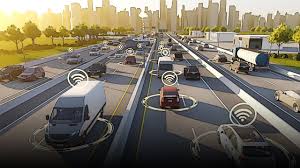
India’s transportation ecosystem is undergoing a transformational shift as the country embraces intelligent infrastructure to address growing mobility challenges. Among the most impactful developments in this transformation is the emergence of smart highways—digitally enabled road networks designed to enhance traffic efficiency, improve safety, reduce environmental impact, and support future-ready transportation systems.
The India Smart Highway Market Report, valued at USD 3.06 billion in 2025, is projected to reach USD 7.77 billion by 2031, expanding at a robust CAGR of 16.63% during the forecast period. This exceptional growth trajectory reflects India’s rising urban population, increasing vehicle density, ambitious infrastructure modernization programs, and rapid adoption of advanced digital technologies.
Request For Sample Copy of Report For More Detailed Market insight: https://www.techsciresearch.com/sample-report.aspx?cid=15712#requestform
The India Smart Highway Market is experiencing rapid growth due to rising urbanization and increasing vehicle ownership.
Market value is expected to more than double between 2025 and 2031, supported by strong government investments.
Intelligent Traffic Management Systems (ITMS) and IoT-enabled monitoring solutions are central to smart highway deployment.
Managed Services dominate the service segment, offering cost-effective, scalable, and integrated solutions.
North India has emerged as the fastest-growing regional market due to large-scale infrastructure projects.
Adoption of AI, IoT, cloud computing, and data analytics is reshaping highway operations and safety standards.
Integration of renewable energy, smart lighting, and EV infrastructure is aligning highways with sustainability goals.
India has one of the world’s largest road networks, serving as the backbone of economic activity and logistics movement. However, rapid population growth, urban expansion, and rising vehicle penetration have placed immense pressure on conventional highway infrastructure. Traffic congestion, road accidents, fuel inefficiencies, and environmental pollution have emerged as persistent challenges.
Smart highways represent a paradigm shift from static infrastructure to intelligent, connected, and responsive road systems. By leveraging digital technologies, smart highways enable real-time traffic control, predictive maintenance, automated tolling, enhanced surveillance, and seamless vehicle-to-infrastructure communication.
This evolution is not merely technological but strategic—aimed at improving road safety, reducing travel time, lowering operational costs, and supporting economic growth through efficient mobility.
India is witnessing unprecedented urban growth, with millions migrating to cities each year in search of better opportunities. This rapid urbanization has led to a sharp increase in vehicle ownership, placing immense pressure on existing road infrastructure.
Smart highways address these challenges by enabling intelligent traffic flow management, congestion prediction, and automated incident response. Real-time monitoring and adaptive traffic systems help optimize road capacity, reduce bottlenecks, and improve overall transportation efficiency.
Government-led infrastructure modernization programs are a cornerstone of the India Smart Highway Market’s growth. National initiatives focusing on highway expansion, urban mobility, and smart cities emphasize the adoption of intelligent transportation systems.
Policies supporting digital infrastructure, road safety enhancement, and technology-driven governance have created a favorable regulatory environment. Public-private partnership (PPP) models further accelerate implementation by encouraging private sector participation, innovation, and funding.
Technological progress in Internet of Things (IoT), Artificial Intelligence (AI), Big Data Analytics, and cloud computing has significantly enhanced the feasibility and effectiveness of smart highways.
Connected sensors, cameras, and communication systems continuously collect traffic data, enabling predictive analytics and automated decision-making. AI-driven platforms optimize signal timings, detect anomalies, monitor violations, and enhance traffic enforcement, contributing to safer and more efficient road networks.
Road safety is a major concern in India, with highways accounting for a significant share of traffic accidents and fatalities. Smart highways integrate advanced surveillance systems, automated speed detection, lane monitoring, and emergency response mechanisms to reduce accident risks.
Real-time incident detection and coordinated response systems allow authorities to act quickly, minimizing casualties and disruptions. This strong focus on safety is a key driver of smart highway adoption.
Environmental sustainability has become a strategic priority for infrastructure development. Smart highways incorporate energy-efficient solutions such as LED lighting, solar-powered systems, and smart energy management platforms to reduce operational costs and carbon emissions.
These green initiatives align with India’s broader sustainability goals and support the transition toward eco-friendly transportation infrastructure.
Artificial Intelligence is playing an increasingly important role in smart highway systems. AI-powered analytics platforms process massive volumes of real-time data to predict congestion patterns, identify accident-prone zones, and optimize traffic flow.
Machine learning algorithms continuously improve system performance, enabling proactive traffic management and enhanced decision-making.
As connected vehicles gain traction, smart highways are being designed to support vehicle-to-infrastructure (V2I) communication. This enables real-time data exchange between vehicles and road systems, enhancing navigation, safety, and traffic coordination.
Smart highways are also laying the groundwork for future autonomous vehicle deployment by integrating high-speed communication networks and intelligent monitoring systems.
The growing adoption of electric vehicles in India is influencing smart highway design. Integration of EV charging stations, smart grid connectivity, and energy management systems ensures highways support sustainable mobility.
Smart highways play a critical role in enabling long-distance EV travel by providing reliable charging and navigation support.
Cloud computing is transforming highway operations by enabling centralized monitoring, data storage, and analytics. Cloud-based platforms offer scalability, flexibility, and cost efficiency, allowing authorities to manage large highway networks effectively.
The Managed Service segment held the largest market share in 2025 and continues to dominate the India Smart Highway Market. Managed services provide end-to-end solutions encompassing design, deployment, monitoring, operation, and maintenance of smart highway infrastructure.
This model is particularly attractive in India, where rapid infrastructure expansion and diverse traffic conditions create complex operational challenges. By outsourcing to specialized providers, authorities gain access to advanced technologies and expertise without heavy capital investment.
Real-time traffic monitoring and predictive management
Enhanced road safety and regulatory compliance
Reduced capital expenditure through subscription-based models
Scalability and flexibility to support expanding highway networks
Integrated management of multi-technology ecosystems
Managed services ensure consistent performance, faster incident response, and long-term operational efficiency.
Intelligent Transportation Management Systems (ITS)
Intelligent Traffic Management Systems (ITMS)
Communication Systems
Monitoring and Surveillance Systems
Among these, ITMS and monitoring systems account for a significant share due to their role in traffic optimization and safety enhancement.
Variable Message Signs (VMS)
Digital Signage
Other Advanced Display Systems
Dynamic display solutions play a crucial role in real-time communication with drivers, improving navigation and safety.
The India Smart Highway Market is moderately fragmented, with a mix of global technology providers and domestic infrastructure companies competing on innovation, integration capabilities, and service delivery.
Siemens India
Honeywell Automation India Ltd.
Larsen & Toubro (L&T) Infrastructure
ABB India
Schneider Electric India
Hella India Automotive Pvt. Ltd.
Bosch Limited
Wabco India
Trimble India
Volvo Group India
Customers can also request for 10% free customization on this report.
Investment in R&D and advanced traffic technologies
Strategic partnerships with government bodies and EPC firms
Expansion of managed service offerings
Integration of AI, IoT, and cloud platforms
Focus on sustainability and energy-efficient solutions
Leading players are differentiating themselves through end-to-end solutions, strong after-sales support, and compliance with national infrastructure standards.
Despite strong growth prospects, the market faces challenges such as high initial implementation costs, integration complexity, data security concerns, and varying levels of digital readiness across regions. However, increasing government support and technological maturity are gradually addressing these issues.
The future of the India Smart Highway Market is exceptionally promising. Continued urbanization, rising vehicle ownership, and strong government commitment to infrastructure modernization will sustain long-term growth.
Emerging technologies such as AI-driven analytics, connected vehicle systems, and renewable energy integration will further enhance smart highway capabilities. Managed services will remain a dominant growth area, offering scalable and cost-effective solutions for expanding highway networks.
As India continues its journey toward intelligent mobility and sustainable infrastructure, smart highways will play a pivotal role in shaping the nation’s transportation future.
The India Smart Highway Market represents a transformative shift in how transportation infrastructure is planned, managed, and experienced. Driven by technological innovation, government initiatives, and growing mobility demands, smart highways are redefining road safety, efficiency, and sustainability.
With strong growth projected through 2031, the market offers significant opportunities for technology providers, infrastructure companies, and service operators. As smart highways become integral to India’s development strategy, they will serve as a foundation for connected, efficient, and future-ready transportation ecosystems.
Contact US:
Techsci Research LLC
420 Lexington Avenue, Suite 300,
New York, United States- 10170
Tel: +13322586602
Email: [email protected]
Web: https://www.techsciresearch.com/

© 2025 Crivva - Hosted by Airy Hosting Managed Website Hosting.