Water damage is one of those issues most property owners never really think about until it suddenly becomes a problem. I used to think the same way. As long as the plumbing worked and there were no visible leaks, I assumed everything was fine. Unfortunately, I learned the hard way that water damage often starts quietly and grows into something much bigger before anyone notices.
A while back, I walked into a property I manage and noticed a small damp patch near the laundry area. At first, it didn’t look serious. The floor felt slightly wet, and there was a faint musty smell in the room. My initial thought was that it might be a small spill or condensation from the washing machine.
But within a few hours, it became clear that something more serious was happening. When we checked more closely, moisture had already spread under the flooring and behind the drywall. What seemed like a minor issue turned out to be hidden water damage that had been developing for days.
That experience completely changed how I think about property maintenance. It also helped me understand why water damage restoration services are so important. Restoring a property after water damage involves far more than simply drying the surface. It requires careful inspection, proper equipment, and a structured process to ensure the building is safe and fully restored.
One of the most surprising things I learned during that situation was how quickly water spreads through a structure. Water rarely stays where the leak begins. Instead, it moves through flooring, insulation, drywall, and even structural framing.
At first glance, the damage may look small. Maybe you see a wet corner on the floor or a small stain on the ceiling. However, water often travels behind walls or underneath flooring where it’s not immediately visible.
In my case, the visible damp area was only a small portion of the actual problem. Moisture had already traveled beneath the floorboards and into nearby walls. If we had ignored it for another few days, the damage could have become much worse.
Another major concern with water damage is moisture retention. Even when surfaces appear dry, water can remain trapped inside building materials. This trapped moisture creates the perfect environment for mold growth and structural deterioration.
That’s why timing matters so much. The longer water sits inside materials like wood or drywall, the more difficult the restoration process becomes. Acting quickly can significantly reduce repair costs and prevent additional damage.
Because of this, many homeowners and property managers rely on water damage restoration services to respond quickly and handle the situation properly.
Before dealing with this situation myself, I always associated water damage with major flooding or storms. What I discovered is that many cases start with small and seemingly harmless issues.
Some of the most common causes of water damage include:
In many situations, the problem develops slowly over time. A tiny leak behind a wall or appliance can release small amounts of water day after day. Since the damage is hidden, it often goes unnoticed until the moisture spreads into visible areas.
That’s exactly what happened in my case. A small plumbing connection behind the washing machine had been leaking slowly. The water collected beneath the flooring before anyone realized there was an issue.
By the time the damp area became visible, the water had already spread beyond the original leak location.
Before going through this process, I assumed restoring water damage was fairly simple. I imagined workers coming in, removing the water, and letting the area dry.
In reality, professional restoration follows a detailed process designed to identify hidden moisture and fully repair the affected areas.
The first step in the restoration process is a thorough inspection. Technicians evaluate how far the water has spread and determine which materials have been affected.
They also work to identify the original source of the water intrusion. Fixing the source is essential before any restoration work begins. Otherwise, the problem could continue even after the cleanup process starts.
During this stage, professionals often use specialized tools like moisture meters and infrared cameras to detect hidden water behind walls or under floors.
This technology allows them to see areas that wouldn’t normally be visible during a standard inspection.
Once the inspection is complete and the source of the leak is resolved, the next step is removing standing water.
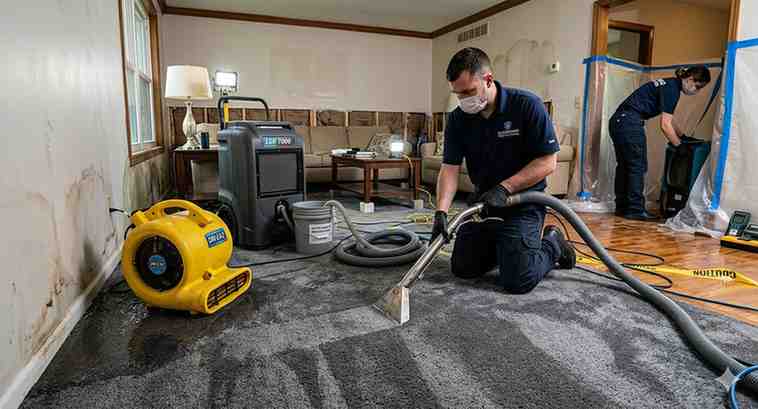
Industrial pumps and extraction equipment are used to remove as much water as possible from the affected areas. This step helps reduce further absorption into building materials and speeds up the drying process.
In situations where carpets or flooring have absorbed significant moisture, those materials may need to be removed to prevent additional damage.
Watching this process made me realize how quickly water can soak into surfaces and spread across large areas.
After the visible water is removed, the next stage focuses on drying the structure itself.
This step usually takes the longest because moisture can remain trapped inside materials like wood, drywall, and insulation.
Large air movers and commercial dehumidifiers are placed throughout the affected area. These machines circulate air and pull moisture out of the building materials.
During the drying process, technicians regularly monitor humidity levels and moisture readings to ensure the environment is returning to safe levels.
Although it might seem like overkill at first, thorough drying is one of the most important steps in preventing mold growth.
Once the structure is completely dry, cleaning and sanitation begin.
Water damage can introduce contaminants, especially if the water came from plumbing systems or outdoor flooding. Even clean water can become contaminated after moving through walls or flooring.
Professionals disinfect affected areas to eliminate bacteria and odors. Materials that cannot be safely restored may be removed and replaced.
In my situation, a section of drywall had absorbed too much moisture and had to be replaced entirely. While it was frustrating at the time, it prevented future issues like mold development.
The final stage of the process involves repairing and restoring the damaged areas of the property.
Depending on the severity of the damage, this may include:
The goal of restoration is to return the property to its original condition, or sometimes even better than before the damage occurred.
By the time the work was completed in my case, the affected room looked completely normal again.
After going through this entire experience, I realized that professional restoration services bring several advantages that are difficult to replicate with basic tools or DIY methods.
First, professionals have specialized equipment designed specifically for water removal and drying. These tools are far more powerful than household fans or shop vacuums.
Second, trained technicians know how to detect hidden moisture. Without the right tools and knowledge, it’s very easy to miss areas where water has spread.
Finally, professionals follow a structured process that ensures the building is safe and fully restored. Skipping steps or rushing the drying process can leave moisture trapped inside materials, which can lead to mold growth or structural damage later.
Because of these factors, many property owners turn to experienced providers like HVDR when dealing with serious water damage situations.
Looking back, there are several things I would do differently now that I understand how water damage works.
First, I would take any sign of moisture more seriously. Even small leaks can indicate a larger hidden problem.
Second, I would act faster. Waiting even a few extra days can allow moisture to spread deeper into building materials.
And finally, I would rely on professional help sooner rather than trying to figure everything out alone.
Water damage is one of those problems that can escalate quickly if it isn’t addressed properly.
Dealing with water damage was definitely one of the more stressful experiences I’ve faced while managing property. However, it also taught me valuable lessons about maintenance, prevention, and restoration.
What started as a small plumbing leak quickly turned into a situation that required professional attention and a structured restoration process.
From my experience, water damage restoration services play a crucial role in protecting both the property and the people who live in it. Proper inspection, water removal, drying, and restoration can prevent long-term issues and help properties recover safely.
If there’s one takeaway from my experience, it’s this: never ignore water problems, even if they seem minor at first. Addressing them quickly can save a significant amount of time, money, and stress in the long run.

© 2025 Crivva - Hosted by Airy Hosting Managed Website Hosting.