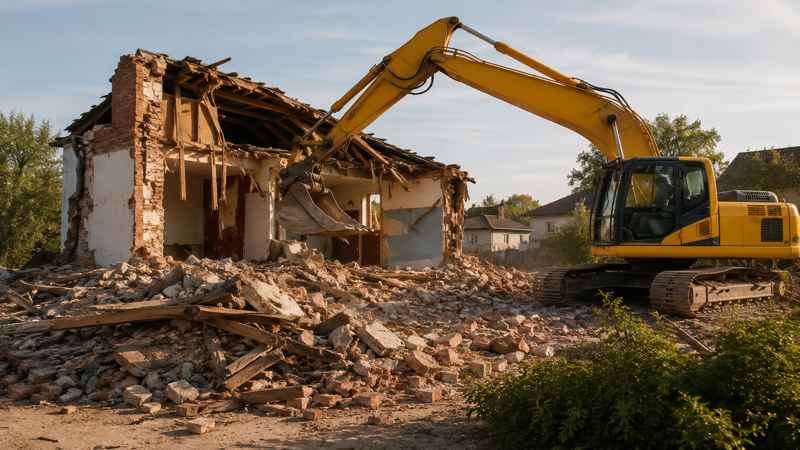


Across roadways, embankments, rail corridors, and industrial yards, ground-related failures remain one of the most persistent sources of cost overruns and performance issues. Rutting, settlement, slope instability, and erosion rarely appear overnight. They build slowly, often beneath the surface, until repair becomes unavoidable and expensive.
In many cases, the problem isn’t poor workmanship. It’s that the ground conditions were treated as static when they were anything but. Soil responds to moisture, traffic loads, seasonal changes, and time. Ignoring that reality tends to surface later in the form of cracked pavements, uneven platforms, and weakened slopes.
This is why modern civil and infrastructure planning has shifted away from purely structural fixes toward systems that work with soil behavior rather than against it.
Soil is not a uniform material. Even within a single site, bearing capacity, drainage, and shear strength can vary dramatically. Clay expands and contracts with moisture. Loose granular soil migrates under repeated loads. Fine particles wash out during heavy rainfall, destabilizing the layers above.
Traditional methods attempted to overcome these issues by adding thickness: more aggregate, deeper excavation, heavier foundations. While effective in certain contexts, this approach increases material consumption, transport costs, and construction time. It also does little to address long-term soil movement.
The industry response has been to introduce reinforcement and confinement techniques that alter how soil behaves under load.
Geosynthetics function as interface materials between soil layers, providing separation, reinforcement, filtration, or confinement depending on their form. Rather than replacing soil, they improve how it performs.
Designers now use these materials to:
These applications are not experimental. They are well documented across highways, ports, landfills, mining sites, and renewable energy projects.
What has changed is the level of precision with which these systems are specified. Material selection, aperture size, tensile strength, and installation method all influence long-term performance.
One of the most effective ways to improve weak ground performance is confinement. When soil is laterally restrained, its load-bearing capacity increases significantly. This principle is used in reinforced earth walls and pavement subgrades alike.
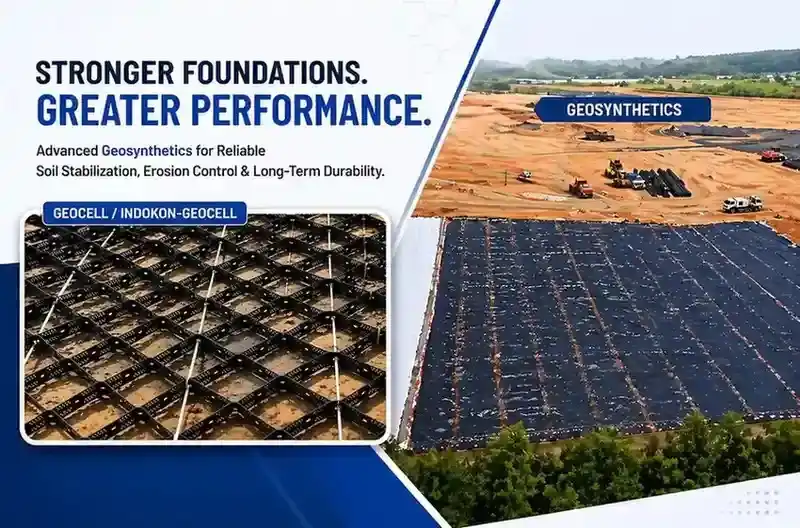
Three-dimensional confinement systems create a cellular structure that holds infill material in place. Under load, the cells limit lateral movement, turning loose aggregate into a semi-rigid layer. This reduces deformation and spreads stress across a wider area.
On projects with variable subgrade strength, engineers often reference guidance from a qualified geosynthetics supplier when selecting reinforcement systems suited to local soil conditions and loading patterns. Access to technical data and field experience helps avoid overdesign while ensuring durability.
Many infrastructure failures blamed on “weak soil” are actually drainage problems. Trapped water reduces effective stress in soil, lowering its strength. Freeze-thaw cycles and monsoon conditions amplify the issue.
Geosynthetic drainage layers allow water to move laterally or vertically while keeping fine particles in place. Unlike granular drainage layers, they do not clog easily when properly specified.
The long-term value lies in predictability. When water behavior is controlled, soil response becomes more consistent, and maintenance intervals extend.
Surface erosion often signals deeper instability. On slopes, channels, and embankments, water flow removes fines first, then progressively undermines the structure.
Flexible confinement systems and erosion control mats address this by anchoring soil while allowing vegetation to establish. Once roots take hold, the combined system becomes stronger over time rather than weaker.
Designers increasingly consider these systems early in project planning rather than as remedial measures after damage occurs.
Cellular confinement systems are being adopted across sectors not because they are new, but because they solve multiple problems at once. They reduce aggregate thickness, improve load performance, and adapt to irregular terrain.
Their use is expanding in:
Project teams often consult experienced geocell manufacturers when working in challenging ground conditions, especially where material availability or environmental constraints limit traditional construction methods.
The key advantage is adaptability. Cell size, height, and material type can be adjusted to match site-specific requirements without redesigning the entire structure.
Infrastructure projects are increasingly evaluated on resource efficiency as well as performance. Reducing excavation, minimizing imported fill, and extending service life are no longer optional considerations.
Soil reinforcement systems contribute by:
In regions with sensitive ecosystems or restricted access, these benefits can be decisive in project approval and execution.
Even well-designed systems fail if installation is rushed or poorly supervised. Alignment, anchoring, infill placement, and compaction all influence performance.
Experienced contractors treat geosynthetic installation as a structural operation, not a secondary task. Inspection protocols and clear sequencing reduce the risk of hidden defects that surface years later.
This is where collaboration between designers, contractors, and material specialists matters most. Shared understanding shortens learning curves and reduces site-level improvisation.
Infrastructure demands are growing while ground conditions are becoming more complex due to climate variability and urban expansion. The industry response is not heavier construction, but smarter systems that respect how soil behaves over time.
Reinforcement, confinement, and drainage solutions are no longer niche tools. They are part of standard engineering practice for projects that prioritize longevity and predictability.
Organizations like Indonet Group operate within this shift, providing materials that support performance-driven design rather than one-size-fits-all solutions.
The most successful projects are those that recognize soil as an active component of the structure. When ground behavior is addressed early and systematically, infrastructure lasts longer, costs less to maintain, and performs as intended throughout its service life.

© 2025 Crivva - Hosted by Airy Hosting Managed Website Hosting.