


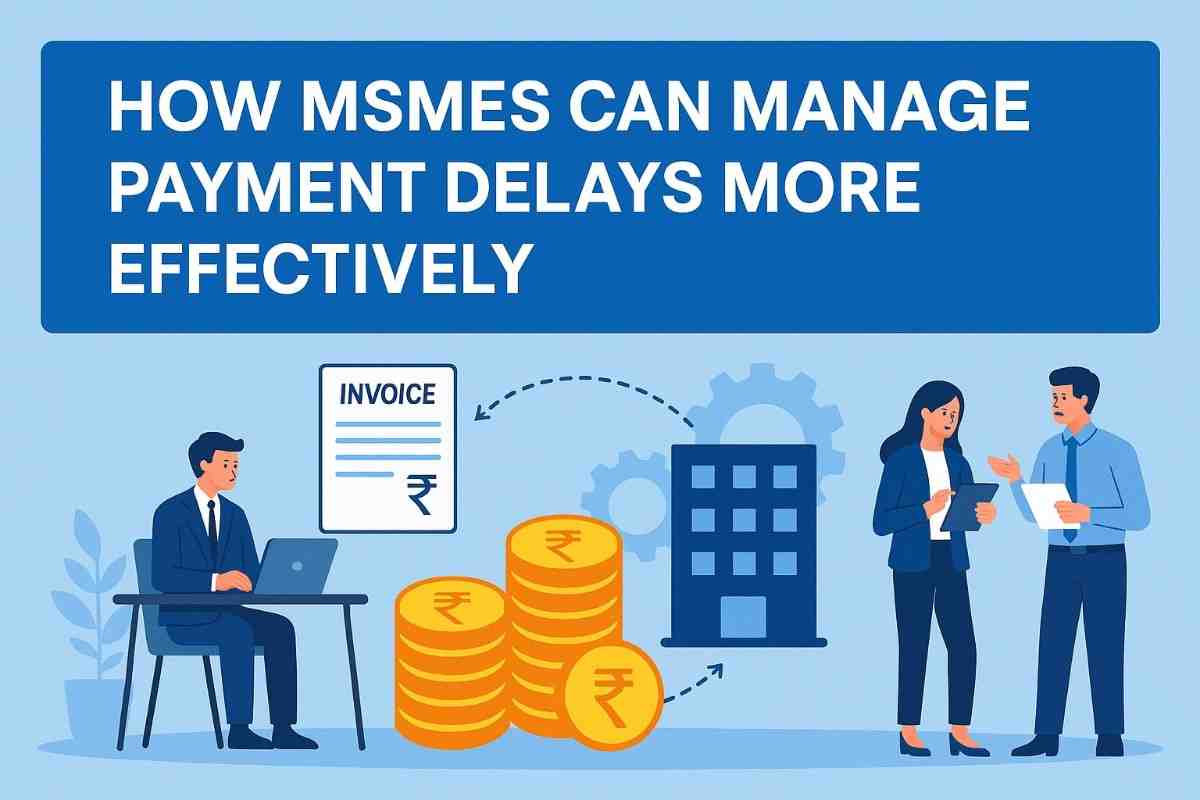
For millions of Micro, Small, and Medium Enterprises (MSMEs) across India, delayed payments remain one of the biggest barriers to financial stability and sustainable growth. Even as MSMEs continue to expand, increase production capacity, and onboard new customers, one persistent issue continues to strain their operations — long and unpredictable payment cycles.
In India’s B2B ecosystem, it is not uncommon for buyers to take 45, 60, or even 90 days to clear invoices. While this might be manageable for large organisations with buffer capital, MSMEs often struggle because a major portion of their working capital remains locked in receivables. The result is clear: disrupted cash flow, delayed salaries, stalled production, halted purchases, and missed growth opportunities.
Managing payment delays is not just a financial task — it is a strategic responsibility. With the right systems and digital tools, MSMEs can strengthen their financial position and ensure consistent liquidity, even when operating in industries that traditionally work on extended credit terms.
This article presents a comprehensive look at how MSMEs can manage payment delays more effectively, supported by modern mechanisms like TReDS, policy frameworks, and digital financial solutions.
Payment delays create a direct ripple effect across every stage of business operations. Since MSMEs typically operate with narrow margins and limited cash reserves, even a few delayed invoices can distort the entire financial cycle.
Key impacts include:
The problem intensifies when an MSME works with large corporates, government departments, or industries where long credit cycles are standard practice.
Understanding the root causes is the first step toward addressing them.
Many industries operate with extended credit periods, and internal buyer approvals often push these timelines even further.
Physical paperwork, mismatched data, missing signatures, and invoice discrepancies lead to verification delays.
Without a structured reminder system, MSMEs often lose track of pending payments.
Sometimes the delay is due to the buyer’s own internal challenges, which directly impacts MSMEs.
These problems highlight why reactive strategies are no longer sufficient — MSMEs need proactive systems to manage receivables efficiently.
Here are practical methods MSMEs can adopt to maintain steady cash flow.
MSMEs should clearly define:
Including these terms in contracts, purchase orders, and email agreements reduces ambiguity and ensures accountability.
Fast and error-free invoicing is critical. MSMEs should:
A clean invoice drastically reduces the scope of disputes.
A professional collection process includes:
Businesses should maintain consistent communication without appearing aggressive.
Relying on one or two major buyers increases vulnerability. Expanding to multiple clients distributes risk and prevents major disruptions when payments get delayed.
Digital transformation has played a critical role in optimising payment efficiency. MSMEs today have access to tools that offer:
Platforms that notify businesses when invoices become overdue.
Timely alerts reduce the possibility of unintentional delays.
Analytics tools help MSMEs identify recurring late payers and plan finances more dynamically.
Embracing digital platforms can significantly reduce administrative inefficiencies.
The Indian government has introduced several measures to protect MSMEs from delayed payments.
A grievance redressal mechanism where MSMEs can lodge complaints for overdue invoices.
Acts as a mediator between MSMEs and buyers for payment disputes.
From April 2024, businesses can no longer claim expenses unless MSME suppliers are paid within 45 days. This provision encourages buyers to pay vendors on time.
These legal frameworks empower MSMEs and enforce payment discipline across industries.
Even with strong internal processes, MSMEs may still face cash flow gaps. In such cases, financing tools offer practical support.
Selling invoices to a third party to receive immediate cash.
A method where MSMEs receive early payments against approved invoices — commonly available on digital platforms.
Short-term loans used to bridge cash flow requirements.
Each of these tools has its advantages, but the most transformative solution for MSMEs today is TReDS.
The Trade Receivables Discounting System (TReDS) is an RBI-regulated digital platform designed to help MSMEs receive faster payments through competitive discounting of invoices.
Here’s why TReDS is so powerful:
Once the buyer approves the invoice on the platform, MSMEs receive payment from financiers typically within 24 to 72 hours.
No physical paperwork, no manual follow-ups, and no ambiguity on invoice status.
Multiple financiers bid on MSME invoices, resulting in better pricing.
TReDS relies on the buyer’s credit profile, not the MSME’s, making it accessible to small businesses with limited credit history.
Since financiers collect payment directly from the buyer, MSMEs enjoy predictable cash flow.
TReDS directly addresses the core challenge of delayed payments by creating an ecosystem of trust, transparency, and efficiency.
RXIL (Receivables Exchange of India Ltd) is India’s first TReDS platform, backed by SIDBI and NSE. With thousands of MSMEs onboarded and a strong record of facilitating early payments, RXIL has become a trusted partner for businesses seeking predictable and secure cash flow.
RXIL simplifies the entire discounting process through:
By enabling MSMEs to receive early payments on approved invoices, RXIL strengthens working capital availability and reduces reliance on costlier forms of credit.
Alongside digital solutions, MSMEs should implement financial discipline to stay prepared for payment delays.
Track receivables, payables, and upcoming expenses.
Set aside a portion of earnings to handle payment delays.
Align stock purchasing with confirmed demand.
Allocate resources carefully to avoid overexposure.
These practices help MSMEs stay financially resilient.
Managing payment delays is no longer a passive task — it requires strategy, discipline, and the right digital tools. With modern systems like TReDS, legal protections, and structured financial practices, MSMEs can take control of their cash flow and operate with greater confidence.
Platforms like RXIL empower MSMEs by ensuring faster, transparent, and reliable payments — transforming delayed receivables into immediate working capital. For growing businesses, this shift can make the difference between stagnation and long-term success.

© 2025 Crivva - Hosted by Airy Hosting Managed Website Hosting.