

Accurate medical records are the backbone of effective healthcare delivery, especially in high-pressure environments like emergency departments. Physicians and clinical staff in emergency rooms must make rapid decisions while managing a constant influx of patients. In such a fast-paced setting, maintaining precise and detailed documentation can become challenging. This is where emergency room (ER) scribes play a critical role. By handling real-time documentation, ER scribes help ensure that medical records are complete, accurate, and compliant, ultimately improving patient outcomes and operational efficiency.
Medical records serve multiple purposes in emergency care. They provide a clear history of the patient’s condition, guide treatment decisions, support communication among healthcare providers, and serve as legal documentation. Inaccurate or incomplete records can lead to misdiagnosis, treatment delays, billing issues, and compliance risks.
Emergency departments are particularly vulnerable to documentation errors due to the urgency and unpredictability of cases. Physicians often have limited time to record every detail while simultaneously focusing on patient care. Without proper support, critical information can be missed or incorrectly documented. ER scribes help bridge this gap by ensuring that every aspect of the patient encounter is captured accurately.
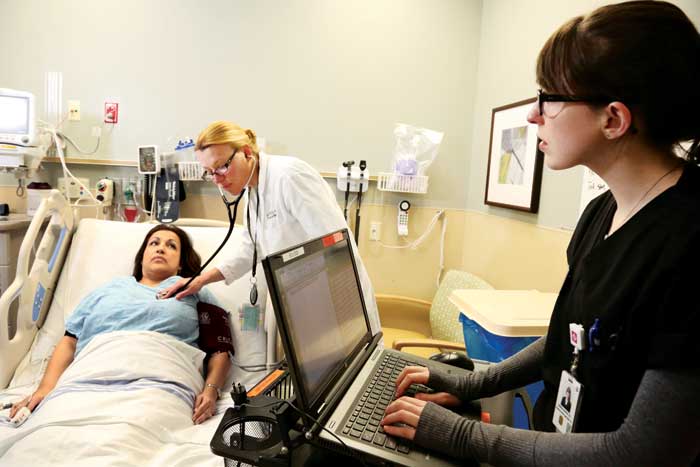
One of the most significant advantages of ER scribes is their ability to document patient encounters in real time. As physicians assess, diagnose, and treat patients, scribes record all relevant details directly into the electronic health record (EHR). This includes patient history, symptoms, physical examination findings, test results, and treatment plans.
Real-time documentation reduces the risk of forgetting important details that might occur when notes are completed later. It also allows physicians to review and verify information immediately, ensuring accuracy before finalizing the record. This level of precision is essential in emergency care, where even small errors can have serious consequences.
Emergency physicians operate under intense pressure, often managing multiple patients simultaneously. The added responsibility of detailed documentation increases cognitive load and can lead to fatigue-related errors. ER scribes alleviate this burden by taking over the documentation process, allowing physicians to focus entirely on clinical decision-making and patient interaction.
When physicians are not distracted by typing or navigating EHR systems, they can give their full attention to diagnosing and treating patients. This not only improves the quality of care but also enhances the accuracy of medical records, as the scribe can capture information more thoroughly and consistently.
Consistency in medical documentation is crucial for maintaining high-quality records. ER scribes are trained to follow standardized documentation protocols and templates, ensuring that all necessary information is included in every patient record. This structured approach reduces variability and helps maintain uniformity across different cases and providers.
Standardized documentation is particularly important for coding and billing purposes. Accurate and consistent records ensure that healthcare providers are appropriately reimbursed for their services while minimizing the risk of claim denials or audits. ER scribes play a key role in maintaining this level of consistency.
Medical records are legal documents that can be used in audits, insurance claims, and potential litigation. Incomplete or inaccurate documentation can expose healthcare providers and institutions to significant legal and financial risks. ER scribes help mitigate these risks by ensuring that all relevant details are properly recorded and aligned with regulatory requirements.
By maintaining thorough and accurate records, scribes support compliance with healthcare regulations and standards. They also provide a clear and detailed account of the care provided, which can be invaluable in defending against legal claims or addressing audit inquiries.
Emergency care often involves collaboration among multiple healthcare professionals, including physicians, nurses, specialists, and technicians. Accurate medical records are essential for effective communication among these team members. ER scribes ensure that all updates, findings, and treatment plans are documented clearly and promptly, enabling seamless information sharing.
When medical records are accurate and up to date, care teams can make informed decisions quickly and efficiently. This reduces the likelihood of errors, duplication of tests, or miscommunication, all of which can impact patient outcomes.
Errors in medical documentation can occur due to time constraints, fatigue, or oversight. Common issues include missing information, incorrect data entry, and incomplete notes. ER scribes are trained to pay close attention to detail, reducing the likelihood of such errors.
Their sole focus on documentation allows them to capture nuances that might otherwise be overlooked. Additionally, because scribes work closely with physicians, they can clarify uncertainties in real time, ensuring that the final record is both accurate and comprehensive.
Emergency departments often experience fluctuating patient volumes, with periods of intense activity that can overwhelm clinical staff. During these peak times, maintaining accurate documentation becomes even more challenging. ER scribes provide essential support by keeping up with the pace of patient flow and ensuring that documentation does not fall behind.
Their ability to handle high volumes of documentation helps prevent backlogs and ensures that records are completed promptly. This is critical for maintaining continuity of care and avoiding delays in treatment or discharge processes.
Modern ER scribes work within advanced EHR systems, leveraging technology to enhance accuracy and efficiency. They are trained to navigate complex digital platforms, input data correctly, and use templates and tools that streamline documentation.
In some cases, scribes may also work alongside voice recognition or AI-assisted tools, further improving the speed and precision of documentation. Their expertise in using these technologies ensures that medical records are both accurate and optimized for clinical and administrative use.
Emergency room scribes play an indispensable role in ensuring accurate medical records in one of the most demanding healthcare environments. By providing real-time documentation, reducing physician workload, enhancing consistency, and supporting compliance, they significantly improve the quality and reliability of medical records.
In a setting where every second counts and every detail matters, the presence of ER scribes can make a substantial difference. Their contribution not only supports healthcare providers but also enhances patient safety, operational efficiency, and overall care quality. As emergency departments continue to face increasing demands, the role of ER scribes in maintaining accurate documentation will remain more important than ever.

© 2025 Crivva - Hosted by Airy Hosting Managed Website Hosting.