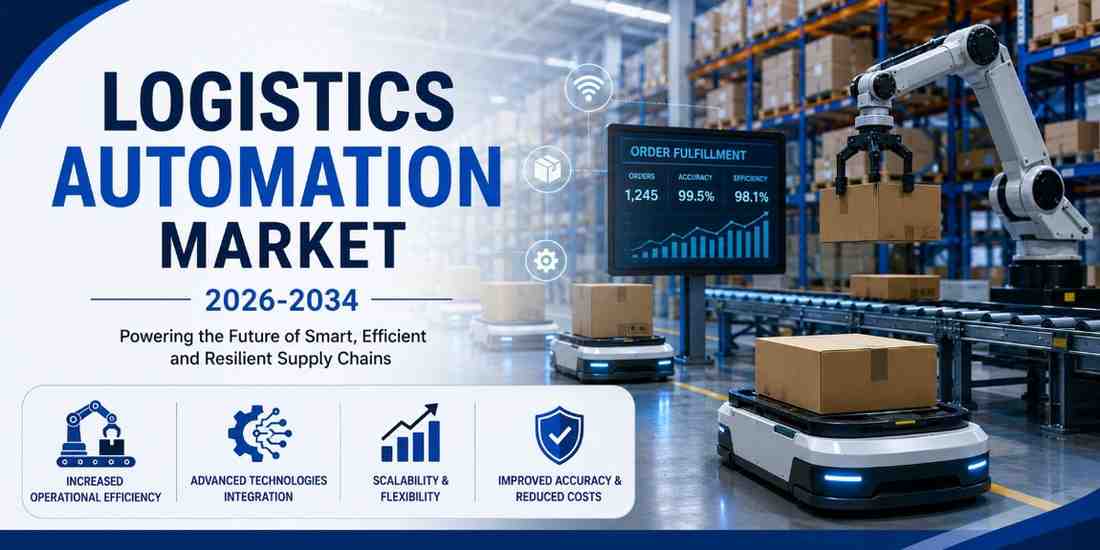


Scaling an eCommerce business is no longer about adding more tools or more people. It is about building systems that operate efficiently under pressure. As order volumes grow, channels expand, and customer expectations rise, operating costs can spiral fast. Manual processes break first. Fragmented systems follow.
Automation changes this equation.
When implemented correctly, automation reduces eCommerce operating costs by removing repetitive work, minimizing errors, improving system coordination, and enabling leaner operations at scale. This is not basic workflow automation. This is enterprise-grade automation built on APIs, data pipelines, and composable architectures.
This article breaks down how automation drives cost reduction across modern eCommerce operations. It focuses on real scaling challenges and shows where automation creates measurable financial impact.
Manual work is the most expensive hidden cost in eCommerce. It grows quietly and scales poorly.
Many growing eCommerce businesses still rely on people to:
Sync orders across systems
Update inventory manually
Reconcile payments
Manage fulfillment exceptions
Generate operational reports
Each manual step introduces labor costs, delays, and errors. These costs compound as order volume increases.
Automation replaces manual intervention with deterministic system behavior.
High-impact automation areas include:
Order ingestion and validation
Inventory updates across channels
Payment confirmation and reconciliation
Fulfillment routing and status updates
These workflows are best automated using API-based orchestration. Orders flow between systems in real time without human touchpoints.
APIs allow systems to communicate directly. They eliminate the need for manual exports, uploads, or reconciliation.
Examples include:
Order APIs connecting storefronts to OMS platforms
Inventory APIs syncing stock levels across warehouses
Payment APIs confirming transaction states instantly
When APIs replace manual workflows, labor costs drop. Error rates fall. Processing speed increases.
Fewer operations staff required per order
Reduced overtime during peak demand
Lower training and onboarding costs
Faster order cycles with less rework
Automation creates operational leverage. The business processes more volume without increasing headcount.
Errors are expensive. In eCommerce, they show up everywhere.
Manual and semi-automated systems lead to:
Incorrect inventory availability
Duplicate or lost orders
Fulfillment mismatches
Incorrect pricing or promotions
Delayed refunds
Each error creates downstream costs. Support tickets increase. Refunds rise. Customer trust erodes.
Automation enforces consistency.
Rules engines and validation layers ensure that data is checked before it moves forward. AI and logic-based automation identify anomalies early.
Examples include:
Order validation rules rejecting incomplete data
Inventory locks preventing overselling
Automated pricing checks across channels
Payment status verification before fulfillment
Modern eCommerce systems use event-driven architectures. Events trigger automated responses.
For example:
An order placed event triggers inventory reservation
A payment failed event pauses fulfillment
A shipment delayed event triggers customer notification
These automated reactions prevent errors from escalating into costly incidents.
Instead of manual monitoring, systems expose exception states through APIs. Operations teams act only when intervention is required.
This reduces:
Support workload
Refund processing costs
SLA penalties
Brand damage
Fewer errors mean fewer expensive fixes.
Inventory mismanagement is one of the largest cost drivers in eCommerce.
Without automation, businesses face:
Overstocking
Stockouts
Emergency restocking
High holding costs
Lost sales
Inventory errors ripple across the entire operation.
Automation ensures inventory data stays accurate across systems.
API integrations connect:
Warehouses
Marketplaces
Storefronts
ERP systems
Inventory updates happen in real time. There is no lag. No guesswork.
Automation also reduces fulfillment costs by routing orders intelligently.
Rules and AI models determine:
Nearest fulfillment center
Lowest shipping cost
Fastest delivery option
Inventory availability
This logic runs automatically at order time.
Shipping providers, 3PLs, and carriers integrate via APIs. Labels are generated automatically. Tracking updates flow back without manual input.
Benefits include:
Lower shipping costs
Fewer fulfillment errors
Reduced warehouse labor
Faster delivery times
Automation turns fulfillment from a cost center into an optimized system.
The most powerful benefit of automation is non-linear scaling.
In manual environments, growth looks like this:
More orders require more people
More channels require more coordination
More regions require more overhead
Costs rise in direct proportion to revenue.
This model does not scale.
With automation, systems handle increased load automatically.
Examples include:
Order processing scales through APIs
Inventory sync scales through event streams
Customer notifications scale through messaging services
The cost per order decreases as volume grows.
An API-first approach decouples systems. Each service scales independently.
Key advantages:
No single bottleneck
Easier system upgrades
Lower integration maintenance costs
Faster innovation cycles
Automation built on APIs supports global expansion without reengineering operations.
Automation also improves cost forecasting. Processes behave consistently. Variability decreases.
This leads to:
Better financial planning
More accurate margin calculations
Fewer surprise operational expenses
Predictability is a cost advantage at scale.
Automation is not just about operations. It also reduces long-term technology costs.
Many eCommerce teams accumulate tools to patch gaps. Over time, this creates overlapping functionality and rising subscription costs.
Automation consolidates workflows into fewer systems.
APIs allow one system to orchestrate many functions. Redundant tools become unnecessary.
Automated systems are easier to maintain because:
Processes are documented in code
Behavior is repeatable
Changes are testable
This reduces reliance on tribal knowledge and manual fixes.
Monitoring and automation go hand in hand.
Automated alerts detect failures early. APIs expose system health. Teams respond faster with less effort.
This reduces:
Downtime costs
Emergency engineering work
Revenue loss from outages
Automation also reduces compliance costs.
Audit logs, access controls, and data flows are automated. Reporting becomes easier. Risk decreases.
This matters for enterprise eCommerce businesses operating across regions and regulations.
Automation is not about replacing people. It is about removing inefficiency from the system.
For eCommerce businesses focused on scaling, automation is one of the most reliable ways to reduce operating costs without sacrificing performance or customer experience.
The greatest savings come from:
Eliminating manual work
Preventing costly errors
Optimizing inventory and fulfillment
Scaling without linear cost growth
Reducing long-term system complexity
When built on API-driven architectures, automation becomes a strategic advantage. It lowers costs today and protects margins tomorrow.
For enterprises planning long-term growth, automation is not optional. It is foundational.

© 2025 Crivva - Hosted by Airy Hosting Managed Website Hosting.