

How skillfully raw materials are mixed can determine the quality of a surface finish in the competitive field. High-efficiency powder coating mixers are essential for modern manufacturers who want consistent color, texture, and durability. A homogeneous blend of resins, pigments, and additives is essential for architectural coatings, automotive finishes, and industrial protective layers.
This article discusses how modern mixing technology handles problems in powder coating production. We will further discuss how equipment aspects drive consistency to improve your compounding process and why cooling mixers for compounding are crucial for material integrity. You’ll leave with tips to improve powder coating quality and efficiency.
Powder coating formulas are surprisingly complicated. Powder coatings require accurate mechanical dispersion of solid particles. Blend must accomplish the following:
Traditional mixing often fails. Low-intensity tumble mixers preserve agglomerates, but high shear heats thermosetting polymers. Here, specialized equipment is essential.
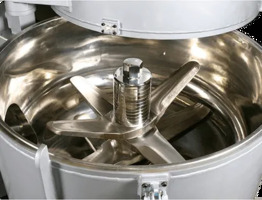
An industrial high-intensity mixer for pigment controls heat generation to overcome these issues. High-speed rotors provide intense turbulence to break down pigment complexes and control temperature rise accurately. A fully dispersed, free-flowing powder is ready for extrusion and grinding.
The most important step in powder coating is pigment dispersion. Poorly scattered pigments can cause visual flaws, weak colors, and bad weathering performance. To work, high-intensity mixers need mechanical shear and the right shape of the vessel.
Key operational factors:
In modern systems, variable-frequency motors let operators adjust the industrial high-intensity mixer for pigments. You may need to be more careful with organic pigments than with inorganic ones, and you need to be even more precise with metallic flakes to keep them in the right position.
Facilities that use these better mixing methods report a higher first-pass color acceptance rate and a lower rework rate.
Professional powder coating differs from amateur due to temperature management. Many powder coatings contain thermosetting polymers that crosslink at 50–60°C (122–140°F). Once started, this reaction is irreversible and destroys the batch.
Cooling mixers for compounding ensure the perfect dispersion and rapidly lower the material temperature. After high-intensity mixing, cooled jackets and specialized agitators lower powder temperatures to safe limits in minutes.
Cooling has further benefits:
Unlike less advanced installations, integrated cooling-mixer systems maintain steady-state processing for continuous output.
Considering your production needs is key to selecting mixing technology. Consider these elements:
If you want more specific advice on how to choose compounding equipment, look into plastic compounding mixers for tough jobs in industry.
Even the best equipment needs to be used correctly to work. Put these excellent practices in your facility:
Many processors have found that Proven Mixing Solutions for PVC work well for powder coating, which needs very precise temperature control and a lot of shear.
Investing in high-efficiency mixing equipment yields benefits that extend beyond just product quality.
How plastic compounding solutions improve product quality can help manufacturers realize the full impact of process changes and provide useful powder coating analogs.
High-efficiency powder coating mixers are more than capital equipment; they underpin profitable surface finishing. Manufacturers reduce coating performance variability by investing in extensive pigment dispersion and accurate temperature management technologies.
High-quality powder coatings start in the mixing room. Prioritize powder coating formulation technology like controlled shear, rapid cooling, and repeatability when updating or expanding production.
Ready to upgrade your powder coating? Compare your mixing skills to these criteria, and see how sophisticated plastic compounding solutions can solve your production problems. Proper mixing technology pays off in every bag of powder you ship and every satisfied customer who applies your coatings to their products.

© 2025 Crivva - Hosted by Airy Hosting Managed Website Hosting.