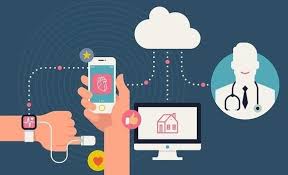



Electronic Health Records were introduced to simplify clinical documentation, yet for many clinicians, EHR systems have become a source of frustration rather than efficiency. Poor usability, disconnected systems, and repetitive data entry often slow down care delivery and increase cognitive load. The real value of digital health platforms emerges only when systems work together seamlessly. This is where ehr integration services play a critical role, not just in data exchange, but in shaping a better clinician experience.
Improving clinician UX is no longer a “nice to have.” It directly impacts productivity, quality of care, and long-term provider satisfaction. Thoughtfully designed integrations can transform EHRs from rigid record-keeping tools into intuitive clinical assistants.
Clinicians spend a significant portion of their day navigating screens instead of engaging with patients. Multiple logins, fragmented patient data, and non-intuitive workflows remain common issues. These challenges are rarely caused by the EHR itself alone; they stem from poor connectivity between clinical, administrative, and diagnostic systems.
When lab systems, imaging platforms, pharmacy software, and billing tools operate in silos, clinicians are forced to switch contexts repeatedly. This fragmentation contributes to clinician burnout and increases the risk of errors. Solving this problem requires more than UI redesign—it demands deep, workflow-aware integration.
Effective ehr integration services focus on how clinicians actually work, not how systems are technically structured. The goal is to reduce friction at every step of the care journey.
A well-integrated EHR environment allows clinicians to:
Access complete patient records from a single interface
Avoid duplicate documentation
Receive relevant clinical data at the right moment
Spend less time on administrative tasks
When integration aligns with real-world clinical workflows, user experience improves naturally, without extensive retraining or process disruption.
One of the biggest mistakes healthcare organizations make is integrating systems without mapping clinical workflows. Integration should follow the clinician’s journey, from patient intake to diagnosis, treatment, and follow-up.
For example, integrating scheduling, clinical notes, and diagnostic results ensures that patient context is preserved throughout the encounter. This form of workflow optimization reduces unnecessary clicks and manual data searches.
Modern ehr integration services prioritize:
Contextual data visibility
Role-based interfaces
Automation of routine documentation
This approach allows clinicians to focus on decision-making rather than system navigation.
True interoperability is essential for improving clinician experience. Industry standards such as HL7 and FHIR enable consistent data exchange across platforms while maintaining data integrity.
FHIR-based APIs, in particular, support real-time data access and modular system design. This allows EHRs to pull only relevant information instead of overwhelming clinicians with excessive data.
When implemented correctly, interoperability reduces chart review time and supports smoother transitions of care. It also lays the foundation for scalable, future-ready EHR ecosystems.
Clinician UX is not just about speed—it’s about clarity. Even when data is integrated, poor presentation can negate its benefits. Integration must be paired with intelligent data filtering and prioritization.
High-quality ehr integration services ensure that:
Alerts are clinically relevant
Data is organized chronologically and contextually
Redundant information is minimized
This thoughtful data orchestration helps clinicians make faster, more confident decisions while minimizing alert fatigue.
Clinical decision support systems (CDSS) are powerful tools, but when poorly integrated, they interrupt workflows. The key is embedding decision support naturally within the EHR experience.
Instead of pop-ups and intrusive alerts, integrated CDSS can provide inline recommendations based on patient data. This subtle integration improves adoption and enhances trust in digital tools.
By aligning decision support with existing workflows, ehr integration services help clinicians see technology as an ally rather than an obstacle.
Clinician experience is also affected by non-clinical tasks. Integrating billing, coding, and documentation systems reduces after-hours charting and administrative burden.
When clinical data flows automatically into revenue cycle systems, clinicians spend less time correcting errors or responding to billing queries. This seamless data flow improves accuracy while protecting valuable clinical time.
Such integrations are particularly valuable in large practices and hospital networks where administrative complexity is high.
Modern care delivery involves interdisciplinary teams. EHRs must support collaboration across departments and specialties without creating confusion.
Well-designed ehr integration services enable shared care plans, unified patient views, and secure communication across teams. This coordination improves continuity of care and reduces redundant testing or documentation.
Team-based integration also enhances accountability by ensuring that everyone works from the same, up-to-date patient information.
While EHRs focus on enterprise-wide records, EMR integration plays a vital role at the practice level. Seamless connectivity between EMRs and broader health systems ensures that clinicians retain flexibility without sacrificing data continuity.
This balance is especially important for specialty practices that rely on customized workflows. Integration allows them to maintain tailored interfaces while participating in larger care networks.
Improving clinician UX should be measurable. Healthcare organizations increasingly track metrics such as:
Time spent per patient record
Documentation completion rates
Clinician satisfaction scores
Successful ehr integration services demonstrate value through tangible improvements in these areas. Continuous feedback loops ensure integrations evolve alongside clinical needs.
EHR usability challenges will not be solved by interface redesign alone. Integration has become a core UX strategy—one that determines whether digital health tools support or hinder care delivery.
As healthcare systems grow more complex, the importance of thoughtful, standards-based integration will only increase. Organizations that invest in clinician-centric integration today are better positioned to deliver efficient, high-quality care tomorrow.
Another often-overlooked UX challenge is the inconsistency of data across connected systems. When information appears differently in lab portals, imaging tools, and patient records, clinicians lose trust in the system. Consistent data normalization during integration ensures that values, units, and terminology remain uniform across platforms. This consistency reduces second-guessing and allows clinicians to act confidently on the information presented.
Latency is another silent UX killer in clinical environments. Even a few seconds of delay when loading patient records or test results can disrupt clinical flow, especially in high-pressure settings like emergency departments. Optimized backend integrations with efficient APIs and caching mechanisms significantly reduce load times, making the system feel responsive and reliable during critical moments.
By focusing on workflows, interoperability, and intelligent data flow, ehr integration services can finally deliver on their promise: technology that works for clinicians, not against them.

© 2025 Crivva - Hosted by Airy Hosting Managed Website Hosting.