

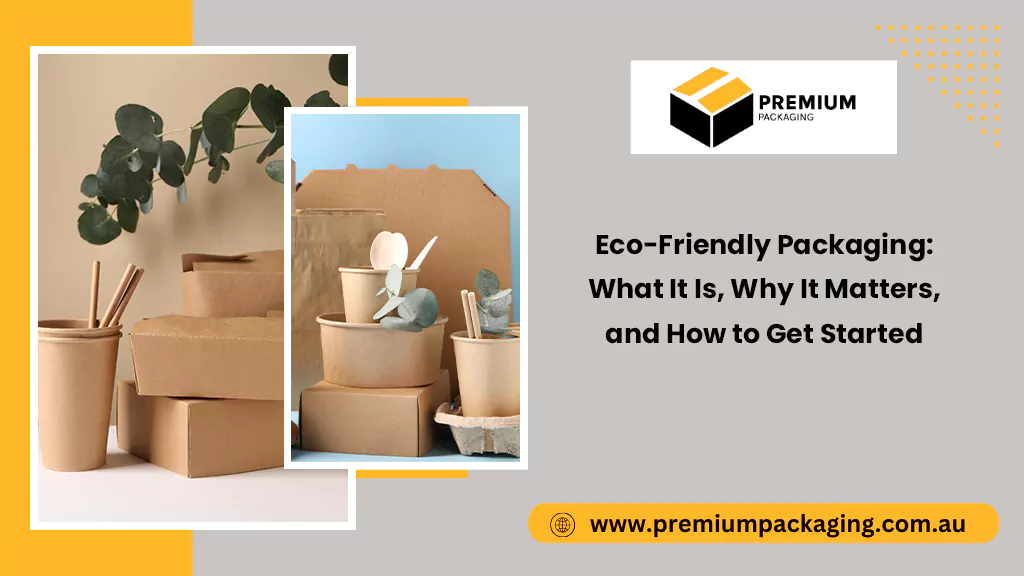
Eco-friendly packaging is packaging designed to reduce environmental impact while still protecting products and supporting efficient distribution. In Australia, it has moved from a niche preference to a mainstream business requirement, driven by consumer expectations, retailer pressure, and national sustainability goals.
This guide is written for Australian brands across eCommerce, food, retail, and manufacturing.
Eco-friendly packaging minimises environmental harm throughout its lifecycle. This includes sourcing, manufacturing, transporting, using, and disposing of materials.
Eco-friendly packaging commonly focuses on:
In Australia, environmentally friendly packaging must work with real recycling systems, not just sound good in theory. A package that cannot be recycled locally often ends up in a landfill, regardless of its material claims.
Sustainable packaging goes beyond eco-friendly packaging. It considers environmental impact alongside economic viability and long-term supply chain performance.
Sustainable packaging looks at:
Why it matters in Australia:
Sustainable packaging is not about finding a perfect solution. It is about making informed, measurable improvements that reduce harm without compromising product safety or business performance.
Australian buyers are more informed than ever. Many actively avoid brands that use excessive plastic or unclear packaging materials.
Key drivers behind the shift include:
Eco packaging has become a reputational factor. For many businesses, packaging is now part of brand trust, not just logistics.
There is no single type of eco-friendly packaging that suits every product. The best solution depends on product type, handling conditions, and customer expectations.
This is one of the most widely adopted sustainable packaging options in Australia.
Benefits include:
Recycled cardboard is commonly used in e-commerce, retail shipping, and outer packaging.
Food packaging must meet strict hygiene and safety requirements while still reducing environmental impact.
Common eco-friendly packaging for food includes:
Food safety always comes first. Sustainable improvements often focus on recyclability, lightweighting, or increased recycled content rather than removing plastic entirely.
Compostable packaging is designed to break down under specific composting conditions.
Examples include:
Key consideration:
Compostable packaging only works as intended if appropriate composting infrastructure is available. Clear labelling is essential to prevent contamination of recycling streams.
Rigid plastic packaging can still be environmentally responsible when designed correctly.
Advantages:
Rigid plastic packaging remains essential for many food, personal care, and household products.
Paper-based flexible packaging offers an alternative to plastic films in some applications.
Benefits:
Barrier performance must be carefully matched to product needs, especially for food- or moisture-sensitive products.
Reusable packaging focuses on extending the product lifecycle rather than disposal.
Examples include:
Reusable systems work best in closed-loop models, subscriptions, or B2B supply chains.
Choosing eco-friendly packaging is not about selecting the greenest-sounding option. It is about finding the right balance between sustainability, protection, and practicality.
Key questions to ask:
Packaging that fails in transit creates more environmental harm through returns, replacements, and additional transport.
Some eco-friendly materials cost more per unit.
How to manage:
Often, optimised packaging offsets material costs through lower freight and damage rates.
Customers may not know how to dispose of packaging correctly.
How to manage:
Simple packaging structures are usually the most effective.
Businesses sometimes worry that eco packaging will not protect products.
How to manage:
Sustainable packaging should never compromise product safety.
Some sustainable materials have longer lead times or limited availability.
How to manage:
Sustainable packaging delivers tangible business benefits when done correctly.
Customers reward brands that take responsibility, especially when sustainability claims are transparent and practical.
Optimised packaging often:
Over time, this can reduce overall packaging spend.
Many retailers now require suppliers to meet sustainable packaging standards as part of supplier agreements.
Sustainable packaging helps businesses stay ahead of regulatory changes and consumer expectations.
Packaging is often the first physical interaction customers have with a brand. Sustainable packaging creates a positive first impression.
Switching to environmentally friendly packaging does not need to be disruptive or expensive.
Premium Packaging supports Australian businesses by:
A practical approach allows brands to improve sustainability without risking product integrity or customer satisfaction.
More packaging is being made with recycled inputs rather than just being recyclable.
Reducing material thickness while maintaining performance lowers resource use and freight emissions.
Fewer materials and coatings improve recyclability and reduce waste.
Consumers expect clear, honest communication about sustainability claims.
Not all eco-packaging performs equally well in real-world systems.
In Australia:
Packaging choices should reflect what actually happens after disposal, not just design intent.
A step-by-step approach works best.
Start by:
Even small changes can lead to meaningful environmental and commercial gains.
Eco-friendly packaging in Australia is about progress, not perfection. Brands that focus on realistic improvements protect their products, reduce waste, and strengthen customer trust.
The most effective eco packaging strategies combine environmental responsibility with practical business thinking.
Know more https://premiumpackaging.com.au/blog/eco-friendly-packaging-australia/

© 2025 Crivva - Hosted by Airy Hosting Managed Website Hosting.