

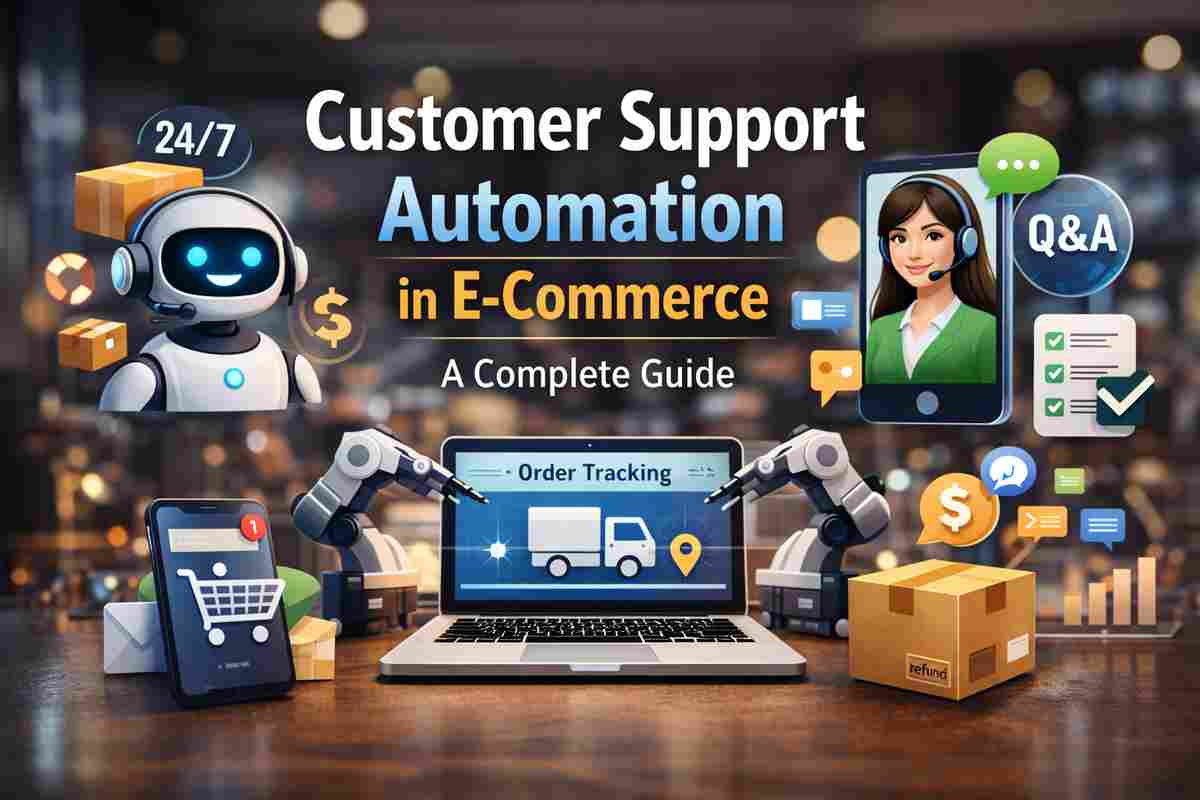
Customer expectations in e-commerce have changed dramatically over the past decade. Fast shipping and competitive pricing are no longer enough. Today’s shoppers expect instant responses, personalized assistance, and seamless problem resolution — available 24/7.
For growing e-commerce brands, meeting these expectations manually is nearly impossible. That’s where customer support automation becomes a strategic advantage.
Automation is no longer about replacing human agents. It’s about enhancing speed, consistency, scalability, and customer satisfaction — while reducing operational costs.
This guide explores how customer support automation works, its impact on conversions and retention, and how modern solutions like are transforming the support experience.a
What Is Customer Support Automation?
Customer support automation refers to the use of artificial intelligence (AI), machine learning, chatbots, voice assistants, and workflow automation tools to handle customer inquiries with minimal human intervention.
In e-commerce, automation typically handles:
Instead of waiting in long queues, customers receive immediate assistance — often in seconds.
Why Automation Matters in E-Commerce?
E-commerce operates at scale. As order volumes grow, so do customer queries. Without automation:
Automation addresses these challenges by creating an always-available support layer.
Online shoppers browse at all hours. Automated systems ensure customers receive support even outside business hours.
This is especially critical for global brands serving multiple time zones.
Speed directly influences satisfaction. Studies consistently show that customers are more likely to remain loyal when issues are resolved quickly.
Automation reduces first response time from hours to seconds.
Hiring and training support agents is expensive. Automation handles repetitive, high-volume queries so human agents can focus on complex cases.
This improves efficiency without sacrificing service quality.
Core Technologies Behind Support Automation
Modern customer support automation combines several technologies:
Chatbots handle text-based inquiries on websites and mobile apps. They:
Unlike early scripted bots, modern systems use natural language processing (NLP) to understand intent.
Voice Assistants
Voice-driven support is gaining traction, especially as consumers become accustomed to platforms like Amazon Alexa, Google Assistant, and Apple Siri.
Voice automation allows customers to:
This creates a hands-free, frictionless support experience.
This is where intelligent Voice Agents for E-Commerce become transformative — enabling conversational support that feels natural while driving operational efficiency.
Automated Ticket Routing
Automation systems can analyze the content and urgency of incoming tickets and assign them to the appropriate department automatically.
This eliminates internal delays and improves resolution time.
Workflow Automation
Behind the scenes, automation can:
The result is a streamlined support pipeline.
Benefits Beyond Cost Savings
Many brands implement automation for efficiency. However, its impact extends much further.
Automation ensures:
This builds trust and reliability.
Increased Conversions
Customer hesitation often leads to abandoned carts. If a shopper has a quick question about sizing, return policies, or delivery timelines, immediate support can prevent drop-offs.
Automated support during checkout reduces friction and increases completed purchases.
Higher Customer Retention
Fast and accurate issue resolution increases loyalty. Returning customers are more profitable than new acquisitions.
Support automation strengthens post-purchase engagement and repeat buying behavior.
Key Use Cases in E-Commerce
“Where is my order?” is one of the most common support questions.
Automation can instantly retrieve order status and provide updates without agent involvement.
Automated systems can validate purchase data, generate return labels, and initiate refunds — reducing manual workload.
When customers need help choosing products, AI-powered support can suggest options based on preferences and browsing behavior.
Voice-enabled solutions elevate this by guiding customers conversationally through product discovery.
Automated messages can remind users of abandoned carts or provide support if checkout issues occur.
Proactive assistance increases recovery rates.
Best Practices for Implementing Support Automation
Identify repetitive questions and automate them first. This delivers quick ROI.
Maintain Human Escalation Paths
Automation should not trap users. Provide seamless transitions to human agents when needed.
Use Conversational Design
Poorly designed bots frustrate users. Natural language and contextual responses are essential.
Integrate With Backend Systems
Automation must connect with:
Disconnected systems lead to inconsistent information.
Monitor and Optimize
Track performance metrics such as:
Continuous optimization ensures long-term success.
Common Mistakes to Avoid
Automation should enhance experience — not complicate it.
The Future of Customer Support in E-Commerce
The next phase of support automation will be proactive rather than reactive.
AI systems will:
Voice, chat, and predictive analytics will merge into unified conversational ecosystems.
E-commerce brands that adopt advanced conversational systems early will gain a competitive advantage in customer satisfaction and operational scalability.
Final Thoughts
Customer support automation is no longer optional for growing e-commerce brands. It is a strategic necessity.
When implemented correctly, automation:
The key is balance intelligent automation with human empathy.
As consumer expectations continue to rise, brands that invest in scalable, conversational support systems, including advanced voice solutions, will be best positioned to deliver seamless, high-performing shopping experiences.
Customer support automation in e-commerce uses AI, chatbots, voice assistants, and workflow tools to handle customer inquiries without constant human involvement. It helps manage order tracking, returns, FAQs, and account updates instantly, improving response speed and scalability.
Automation improves customer satisfaction by reducing wait times, providing 24/7 availability, and ensuring consistent, accurate responses. Faster issue resolution increases trust and strengthens brand loyalty.
Yes. Instant responses during product browsing or checkout reduce hesitation and cart abandonment. When customers quickly get answers about sizing, delivery timelines, or return policies, they are more likely to complete their purchase.
No. Automation is designed to handle repetitive, high-volume queries while routing complex or sensitive issues to human agents. This improves efficiency while maintaining personalized customer care.
Modern systems use:
Artificial Intelligence (AI)
Natural Language Processing (NLP)
Machine Learning
AI-powered chatbots
Voice assistants
Workflow automation tools
These technologies work together to deliver intelligent, conversational support.
Common challenges include:
Over-automating complex cases
Poor conversational design
Lack of backend integration
Weak personalization
Data security compliance gaps
Proper planning and testing help avoid these issues.
Start by identifying high-volume repetitive queries such as order tracking or returns. Implement chatbot or voice automation for those areas first, integrate systems with CRM and order management tools, and continuously monitor performance metrics like CSAT and resolution time.

© 2025 Crivva - Hosted by Airy Hosting Managed Website Hosting.