


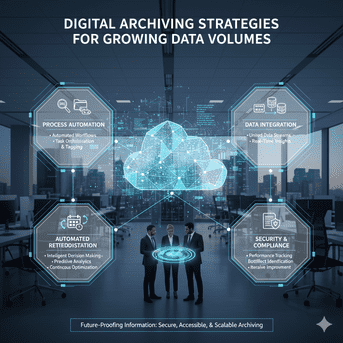
In today’s fast-paced digital world, businesses are generating more data than ever before. From transactional records to customer communications, operational documents, and beyond, this data is critical to decision-making, compliance, and overall business success. However, as data volumes grow, managing and storing this information securely and efficiently becomes a major challenge. Digital Archiving provides a strategic solution to this challenge, allowing organizations to securely store, organize, and manage vast amounts of data while ensuring compliance and enabling easy retrieval.
As organizations scale and accumulate more data, the need for a robust digital archiving strategy becomes more apparent. A well-designed archiving system not only improves efficiency but also helps businesses navigate the complexities of data management, security, and compliance. In this blog, we’ll explore key strategies for digital archiving in the context of growing data volumes and how organizations can optimize their archiving practices.
As businesses collect more data across multiple systems and platforms, it becomes increasingly difficult to manage, store, and access it effectively. Storing all data in active systems is expensive, inefficient, and can lead to slower system performance. Additionally, businesses need to ensure that their data is secure and compliant with industry regulations, which can vary depending on the sector.
Digital Archiving offers a solution by providing a centralized, secure, and organized storage system for all non-essential data. Archiving allows businesses to store inactive or historical data separately from operational systems, reducing the load on critical systems and freeing up valuable resources. This approach ensures that data remains accessible, compliant, and protected from data loss, theft, or corruption.
With the right digital archiving strategy, organizations can also maintain data for compliance purposes while ensuring that it’s easy to retrieve when needed, whether for audit purposes, legal inquiries, or business analysis.
As businesses grow, so do their data management needs. Below are key strategies for implementing effective Digital Archiving to address the challenges posed by increasing data volumes.
One of the most important aspects of any digital archiving strategy is developing a data retention policy. A clear policy defines how long different types of data should be retained and when it should be archived or deleted. This policy should be tailored to meet industry regulations and business needs.
For example, financial records may need to be stored for seven years to comply with tax laws, while customer communications may need to be retained for shorter periods. By defining retention periods for various types of data, businesses can ensure compliance while keeping their archives organized and manageable.
In addition, a good retention policy helps businesses reduce unnecessary data storage costs by eliminating old or irrelevant files and freeing up space for more important data.
Manually sorting and archiving data is time-consuming, error-prone, and inefficient. Digital Archiving solutions can automate much of this process, automatically classifying and storing data based on predefined rules and metadata. This ensures that the right data is archived at the right time without requiring manual intervention.
For example, an automated system might archive financial records after 30 days of inactivity, or it could move emails containing sensitive information to a secure archive for long-term retention. Automation helps ensure consistency in the archiving process and reduces the risk of human error.
In addition to improving efficiency, automation can improve data accessibility by tagging and categorizing archived records. This makes it easier for teams to search for and retrieve archived data when needed, saving valuable time.
As businesses scale and data volumes grow, cloud-based Digital Archiving solutions offer scalability, flexibility, and cost-efficiency. Cloud storage allows businesses to store vast amounts of data offsite, reducing the need for on-premises storage infrastructure and the associated maintenance costs.
Cloud-based archiving solutions also provide remote access, allowing teams to retrieve archived data from anywhere with an internet connection. This is particularly important for businesses with distributed or remote teams, as it enables faster access to archived information regardless of location.
Additionally, cloud archiving solutions often come with built-in redundancy and data protection, ensuring that archived data is secure and protected against data loss or system failures.
One of the top priorities when implementing Digital Archiving is ensuring that archived data remains secure and compliant with industry regulations. Archived data may contain sensitive information, such as customer data, financial records, or intellectual property, and it must be protected from unauthorized access, data breaches, or corruption.
To maintain security, organizations should use encryption, access control, and multi-factor authentication (MFA) to protect archived data. This ensures that only authorized individuals can access or modify archived records. Additionally, archived data should be stored in secure, compliant environments that adhere to industry standards such as GDPR, HIPAA, or SOC 2.
Regular audits and monitoring of archived data can also help identify and mitigate potential security risks, ensuring that the archiving system remains secure and compliant over time.
As organizations evolve and their data management needs change, it’s important to regularly review and update Digital Archiving practices. This includes revisiting retention policies, updating security measures, and ensuring that the archiving system continues to meet business and regulatory requirements.
For example, as new data privacy regulations are enacted, businesses may need to adjust their archiving processes to remain compliant. Regular reviews also ensure that the archiving system is optimized for efficiency, allowing businesses to scale their archiving solutions as needed.
A major benefit of Digital Archiving is the ability to quickly search and retrieve archived documents when needed. However, without a well-organized archiving system and efficient search capabilities, finding specific records in a large archive can become challenging.
To optimize search and retrieval, businesses should implement robust indexing and metadata tagging systems. This allows employees to easily search for documents based on keywords, dates, file types, or other criteria. Fast, reliable search functionality ensures that archived data can be accessed in seconds, improving productivity and reducing downtime.
As data volumes continue to increase, Digital Archiving becomes an essential strategy for businesses looking to efficiently manage, store, and retrieve critical data. By implementing a well-defined archiving policy, automating processes, leveraging cloud-based solutions, and ensuring data security, businesses can scale their archiving efforts to accommodate growing data needs while remaining compliant with industry regulations.
Digital archiving not only improves operational efficiency but also provides long-term protection for valuable business records, ensuring that important data is never lost or compromised. A well-executed archiving strategy helps businesses stay organized, reduce costs, and maintain access to the information that drives success. As your organization grows, digital archiving will continue to be a vital tool in managing the complexities of modern data management.

© 2025 Crivva - Hosted by Airy Hosting Managed Website Hosting.