


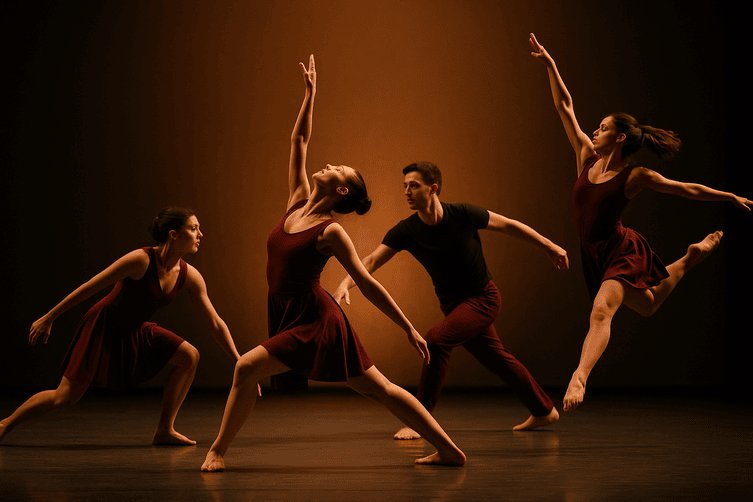
Dance styles continue to evolve as performers, educators, and audiences look for movement forms that blend creativity, physical skill, and expressive freedom. One style that has gained steady attention in recent years is dance cirque. Sitting at the intersection of contemporary dance, acrobatics, and theatrical movement, dance cirque offers a distinctive approach to performance that differs in both structure and intent from more traditional dance disciplines.
Rather than focusing solely on codified steps or rigid technique, dance cirque centres on how the body moves through space, how strength and flexibility support expression, and how movement tells a story. For readers curious about modern performance trends, understanding what sets dance cirque apart helps explain why it continues to appear in youth programs, stage productions, and creative training environments.
At its core, dance cirque is a hybrid movement discipline. It draws on contemporary dance foundations while incorporating floor-based acrobatics, balances, controlled inversions, and dynamic transitions. Unlike classical circus arts, dance cirque does not rely on apparatus such as silks, hoops, or trapeze. The emphasis remains on the dancer’s body, control, and connection to the choreography.
This blend allows performers to move fluidly between grounded dance phrases and moments that demand upper body strength, core stability, and spatial awareness. The result is a style that looks athletic yet expressive, technical yet creative. Dance cirque routines often feel organic rather than segmented, with acrobatic elements integrated seamlessly into the flow of movement.
For readers exploring different movement forms, this approach aligns closely with broader trends in creative education and performance culture. Similar discussions around hybrid art forms and modern movement practices appear in articles focused on evolving performance disciplines, such as those found in arts and culture sections on platforms like https://crivva.com/.
Traditional dance styles such as ballet, jazz, and even contemporary dance usually follow structured techniques with defined movement vocabularies. While creativity plays a role, there is often a strong emphasis on form, alignment, and repetition of established steps.
Dance cirque takes a different path.
Dance cirque requires dancers to develop strength in areas not always prioritised in traditional dance classes. Upper body conditioning, grip strength, controlled weight transfers, and safe inversion techniques become part of regular training. Movements may travel closer to the floor, involve rolling patterns, or shift weight in unconventional ways.
This physical diversity does not replace dance technique but builds upon it. A strong dance foundation supports control and artistry, while acrobatic skills add another layer of movement possibility. For dancers already trained in contemporary or jazz styles, dance cirque may feel like an expansion rather than a departure.
Another key difference lies in how choreography is approached. Dance cirque often encourages exploration, improvisation, and personal interpretation. Rather than working toward uniformity across a group, dancers may be guided to adapt movements to their own strengths and movement quality.
This approach reflects broader educational ideas around creative development and embodied learning, topics commonly discussed in general creative education articles such as those available via https://crivva.com/Dashboard/education-and-learning.
Dance cirque has found a place within contemporary performance settings where audiences value originality and visual storytelling. It appears in theatre productions, dance festivals, and youth showcases where the line between dance and physical theatre continues to blur.
One reason for its appeal is its adaptability. Dance cirque routines may be abstract, narrative-driven, or emotionally focused, depending on the choreographer’s intent. The style lends itself well to storytelling through movement, often without the need for elaborate sets or props.
As performance culture shifts toward experiences that feel immersive and emotionally engaging, dance cirque offers a language that communicates through both athleticism and nuance. This mirrors wider trends seen across creative industries, where hybrid forms are increasingly recognised as legitimate and expressive art practices.
While dance cirque encourages creativity, structured training remains important. The physical demands of the style mean that safe progression, conditioning, and technique are essential. Learning how to transfer weight, manage momentum, and exit movements safely helps reduce injury risk and builds long-term confidence.
Structured classes provide an environment where dancers may develop these skills gradually under guidance. In Australia, formal programs such as Canberra Dance Cirque Classes for All Skill Levels offer an example of how dance cirque may be taught within a studio setting, combining creative exploration with physical foundations. Referencing such programs within broader discussions helps contextualise how the style functions in real-world training environments without shifting into promotion.
Dance cirque appeals to a wide range of movers, not only those with extensive dance backgrounds.
Contemporary and jazz dancers often find dance cirque a natural extension of their training. The style builds on familiar movement principles while introducing new physical challenges that enhance overall body awareness.
For those curious about acrobatic movement but less interested in aerial equipment, dance cirque offers an accessible pathway. The focus on floor-based skills allows dancers to explore strength and inversion within a grounded context.
Dance cirque may also suit individuals drawn to movement for creative expression rather than strict technique. Its emphasis on exploration and adaptability allows participants from varied backgrounds to engage with the style at their own pace.
The ongoing growth of dance cirque reflects broader cultural shifts toward interdisciplinary learning and creative flexibility. As performance training becomes more inclusive and varied, styles that bridge multiple disciplines naturally gain traction.
Dance cirque aligns with this direction by offering a framework where movement, strength, creativity, and storytelling coexist. Its adaptability ensures it remains relevant across different age groups and performance contexts, from recreational classes to staged works.
Discussions around these evolving creative pathways often feature in articles examining future-focused education and arts participation, similar to those curated within the creative development sections at https://crivva.com/.
Dance cirque is more than a trend or a fusion label. It represents a shift in how movement is taught, learned, and experienced. By blending dance technique with acrobatic skill and creative freedom, it challenges traditional boundaries while remaining grounded in physical discipline.
For readers interested in modern performance styles, understanding dance cirque offers insight into how the performing arts continue to adapt. Whether encountered on stage, in a studio, or through broader discussions of creative education, dance cirque reflects a movement language shaped by both tradition and innovation.

© 2025 Crivva - Hosted by Airy Hosting Managed Website Hosting.