

The integration of sculptural art into architectural and interior design projects has evolved dramatically over the past decade. No longer confined to museums or private collections, contemporary sculptures have become essential elements that define spaces, create focal points, and establish emotional connections between environments and their inhabitants. For architects and interior designers seeking to elevate their projects, understanding the strategic role of sculptural elements represents a crucial aspect of modern spatial design.
Contemporary sculpture serves multiple functions within architectural and interior design contexts. Beyond aesthetic appeal, these art objects contribute to wayfinding, establish brand identity, influence spatial perception, and create memorable experiences for occupants and visitors. The careful selection and placement of sculptural elements can transform ordinary spaces into extraordinary environments that resonate with purpose and meaning.
Modern designers increasingly recognize that sculpture acts as three-dimensional poetry within space. Unlike two-dimensional artwork, sculptures interact with light, shadow, and spatial volumes in dynamic ways that change throughout the day and from different viewing angles. This dimensional quality makes sculpture particularly valuable in open-plan environments, atriums, and transitional spaces where traditional art forms might lack sufficient impact.
The choice of sculptural materials directly impacts both aesthetic outcomes and practical considerations such as durability, maintenance, and environmental appropriateness. Professional designers must evaluate materials based on project-specific requirements, including indoor versus outdoor placement, climate conditions, and long-term maintenance capabilities.
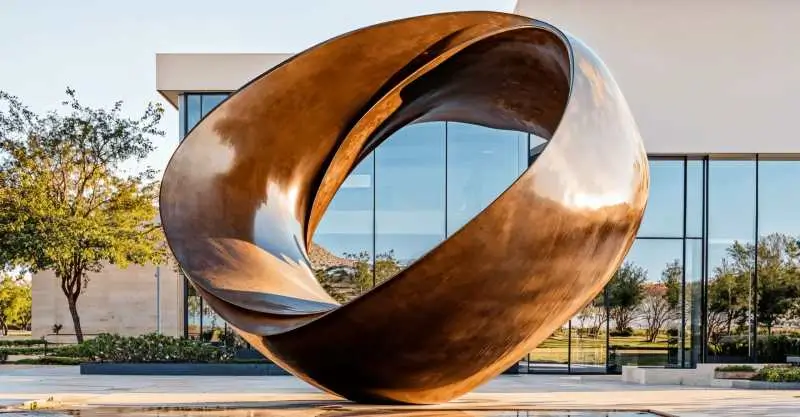
Corten steel has emerged as a favored material for exterior installations due to its distinctive weathering characteristics. This specialized steel develops a protective rust layer that prevents further corrosion while creating a warm, earthy patina that evolves over time. The material’s natural aging process appeals to designers seeking sustainable solutions that gain character rather than deteriorate with environmental exposure.
Stainless steel offers contrasting qualities that suit contemporary minimalist aesthetics. Its reflective properties create visual lightness and can make spaces appear larger through mirrored surfaces. The material’s inherent durability and corrosion resistance make it ideal for high-traffic public areas, coastal environments, and spaces requiring minimal maintenance protocols.
Bronze remains the classic choice for traditional and figurative works, offering rich color variations and proven longevity measured in centuries rather than decades. Interior designers working on heritage projects or spaces requiring historical continuity often specify bronze sculptures to establish visual dialogue with architectural periods and cultural contexts.
Fiberglass represents the modern solution for complex geometries and ambitious scales without prohibitive weight considerations. This composite material enables designers to realize intricate forms that would be structurally challenging or economically impractical in traditional materials. Its lightweight nature simplifies installation logistics, particularly for ceiling-mounted or suspended sculptural elements.
The positioning of sculptural elements within architectural compositions requires careful analysis of circulation patterns, sight lines, and spatial hierarchies. Professional designers understand that sculpture placement is never arbitrary but results from deliberate strategic decisions aligned with project objectives.
Lobby areas and entrance sequences present primary opportunities for sculptural intervention. These transitional zones establish the tone for entire projects, making them ideal locations for signature art pieces that communicate brand values, cultural identity, or design philosophy. Scale becomes particularly important in these contexts, as sculptures must command attention without overwhelming spatial proportions or interfering with circulation flows.
When specifying sculptures for entry areas, designers should consider viewing distances and approach angles. Pieces intended for frontal viewing require different compositional strategies than sculptures designed for circumnavigation. The relationship between ceiling heights and sculptural scale also demands attention, as insufficient clearance can create visual compression while excessive space may diminish impact.
Garden and park installations require sculptures that dialogue with natural elements while withstanding environmental exposure. Weather-resistant materials become non-negotiable specifications, with corten steel and stainless steel offering optimal durability characteristics. These materials maintain structural integrity and visual appeal despite continuous exposure to rain, temperature fluctuations, and ultraviolet radiation.
Landscape architects increasingly incorporate sculptural elements as focal points within carefully composed sight lines. Strategic placement along pathways creates discovery moments that enhance the pedestrian experience, while terminal vistas benefit from substantial sculptural presences that reward visual exploration. The interplay between organic landscape forms and geometric sculptural elements generates dynamic compositional tension that enriches outdoor environments.
Companies like arieteart.com specialize in creating weather-resistant sculptures specifically engineered for permanent outdoor installation. Their expertise in material selection and fabrication techniques ensures that exterior sculptures maintain aesthetic integrity while meeting practical durability requirements essential for landscape applications.
Determining appropriate sculptural scale represents one of the most challenging aspects of art integration in architectural projects. Undersized pieces disappear within generous spatial volumes, while oversized sculptures can dominate environments in counterproductive ways. Professional designers employ various strategies to evaluate scale relationships before committing to specific pieces.
Digital visualization tools enable accurate scale assessment through virtual placement within three-dimensional models. These previsualization techniques help design teams and clients understand spatial relationships before fabrication begins, reducing expensive specification errors. Physical mockups using inexpensive materials provide alternative assessment methods, particularly valuable for outdoor installations where digital representations may not capture environmental context accurately.
The relationship between human scale and sculptural dimensions influences emotional responses and functional circulation. Monumental sculptures create awe and establish landmark qualities, while human-scaled pieces encourage intimate engagement and detailed examination. Interior designers must balance these psychological effects with practical considerations such as furniture placement and traffic flow patterns.
Custom sculptural commissions offer architects and designers opportunities to create site-specific art pieces that respond directly to project requirements, contextual conditions, and client aspirations. The commissioning process requires clear communication, realistic timelines, and collaborative relationships between design teams and sculptural artists or fabricators.
Successful commissions begin with comprehensive design briefs that articulate functional requirements, aesthetic preferences, budget parameters, and installation constraints. These documents should specify material preferences, dimensional requirements, weight limitations, and maintenance expectations. Clear briefs minimize misunderstandings and enable artists to propose solutions aligned with project objectives.
Timeline coordination becomes critical when integrating custom sculptures into construction schedules. Production periods typically range from several weeks to several months depending on complexity, material choices, and fabrication methods. Designers must account for these lead times within master project schedules, often initiating commissioning processes during early design phases to ensure timely delivery.
Interior sculptural installations require different considerations than exterior placements. Climate control eliminates weathering concerns but introduces challenges related to scale perception, lighting design, and spatial integration within furnished environments.
High-end residential projects increasingly feature custom sculptural elements that express personal taste while establishing sophisticated aesthetic environments. Interior designers specify sculptures for various residential locations including entry foyers, stairwells, living areas, and private galleries. Material choices often favor bronze, polished metals, and elegant stone varieties that complement luxury finishes and refined decorative schemes.
Residential scale differs significantly from commercial contexts, requiring more intimate proportions that harmonize with domestic furniture and human-scale spaces. Tabletop sculptures and wall-mounted pieces offer versatile solutions that provide artistic interest without consuming valuable floor space in compact urban residences.
Commercial interiors utilize sculpture to reinforce brand identity, create memorable guest experiences, and distinguish properties within competitive markets. Hotel lobbies, corporate headquarters, and upscale restaurants deploy sculptural elements as signature features that guests associate with specific venues and brands.
These commercial applications often require larger scales appropriate to generous ceiling heights and expansive floor areas typical of hospitality and corporate architecture. Material durability becomes particularly important in high-traffic environments where sculptures endure continuous exposure to human contact and operational activities.
Working with experienced sculpture producers such as arieteart.com provides designers with access to specialized fabrication capabilities and material expertise essential for demanding commercial applications. Professional fabricators understand building codes, structural loading requirements, and installation logistics that ensure successful project outcomes.
Lighting represents a critical variable that dramatically affects sculptural perception and spatial impact. Professional lighting designers collaborate with architects and sculptural artists to develop illumination strategies that reveal form, create dramatic effects, and support overall design intentions.
Natural lighting creates dynamic sculptural experiences that change throughout daily cycles as sun angles shift and shadow patterns transform. Designers can exploit these temporal variations by positioning sculptures where natural light creates optimal viewing conditions during peak usage hours.
Artificial lighting offers precise control over sculptural presentation after daylight hours. Directional spotlights emphasize texture and three-dimensional form through controlled shadow patterns, while ambient illumination provides subtle background presence. Integrated lighting solutions embed illumination sources within sculptural elements themselves, creating dramatic effects particularly effective for evening exterior installations.
Art budgets within architectural projects vary dramatically based on project type, client priorities, and overall construction values. Industry standards suggest allocating between one and two percent of construction budgets toward art programs for commercial projects, though luxury residential and landmark public projects often exceed these percentages significantly.
Quality sculptural works represent long-term investments that appreciate in cultural and potentially financial value over time. Unlike many building components that depreciate, significant art pieces can increase in value while providing continuous aesthetic and experiential benefits throughout building lifecycles.
Designers should present art expenditures as strategic investments rather than decorative luxuries. Sculptural elements differentiate properties in competitive markets, create distinctive brand identities, and contribute to occupant satisfaction and employee retention in workplace environments. These tangible benefits justify art investments from business perspective beyond pure aesthetic considerations.
Contemporary design practice increasingly emphasizes environmental stewardship and sustainable material choices. Sculptural specifications should reflect these values through material selection, production methods, and long-term lifecycle considerations.
Durable materials such as bronze, stainless steel, and corten steel offer exceptional longevity that reduces replacement needs and associated environmental impacts. These materials typically contain significant recycled content and remain fully recyclable at end-of-life, supporting circular economy principles.
Local fabrication reduces transportation-related carbon emissions while supporting regional artistic communities and craft traditions. Designers should investigate fabricators within reasonable proximity to project sites when project budgets and quality requirements permit local sourcing.
Contemporary architectural and interior design practice recognizes sculpture not as optional decoration but as essential spatial element that shapes experiences, communicates values, and creates lasting impressions. Professional designers who master sculptural integration expand their creative capabilities while delivering enhanced value to clients and building occupants.
The successful incorporation of sculptural elements requires technical knowledge, aesthetic sensitivity, and collaborative relationships with skilled fabricators and artists. By approaching sculpture as integral architectural component rather than afterthought addition, designers create richer, more memorable environments that transcend purely functional requirements and achieve lasting cultural significance.
As design continues evolving toward more holistic approaches that prioritize human experience and emotional resonance, sculptural art will maintain and expand its essential role in creating meaningful places that inspire, comfort, and enrich the lives of those who inhabit and encounter them.

© 2025 Crivva - Hosted by Airy Hosting Managed Website Hosting.