

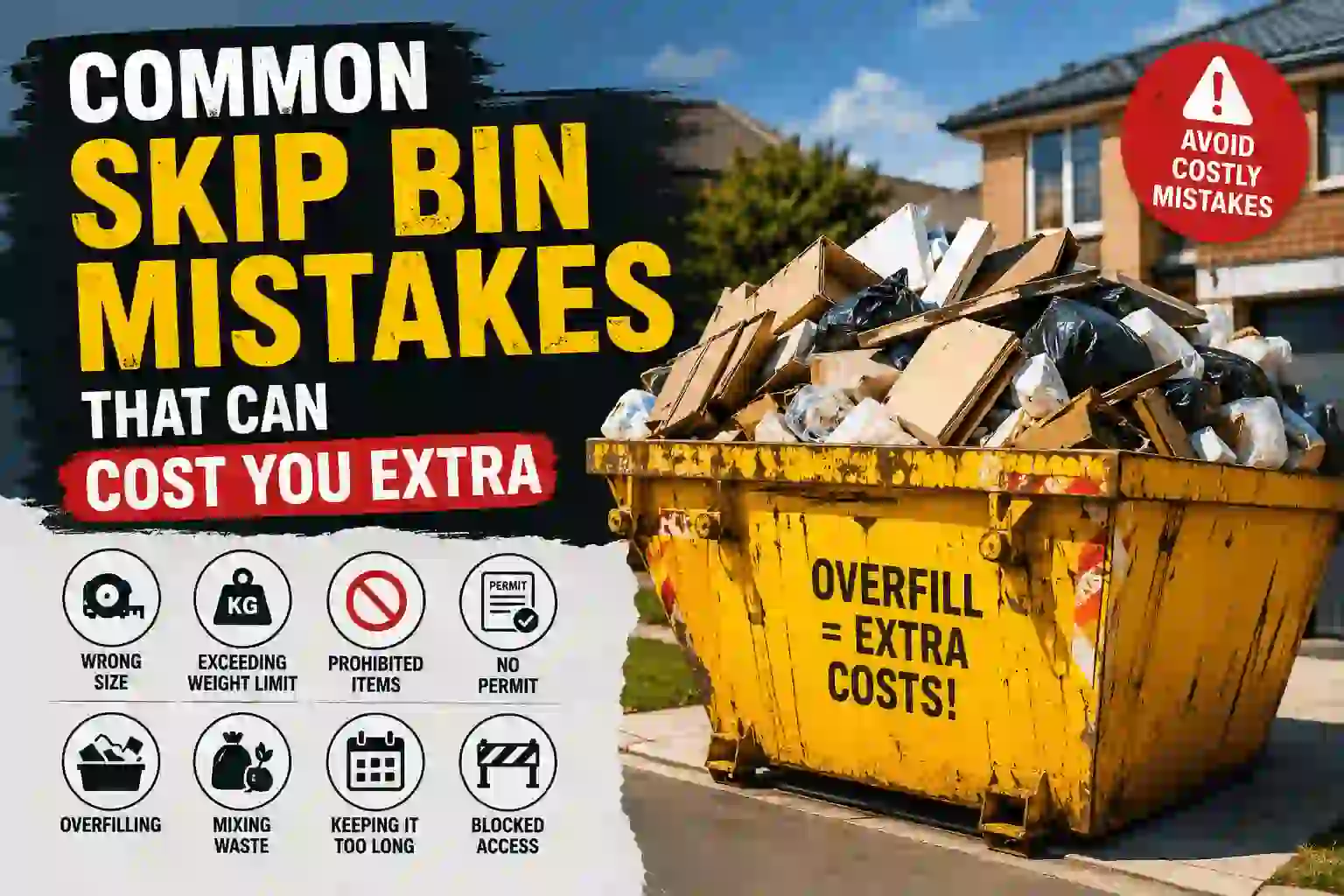
Hiring a skip bin is one of the easiest and most convenient ways to manage waste from home renovations, garden cleanups, moving house, construction projects, and general decluttering. However, many people underestimate the importance of using a skip bin correctly. A few simple mistakes can lead to unexpected fees, delays in collection, or even safety issues.
Whether you’re hiring a skip bin for the first time or have used one before, understanding the most common mistakes can help you save money and avoid unnecessary stress. In this guide, we’ll explore the skip bin mistakes that often result in additional costs and explain how to avoid them.
One of the most common and costly mistakes is selecting the wrong bin size.
Many customers try to save money by ordering a smaller skip bin than they actually need. Unfortunately, this often backfires. Once the bin is full, you’ll either need to hire a second bin or arrange an additional collection, both of which increase your overall costs.
On the other hand, hiring a bin that’s far too large means paying for space you don’t use.
Before booking, estimate the amount of waste you’ll generate. Consider the type of project you’re undertaking and discuss your requirements with your skip bin provider. Most companies can recommend the most suitable size based on your waste volume.
When in doubt, it’s often more cost-effective to choose a slightly larger bin rather than risk needing a second one.
Many people assume they can continue piling rubbish above the rim of the bin. However, overfilled skip bins are a major safety concern.
Transport regulations require skip bins to be loaded only up to the designated fill line. If waste extends above the rim, the driver may refuse collection until excess materials are removed.
This can result in:
Additional collection fees
Delayed pickup
Labour charges
Safety risks during transportation
Always load waste evenly and stop at the designated fill line. Break down bulky items where possible to maximise available space without exceeding height limits.
A skip bin may appear to have plenty of room left, but weight limits are just as important as volume limits.
Heavy materials such as:
Concrete
Bricks
Soil
Rocks
Tiles
Sand
can quickly exceed the allowed weight even if the bin isn’t full.
Many skip bin providers charge excess weight fees when the contents exceed the agreed limit.
Inform your provider about the type of waste you’re disposing of. If your project involves heavy materials, you may require a specialised skip bin designed for dense waste.
Separating heavy materials from general rubbish can also help reduce costs.
Not everything can legally be disposed of in a standard skip bin.
Many customers unknowingly throw prohibited items into their bins, leading to additional sorting charges or refusal of collection.
Common prohibited items include:
Asbestos
Paints and chemicals
Gas bottles
Batteries
Oils and fuels
Medical waste
Tyres
Hazardous materials
These items require specialised disposal methods under Australian environmental regulations.
Always check the provider’s list of accepted and prohibited items before loading the bin. If you’re unsure about a particular item, contact the company for guidance.
If your skip bin needs to be placed on public property such as a road, footpath, or council land, you may require a permit.
Many people only discover this requirement after the bin has already been delivered, resulting in fines or removal notices.
Check with your local council before booking a skip bin. Some skip bin companies can assist with permit applications, making the process much easier.
Whenever possible, place the bin on private property to avoid permit requirements.
Poor loading techniques can waste valuable space and force you to hire another bin.
Common loading mistakes include:
Throwing items in randomly
Leaving large gaps between materials
Failing to break down furniture
Not flattening cardboard boxes
These practices significantly reduce the amount of waste your bin can hold.
Load flat items first and place heavier materials at the bottom. Break down furniture, boxes, and bulky waste to maximise capacity.
Think of packing a skip bin like solving a puzzle—the more efficiently you arrange items, the more waste you’ll fit inside.
Many skip bin companies offer separate bins for different waste streams.
Mixing materials such as:
Green waste
Construction debris
Household rubbish
Recyclables
can increase disposal costs because sorting becomes more complicated.
In some cases, contamination can prevent recyclable materials from being processed correctly.
Separate waste whenever possible and choose the appropriate skip bin type for your project.
Dedicated bins for green waste or construction waste are often more affordable than mixed-waste options.
Most skip bin hire agreements include a standard rental period.
If you keep the bin beyond the agreed timeframe, daily extension fees may apply. These charges can add up quickly, especially if collection schedules become disrupted.
Plan your project carefully and schedule waste removal around your timeline.
If delays occur, contact the skip bin company as soon as possible. Many providers can arrange extensions at a lower cost if notified in advance.
Collection drivers need safe and clear access to remove the bin.
Vehicles parked nearby, construction materials, locked gates, or overhanging branches can prevent collection.
If the driver cannot safely access the bin, a failed collection fee may be charged.
Ensure there is sufficient clearance around the skip bin on collection day.
Move vehicles and obstacles beforehand and keep access routes clear.
Homeowners often underestimate how much waste renovation projects generate.
Even small projects such as bathroom upgrades or kitchen renovations can produce large amounts of:
Tiles
Timber
Plasterboard
Packaging materials
Fixtures and fittings
Running out of bin space midway through the project often results in extra collection and delivery charges.
Build a waste management plan before work begins.
Consider all demolition materials, packaging, and construction debris when estimating waste volume.
It’s generally more economical to hire a slightly larger bin from the start.
Skip bins are in high demand during busy periods, including weekends, holidays, and spring-cleaning seasons.
Leaving your booking until the last minute may limit your options and force you to pay higher rates for available bins.
Book your skip bin several days in advance, especially during peak periods.
Early booking provides better availability, more bin size options, and often better pricing.
Everyone wants affordable skip bin hire, but selecting the cheapest provider isn’t always the best decision.
Some low-cost services may have:
Hidden fees
Strict weight restrictions
Limited customer support
Delayed collections
Poor communication
What appears to be a bargain can end up costing more once additional charges are added.
Compare providers based on:
Transparent pricing
Customer reviews
Included weight allowances
Collection reliability
Customer support
A reputable skip bin company can often save you money by helping you avoid costly mistakes.
Skip bin hire is designed to make waste removal simple and stress-free, but avoidable mistakes can quickly turn a convenient solution into an expensive one.
Choosing the correct bin size, respecting weight limits, loading waste properly, and understanding local regulations are all essential steps in keeping your project on budget.
Before hiring a skip bin Darwin, take a few minutes to plan ahead and discuss your needs with your provider. A little preparation can help you avoid unexpected fees, maximise your bin’s capacity, and ensure a smooth waste removal experience from start to finish.

© 2025 Crivva - Hosted by Airy Hosting Managed Website Hosting.