

Clothing layering strategies for Left Ventricular Assist Device (LVAD) users represent a specialized branch of adaptive apparel design within the broader field of medical wearables. These strategies focus on balancing three critical requirements: effective concealment of external LVAD components, secure stabilization of driveline and controller hardware, and preservation of wearer comfort during daily activities.
An LVAD is a mechanical circulatory support system used in patients with advanced heart failure to assist the pumping function of the left ventricle Left Ventricular Assist Device. Because the device includes external driveline exits, controller units, and power sources, clothing must be intentionally structured to avoid tension, reduce visibility, and minimize physical irritation.
This article examines evidence-informed layering frameworks, real-world garment integration practices, and expert approaches used in medical wearables design. It also incorporates functional apparel solutions such as the heart warrior shirt and stabilization systems like the lvad stabilization belt to demonstrate practical implementation.
LVAD concealment is not purely aesthetic; it is a functional necessity that supports safety, device integrity, and psychological well-being.
Effective LVAD clothing systems aim to:
Clinical observations in heart failure rehabilitation programs indicate that poorly managed external device movement can increase discomfort and reduce patient mobility adherence Mayo Clinic Ventricular Assist Devices.
Layering systems for LVAD users follow structured biomedical textile principles rather than traditional fashion layering.
The base layer sits directly on the skin and must prioritize:
Medical-grade cotton blends and antimicrobial fabrics are commonly used in this layer.
The mid-layer provides mechanical stabilization for external LVAD components. It often integrates:
This layer is critical in reducing oscillation of the device during walking or bending movements.
The outer layer is responsible for visual discretion and environmental protection. Loose-fitting shirts, adaptive jackets, and modified streetwear silhouettes are commonly used.
Stabilization garments are central to reducing mechanical stress on LVAD components while improving concealment efficiency. These garments are engineered to anchor external device components close to the body, minimizing movement-related discomfort.
A key example of this integration is the medically adapted lvad stabilization belt, which is designed to secure controller units and reduce torque on driveline connections. Such belts are typically worn under or between clothing layers to maintain discreet support while preserving mobility.
In advanced layering systems, stabilization garments function as the structural “core,” allowing outer clothing to remain visually normal while maintaining medical safety standards.
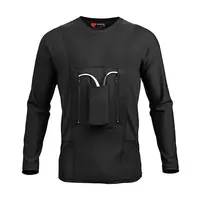
The heart warrior shirt represents a category of adaptive upper-body garments designed specifically for individuals living with advanced cardiac support devices.
These shirts typically incorporate:
When used in a layering strategy, the heart warrior shirt functions as either:
Its dual functionality makes it a cornerstone of LVAD wardrobe planning.
Despite advancements in medical textiles, several challenges remain:
Multiple clothing layers can trap heat around the device site, increasing discomfort and risk of irritation if moisture management is insufficient.
Improper layering can cause uneven load distribution, leading to shoulder strain or abdominal pressure points.
There is currently no universal standard for LVAD clothing design, leading to variability in garment quality and compatibility across device types Left Ventricular Assist Device.
Medical wearable design specialists and cardiac rehabilitation professionals emphasize several evidence-informed practices:
Stability reduces complications such as driveline tension injuries. Functional anchoring should always precede concealment goals.
Instead of relying on a single garment, professionals recommend modular combinations:
Regular inspection of contact areas is essential to prevent pressure injuries or infection risks.
Moisture-wicking and hypoallergenic fabrics significantly reduce dermatological complications in long-term wear.
Excessive compression can restrict airflow and increase discomfort without improving device stability.
Outer garments alone do not stabilize LVAD hardware, leading to increased mechanical stress.
Improper routing of driveline cables can lead to entanglement or accidental pulling incidents.
LVAD users vary significantly in body type, device configuration, and lifestyle needs, requiring personalized garment systems.
Clothing layering strategies for LVAD equipment concealment represent a critical intersection of medical engineering, textile innovation, and patient-centered design. Effective systems integrate stabilization tools such as the lvad stabilization belt, adaptive garments like the heart warrior shirt, and structured layering principles that prioritize safety and comfort.
When properly implemented, these strategies reduce mechanical stress on the device, improve skin health outcomes, and enhance psychological well-being. As LVAD technology continues to evolve, adaptive clothing systems will remain an essential component of holistic cardiac support care, bridging the gap between clinical function and everyday living.
Clothing layering reduces mechanical stress on external LVAD components, stabilizes driveline movement, and minimizes skin irritation by distributing weight across multiple garment layers.
A soft, breathable, antimicrobial fabric base layer is recommended to protect skin integrity and reduce infection risk around driveline exit sites.
While full concealment is challenging, strategic layering can significantly reduce visibility while maintaining safe device operation.
A stabilization belt secures external components close to the torso, reducing movement-induced stress and improving comfort during physical activity.
Adaptive shirts like the heart warrior shirt enhance comfort and integration of device components, but they are not mandatory for all users depending on lifestyle and device configuration.
Typically, two to three functional layers are recommended: a base stabilizing layer, a mid functional layer, and an outer concealment layer.
Non-breathable synthetic fabrics that trap heat and moisture should generally be avoided due to increased risk of skin irritation.
Using stabilization garments, proper cable routing, and avoiding restrictive clothing tension points helps minimize driveline strain.
Yes, customization is often required due to variations in body shape, device placement, and daily activity levels.
Improved concealment can reduce social anxiety and enhance confidence, supporting better long-term adherence to device use.

© 2025 Crivva - Hosted by Airy Hosting Managed Website Hosting.