


CCTV cameras are everywhere today—homes, shops, warehouses, offices, societies, hospitals, and even small retail counters. But in 2026, the real upgrade is not the camera itself…it’s how you store the footage safely.
Most people still use DVR/NVR systems with hard drives. They work, but they come with common problems: limited storage, overwriting old footage, hardware failures, and the biggest risk—if the recorder is stolen or damaged, your video evidence is gone.
That’s why CCTV cloud storage is becoming the preferred option across India. It gives you remote access, secure backup, flexible retention, and scalable storage. But the biggest question remains the same:
What is CCTV cloud storage pricing in India in 2026?
Let’s break it down in a simple, real-world way.
Why CCTV Cloud Storage Pricing in India Depends on More Than Just “GB”
Unlike normal cloud storage (like Google Drive), CCTV recording works differently because video data is continuous and heavy. So cloud storage pricing India for CCTV cameras is usually calculated based on a mix of factors:
1) Number of cameras
The more cameras you have, the higher the monthly cost. Many providers charge per camera.
2) Recording type: 24/7 vs Motion-based
3) Video quality (resolution)
4) Retention period (7 / 15 / 30 / 60 days)
Retention means how long footage stays saved in the cloud. Longer retention increases cost.
5) Smart features (AI + alerts)
If you are using a cloud storage intelligent camera, the system can detect motion, humans, vehicles, or suspicious activity. These features improve security but may increase pricing depending on the provider.
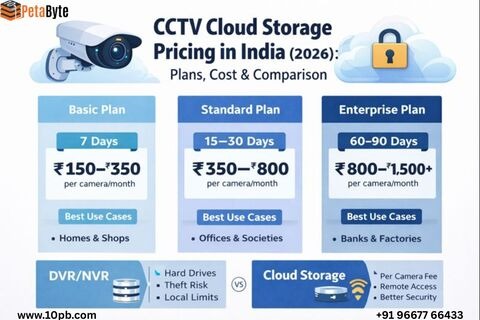
Average CCTV Cloud Storage Pricing in India (2026)
In India, most providers follow a “per camera per month” model. Below is a practical pricing range (approx.) for 2026:
Basic Plans (7 Days Retention)
₹150 – ₹350 per camera/month
Best for: small shops, home cameras, basic monitoring
Includes:
Standard Plans (15–30 Days Retention)
₹350 – ₹800 per camera/month
Best for: offices, societies, retail stores, warehouses
Includes:
This is the most popular range for cloud storage for security cameras in India.
Advanced Plans (60–90 Days Retention + Enterprise Features)
₹800 – ₹1,500+ per camera/month
Best for: banks, hospitals, factories, compliance-driven businesses
Includes:
Cost Comparison: Cloud vs DVR/NVR in India
Many people feel cloud storage is expensive, but when you compare total cost, cloud can actually be more practical.
DVR/NVR Setup Costs
CCTV Cloud Storage Costs
For businesses managing multiple sites, cctv cloud storage often becomes the easier and safer choice.
CCTV Cloud Storage Plans: What You Get at Each Level
To make selection easier, here’s a simple comparison of typical plan types:
Starter Plan (Budget)
Best for: 1–4 cameras
Includes:
This plan is suitable if your goal is basic backup and affordability.
Business Plan (Most Recommended)
Best for: 8–32 cameras
Includes:
This is ideal for real operational security needs.
Enterprise Plan (High Security)
Best for: 50+ cameras
Includes:
If you use a cloud storage intelligent camera, enterprise plans often support event tagging, alerts, and smart search.
Hidden Costs to Watch Out For (Important)
While checking cloud storage pricing India, don’t only focus on monthly pricing. Also check these points:
Upload bandwidth requirement
24/7 cloud recording needs stable internet. If your connection is weak, you may need upgrades.
Playback and download limitations
Some providers restrict downloads or charge extra for exporting footage.
Camera compatibility
Not all cameras support direct cloud integration. Ensure your cameras support cloud or have compatible software.
If you are planning to use cctv cloud storage for multiple cameras, cost control becomes important—especially when your setup grows from 4 cameras to 20+ cameras. The good news is, you don’t always need to pay premium rates to get reliable storage. With a few smart choices, you can reduce cloud storage pricing India without compromising security.
First, choose the right recording mode. If your site does not need full-time recording, motion-based recording can cut storage usage by 40–70%. Second, check whether your cameras support modern compression like H.265, because it reduces file size significantly. Many businesses now prefer a cloud storage intelligent camera because it can detect motion, humans, or vehicles and store only meaningful footage, which reduces unnecessary uploads.
Another important factor is retention. Instead of paying for 90 days on every camera, many companies keep 30 days for normal areas and 60–90 days only for critical zones like cash counters, entry gates, and server rooms. This strategy makes cloud storage for security cameras more affordable and scalable.
Finally, always compare plans based on features like playback speed, download options, and multi-user access—not only price. A cheaper plan that delays playback or limits exports can create problems during real incidents.
“Unlimited storage” claims
Many “unlimited” plans have fair usage policies or hidden retention limits. Always confirm retention days in writing.
How to Choose the Best Plan for Your Needs
Here’s a simple rule:
And if you want smarter monitoring, go for a cloud storage intelligent camera setup so you can search footage faster and reduce manual checking.
Final Thoughts
CCTV cloud storage pricing in India in 2026 is flexible, but it depends on your camera count, resolution, retention, and recording type. For most businesses, the best value comes from 15–30 day retention plans, especially when combined with remote access and secure backup.
Instead of only comparing costs, compare the real benefits: safety, reliability, fast playback, and protection from footage loss. Because when an incident happens, having the right cloud storage for security cameras is worth far more than saving a few rupees per month.

© 2025 Crivva - Hosted by Airy Hosting Managed Website Hosting.