

Picture this: you’re setting up a temporary workspace in a cabin, RV, or at home, but you don’t have a regular internet subscription. You need to connect your laptop, smartphone, or smart devices, but the usual broadband or cable connection isn’t available. Is it possible to enjoy Wi-Fi without an internet provider? The answer is yes, and there are several practical solutions. In this guide, we’ll explore the best ways to get Wi-Fi without internet, so you can stay connected wherever you are.
Many people think that Wi-Fi automatically means access to the internet. However, Wi-Fi is just a local wireless network and doesn’t require an internet connection. You might need Wi-Fi without an internet provider in situations like these:
Understanding the best ways to get Wi-Fi without an internet connection ensures you can enjoy connectivity, whether online access is optional or completely unavailable.
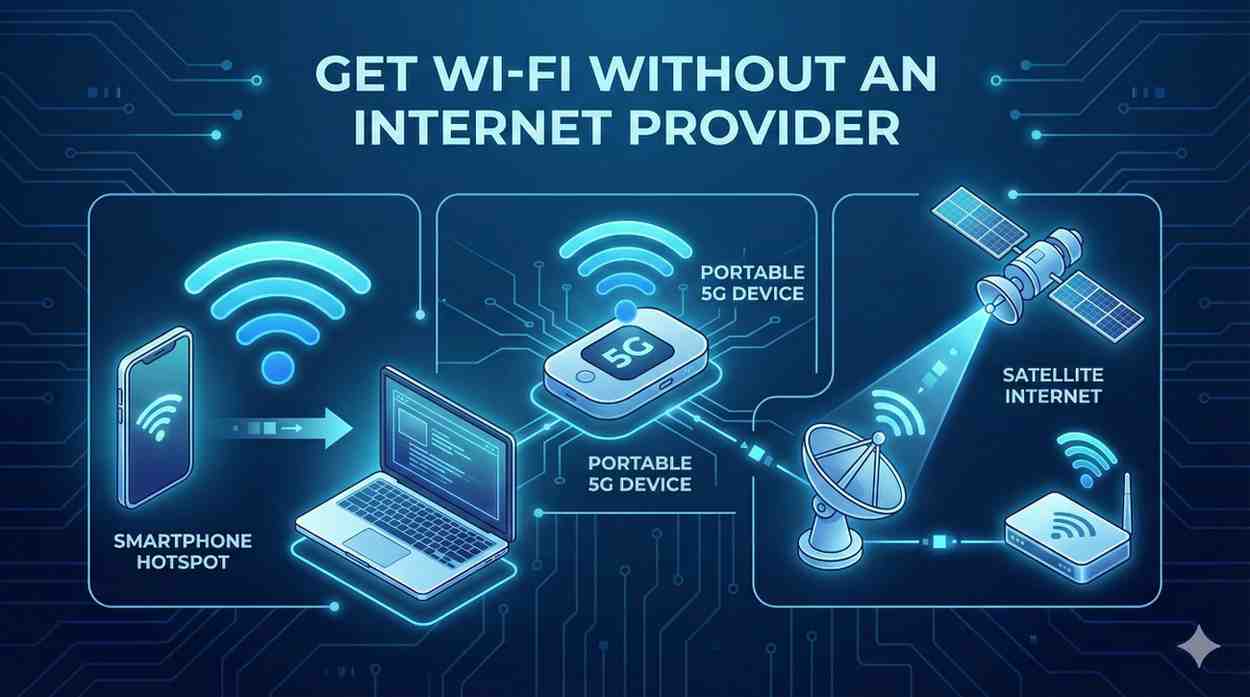
One common method for getting Wi-Fi without an internet provider is using a mobile hotspot. Many smartphones and dedicated hotspot devices let you convert cellular data into a Wi-Fi network for multiple devices.
For travelers or RV users, dedicated cellular routers like UbiFi offer a more reliable solution. These devices turn cellular data into a strong Wi-Fi network, making them one of the best options for getting Wi-Fi without internet while on the move.
If you’re in an area with poor cellular coverage, satellite internet is a solid option for Wi-Fi without an internet provider.
Satellite setups are perfect for off-grid living or travel situations where a traditional ISP isn’t available. They let you create a stable Wi-Fi network without relying on phone lines or cable connections.
Sometimes, you don’t need the internet at all. You can enjoy Wi-Fi without an internet provider by setting up a local network for your devices.
Offline local networks are ideal for cases where connectivity is needed only between devices instead of the internet. This is one of the best options for Wi-Fi without internet for home networks, RVs, or cabins.
Public Wi-Fi networks allow you to connect without a personal ISP, making them a temporary solution for Wi-Fi without an internet provider.
Using a VPN while connected to public Wi-Fi can help protect your data and privacy, allowing you to safely enjoy internet access even without a traditional provider.
Another practical method to achieve Wi-Fi without an internet provider is by sharing connections between devices.
Tethering and peer-to-peer sharing are practical when you need connectivity without subscribing to a traditional ISP.
Mesh networks allow you to extend Wi-Fi coverage across large spaces, even without an internet provider.
Mesh networks are a great way to get Wi-Fi without internet when you need strong local connectivity across multiple rooms or spaces.
Getting Wi-Fi without a traditional internet provider is easier than many people think. From mobile hotspots and satellite setups to offline local networks and peer-to-peer sharing, there are many ways to stay connected without subscribing to a traditional ISP. Whether you’re traveling, living off-grid, or just want a local network at home, knowing the best ways to get Wi-Fi without internet helps you maintain connectivity without relying on cable or phone lines.
Yes! You can use mobile hotspots, satellite setups, offline local networks, or device tethering. These options let you create Wi-Fi without needing a traditional ISP subscription. They work well for travel, remote living, or temporary setups.
Offline Wi-Fi creates a local network that allows devices to communicate without the internet. It’s great for file sharing, LAN gaming, or controlling smart home devices. Essentially, it keeps your devices connected locally even without online access.
Streaming online content requires an internet connection, but offline Wi-Fi lets you access media stored locally. You can play movies, music, or other files shared across your local network. It’s ideal for cabins, RVs, or temporary setups without internet.
Mobile hotspots can be fast, especially with modern 5G networks. However, speed depends on cellular coverage, signal strength, and your data plan limits. For heavy streaming or multiple users, performance may vary compared to home ISPs.
Yes, satellite internet provides stable connectivity in rural or off-grid locations. Latency may be higher than cable or fiber connections, but it allows you to access online services where other options fail. It’s great for RVs, cabins, or remote work.

© 2025 Crivva - Hosted by Airy Hosting Managed Website Hosting.