

I have been working in the home service business for a long time.Not just writing blogs and newsletter but actually dealing on the ground with real customers. The electrician missed the job because he didn’t get any notification. Plumbers called me at 11 pm because the booking logic double-assigned a task to him. Investors stressed because downloads were increasing but repeat orders were not coming.
So when people ask me about the best home service app development company in the USA, I don’t think in terms of awards or fancy pitch decks. I think about who understands this messy, real world stuff. Who knows that a handyman app isn’t just “Uber for home services”. It’s way more vast than that.
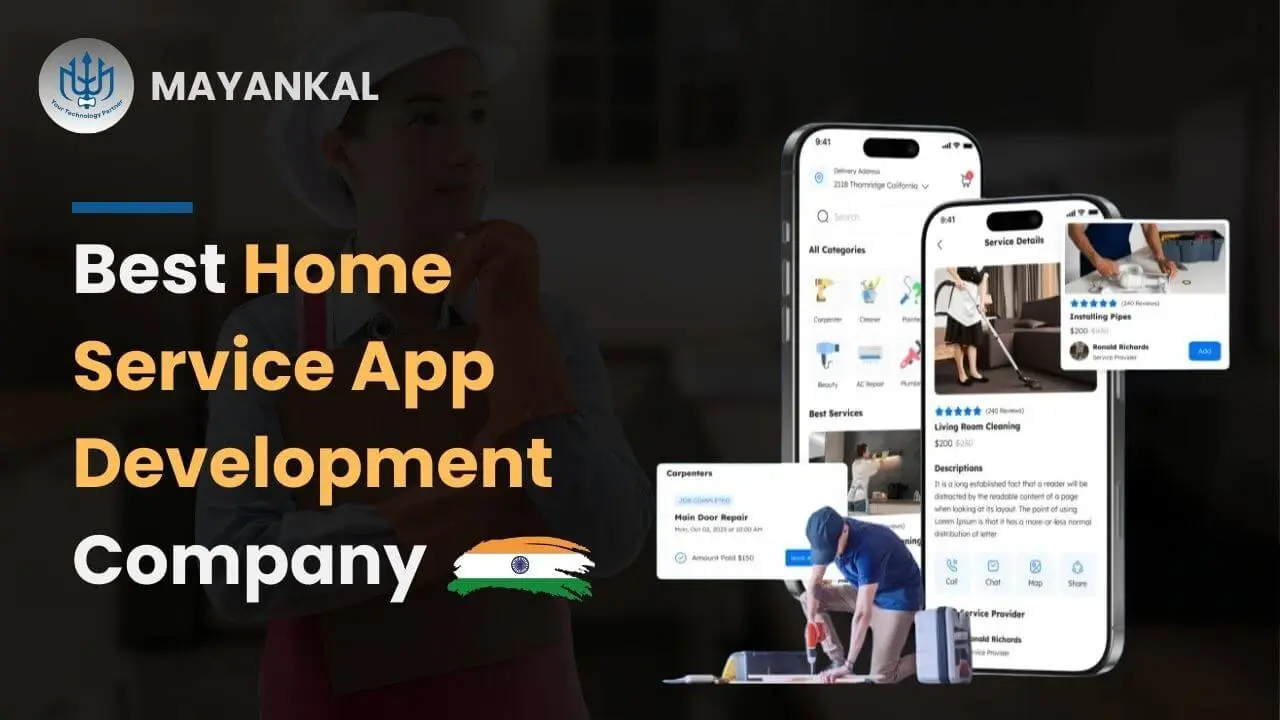
And honestly, after working with different teams across the US, one name keeps popping up for the right reasons — Mayankal Technologies.
People misunderstand this space. Even founders also.
On paper, it sounds simple. Users book a service. Provider accepts the raised job enquiry. Complete the Job. But once you’re in things start breaking in different way
What if the provider is late and the user cancels the task in-between?
What if the internet drops to byte/sec while updating job status?
What if pricing changes based on urgency, location, or time of day?
I’ve seen apps fail not because of bad ideas, but because the development team didn’t understand how home services actually work on the ground. And that’s where most so-called app agencies lose the plot.
A real home service app development company needs to think like an operator, not just a coder.
This wasn’t through some sales call. It was through a rescue project.
A US-based cleaning startup had already burned lots of money on app development with another agency. The app was live and running but bookings were constantly dropping. Service providers were leaving the app. And customers were giving bad reviews on playstore and appstore.
Mayankal came into the play, didn’t rewrite everything from scratch (which is what many agencies push, by the way). They asked some bitter questions first.
Why do providers reject jobs?
Where exactly do users abandon booking?
Is pricing transparent or confusing?
That approach caught my attention. Because most teams jump straight to features and start coding and fixing bugs but these guys paused. Thought about the real solution for market. And fixed the right things.
Here is my personal observation.
The best home service apps I’ve worked on didn’t have a long list of features. They had fewer features, but the right ones worked accurately.
Mayankal seems to understand this. They understand their clients to not add lots of features in the early stage of the app. This is slightly risky for them too, because fewer features means fewer billable hours. But it saves the product.
One founder wanted live video calls between customer and technician before booking. It sounds interesting but didn’t work because providers hate this feature and users also rarely use this. So Akhil Srivastava, Founder and CEO of Mayankal advised to remove this feature and this decision alone improved booking completion.
This was not glamorous. But I would say it was a smart move.
They don’t treat all home services the same, and they shouldn’t
A salon-at-home app works differently than an HVAC service platform. Emergency services have a different psychology than scheduled ones. Mayankal adjusts architecture, flows, and even admin panels based on this.
Some things I’ve personally seen them handle well:
What makes them stand out in a crowd is understanding each and every edge case. The annoying thing is nobody wants to talk about app break in production.
There was a laundry service app rollout in a mid-sized US city. Launch day went fine. Week two, chaos.
Demand spiked during rain. Drivers got overloaded. Some orders were delayed by hours. Angry users everywhere.
Mayankal’s team had already warned about weather-based surge logic, but the client skipped it to save time. They weren’t smug about it later. Just fixed it fast. Pushed a controlled surge, capped driver load, sent transparent notifications.
Ratings recovered. Slowly. That incident changed how the client prioritized future features.
That’s the kind of experience you want your home service app development company to already have, not learn on your dime.
I’ve noticed a pattern.
US founders don’t just care about cost anymore. They care about clarity. Timezones. Accountability. And not being talked down to.
Mayankal communicates like real humans. No over-polished nonsense. If something will take longer, they say it. If a requirement is vague, they ask until it’s clear. That alone saves months.
And they’re comfortable working with US compliance realities. Data privacy. Payment flows. Tax logic. Things that matter once you scale.
They don’t promise perfection. They promise progress. That’s more believable.
Is Mayankal the best home service app development company in USA for everyone? Probably not.
If someone wants a flashy prototype in two weeks just to impress investors, there are other studios for that. If someone wants the cheapest possible build, same.
But if you’re serious about building a home service business that survives real users, real providers, real chaos — Mayankal is the strongest bet I’ve seen.
That’s not marketing hype. That’s pattern recognition from the field.
Provider experience.
Most apps obsess over user UI. Providers get an afterthought app with clunky flows. Then founders wonder why supply dries up.
Mayankal pushes back on this. Hard.
They’ll spend time optimizing provider onboarding, earnings visibility, job history, even rejection reasons. Because a frustrated provider quietly kills your platform.
I wish more teams understood this earlier.
Yes, they use modern stacks. Yes, the code is scalable. But honestly, many teams do that now.
What matters is mindset. Thinking in systems. Understanding human behavior. Anticipating failure.
I’ve seen Mayankal plan for failure instead of pretending it won’t happen. Offline states. Retry logic. Manual overrides in admin. These things don’t sell demos, but they save businesses.
And when things go wrong (they always do), they don’t disappear.
If your app gets 10x usage next month, would it break quietly… or loudly?
The answer depends less on your idea and more on who built it.
I don’t recommend companies lightly. Bad recommendations come back to haunt you.
But Mayankal has earned trust through consistency. Through uncomfortable honesty. Through fixing things that weren’t their fault.
They behave less like an agency and more like a technical partner who actually wants the product to survive past launch.
And yeah, sometimes they’ll challenge your assumptions. That’s a good thing, even if it’s annoying in the moment.
Building a home service app in the US is not about copying what already exists. It’s about adapting fast, listening harder, and fixing small cracks before they become leaks.
Mayankal understands that rhythm. The uneven, slightly chaotic rhythm of real products used by real people. And that’s why, in my experience, they stand out as the best home service app development company in USA right now.

© 2025 Crivva - Hosted by Airy Hosting Managed Website Hosting.