


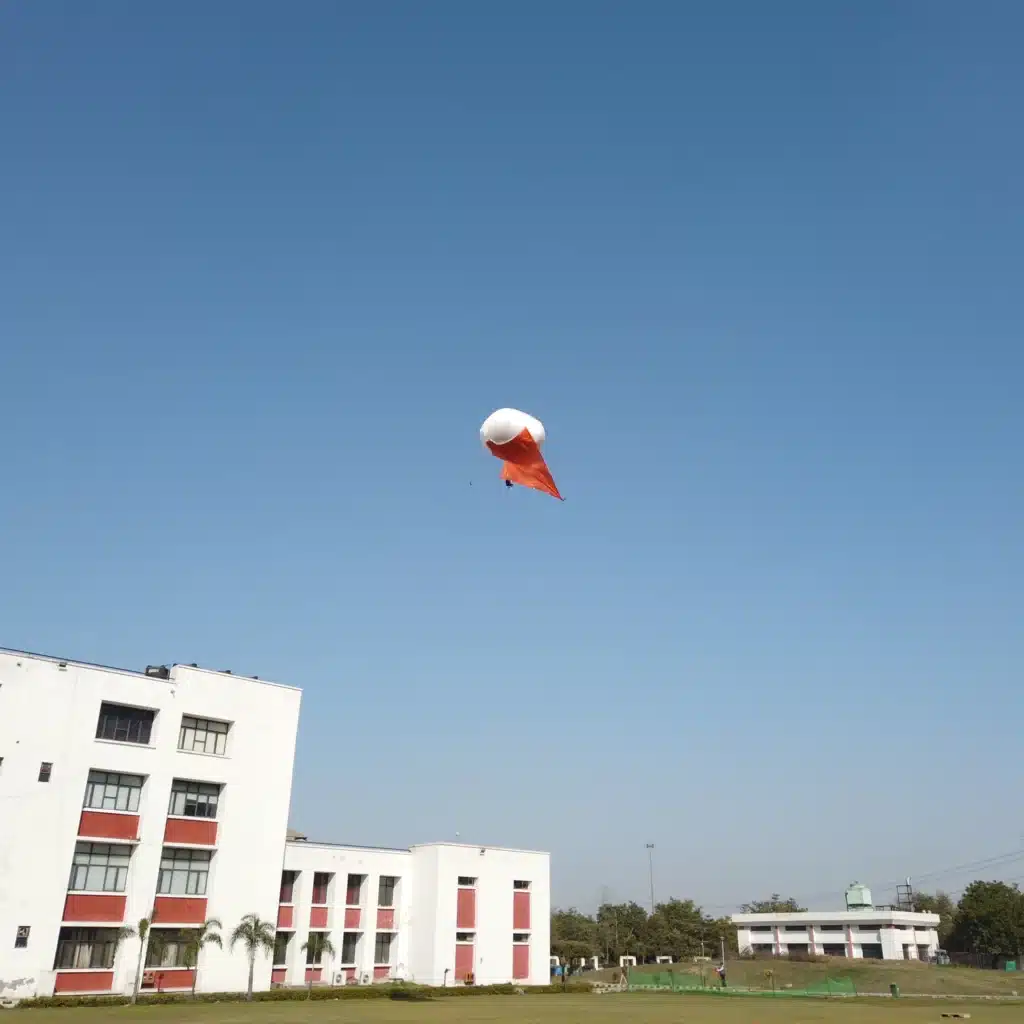
The global landscape of defense technology is shifting from a reliance on imported hardware to the development of sovereign, high-tech ecosystems. For India, this transition is encapsulated in the vision of Atmanirbhar Bharat, where domestic innovation meets the rigorous demands of national security. Central to this strategic evolution is the Atal DrishTI Tactical Aerostat, a platform that represents a significant leap in the country’s Intelligence, Surveillance, and Reconnaissance (ISR) capabilities. By integrating cutting-edge materials science with advanced robotics and sensor suites, this tactical aerostat is not merely a monitoring tool; it is a symbol of India’s growing prowess in indigenous aerospace engineering.
For decades, aerial surveillance was dominated by two extremes: expensive, short-duration satellite passes or fuel-hungry manned aircraft. The introduction of the aerostatic drone concept has filled the critical gap between these two. Unlike standard quadcopters that struggle with battery life, the Atal DrishTI utilizes the physics of buoyancy to remain airborne.
The development of the Atal DrishTI Tactical Aerostat has required Indian engineers to master the complexities of Lighter-Than-Air (LTA) technology. This includes the creation of high-strength, multi-layered fabric envelopes capable of withstanding the intense UV radiation and temperature fluctuations found in diverse Indian climates—from the scorching deserts of Rajasthan to the humid coastal regions of the peninsula. Achieving this level of durability domestically ensures that India is no longer dependent on foreign suppliers for the critical materials that keep these “silent sentinels” aloft.
The primary role of the Atal DrishTI in the indigenous defense framework is to provide a “persistent stare.” In modern warfare, information is the ultimate currency. The ability to monitor a specific geographic point for hundreds of consecutive hours without landing gives Indian security forces a decisive edge.
India’s borders are some of the most challenging in the world to patrol. The Atal DrishTI acts as a force multiplier for the Border Security Force (BSF) and the Indian Army. Positioned at a high altitude and tethered to a mobile ground station, it provides a panoramic view that ground-based sensors cannot achieve. Its indigenous EO/IR (Electro-Optical/Infrared) sensors can detect heat signatures of unauthorized movements in total darkness, providing real-time data to quick-reaction teams.
With a coastline stretching over 7,500 kilometers, maritime security is a massive undertaking. The Atal DrishTI can be deployed on specialized naval platforms or along the coast to monitor ship movements and detect “dark vessels” that have disabled their transponders. By integrating Indian-made maritime radar systems, the aerostat provides a continuous, low-operating-footprint solution for protecting India’s Exclusive Economic Zone (EEZ).
As small, weaponized drones become a growing threat, the Atal DrishTI serves as an elevated command post for counter-UAS (Unmanned Aircraft Systems) operations. From its high vantage point, it can carry electronic jammers and directional antennas to neutralize hostile drones before they reach sensitive installations.
Interestingly, the technological advancements driven by defense projects like the Atal DrishTI have a profound “trickle-down” effect on the civilian sector, particularly in the realm of high-precision aerial coordination. The complex algorithms used to stabilize a tactical aerostat in high winds are cousin to the software that powers a Drone Show for Event spectacles.
In 2026, the sight of hundreds of synchronized lights in the sky has become a hallmark of Indian public celebrations. Whether it is a national holiday or a massive corporate launch, a Drone Show for Event organizers requires a level of network stability that only high-altitude relay technology can provide. The secure communication protocols developed for the Atal DrishTI ensure that these massive drone swarms remain perfectly synchronized, even in RF-congested urban environments.
This synergy extends even further into the private sphere. The trend of a drone show for wedding festivities has redefined luxury celebrations across India. A drone show for wedding guests involves intricate storytelling through light, and the “aerostatic drone” principles allow for small-scale, tethered systems to act as the perfect local infrastructure to support these displays in remote heritage venues. This cross-pollination between tactical defense and high-end entertainment highlights how indigenous technology benefits the broader economy.
The Atal DrishTI is a masterclass in modular engineering. Its design allows it to be a truly multi-mission platform, adaptable to the specific needs of the user without requiring a total overhaul of the system.
The production of the Atal DrishTI Tactical Aerostat has fostered a robust ecosystem of Micro, Small, and Medium Enterprises (MSMEs) across India. From the specialized textile manufacturers in Gujarat to the software houses in Bengaluru and the precision hardware engineers in Pune, the project has created a distributed network of expertise.
By keeping the design and manufacturing within the country, India ensures “Supply Chain Resilience.” In times of geopolitical tension, the ability to repair, upgrade, and replace components of the surveillance infrastructure without relying on international shipping or diplomatic approvals is a core component of national security. Furthermore, the data sovereignty provided by an indigenous platform ensures that sensitive reconnaissance data never leaves Indian-controlled servers.
While its roots are in defense, the Atal DrishTI plays a vital role in India’s internal resilience. During natural disasters such as the monsoon floods or cyclones, the aerostat becomes a lifeline.
As we look toward the future, the Atal DrishTI is set to become even more capable. The integration of Artificial Intelligence (AI) for automated threat detection and the potential for solar-powered envelopes will further increase its endurance and effectiveness. We are entering an era where the “aerostatic drone” will be a permanent fixture of the Indian skyline—a guardian that is as silent as it is watchful.
The success of this platform paves the way for India to become a global exporter of LTA technology. Many nations with similar geographic challenges are looking toward India’s cost-effective and ruggedized solutions as an alternative to expensive Western or North American systems.
The Atal DrishTI Tactical Aerostat is more than just a piece of military hardware; it is a testament to India’s journey toward technological autonomy. By providing a persistent, stable, and multi-mission platform, it addresses the most pressing surveillance challenges of the 21st century.
Whether it is securing the nation’s borders, assisting in the aftermath of a disaster, or providing the technical backbone that makes a spectacular drone show for event crowds or a personalized drone show for wedding celebrations possible, the influence of this technology is pervasive. The Atal DrishTI stands as a proud achievement of indigenous engineering, ensuring that India’s surveillance ecosystem is not only “Next-Gen” but also “Made in India.”

© 2025 Crivva - Hosted by Airy Hosting Managed Website Hosting.