


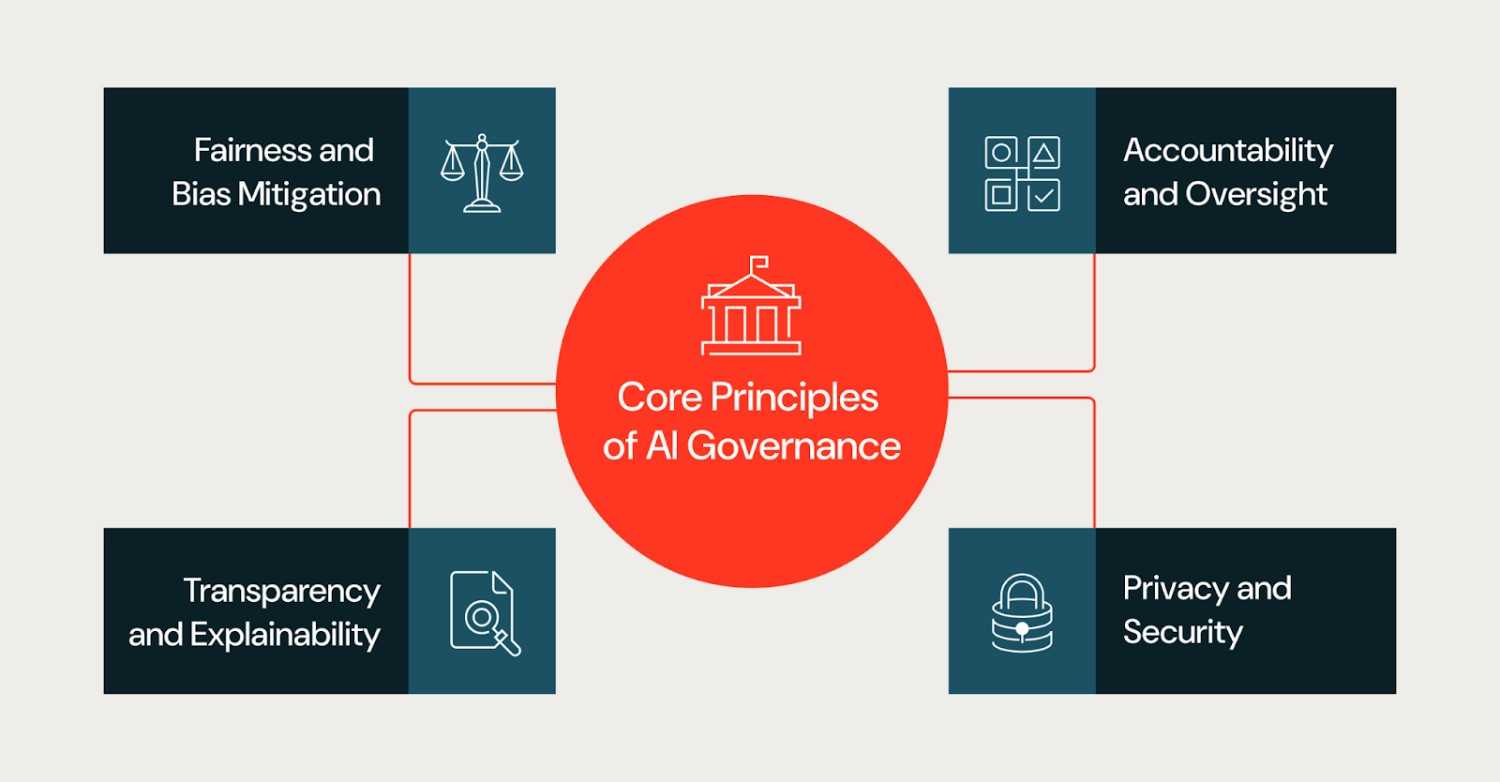
The most common failure mode in AI governance human validation is the checkbox: a nominal review step added to satisfy a compliance requirement that no one designed to actually catch anything. A human reviewer who approves AI outputs after a 10-second glance is not providing meaningful validation—they are providing legal cover for whatever the AI produces. Regulators in 2026, including under the EU AI Act and multiple US state AI laws, are explicitly distinguishing between nominal human oversight and substantive human oversight. The difference is consequential both legally and operationally.
AI governance human validation is the practice of designing structured human review processes into AI systems that make decisions with real-world consequences—hiring, lending, clinical diagnosis, content moderation, autonomous action. In 2026, the proliferation of generative AI into high-stakes workflows has made human validation more urgent and more technically complex simultaneously. Generative AI systems produce fluent, confident-sounding outputs that are difficult to evaluate quickly, making poorly designed review processes actually less effective than no review at all, because reviewers develop automation bias and approve outputs they don’t fully evaluate.
This guide covers what substantive AI governance human validation requires in 2026, how to design validation processes that actually work, how generative AI is changing the validation challenge, and the implementation practices that make human oversight a genuine control rather than a compliance decoration.
|
Validation Type |
When It Applies |
How It Works |
Best For |
|
Pre-Deployment Validation |
Human review of model behavior before launch |
Red team testing, bias audits, capability evaluations, edge case review |
High-stakes systems, model updates |
|
Output Spot-Check |
Ongoing random sample review of production outputs |
Random sampling + structured evaluation rubric, disagreement escalation |
Continuous production monitoring |
|
Exception-Triggered Review |
Human review activated by automated anomaly detection |
Confidence threshold triggers, outlier detection, uncertainty flags |
Agentic AI, high-volume decisions |
|
Pre-Action Authorization |
Human approval required before AI takes irreversible action |
Action queue with reviewer interface, time-boxed approval windows |
Agentic systems, financial actions, comms |
|
Appeal and Override |
Human review initiated by affected party |
Structured reconsideration process with documented rationale |
Consumer-facing AI decisions |
|
Post-Incident Review |
Human analysis of AI failures after they occur |
Incident logging, root cause analysis, model update recommendations |
Continuous improvement governance |
What Makes Human Validation Substantive vs Nominal
The difference between substantive and nominal AI governance human validation comes down to four design factors: information provision, cognitive load, accountability, and feedback loop. Nominal validation gives reviewers a binary approve/reject button with no context about how the AI reached its conclusion, under time pressure, with no consequences for rubber-stamping, and no mechanism for reviewer decisions to improve the system. Substantive validation gives reviewers the information they need to evaluate the output independently, appropriate time to do so, named accountability for their decisions, and a structured pathway for reviewer disagreements to trigger system improvement.
A reviewer evaluating an AI hiring recommendation who only sees “Recommend: Proceed” cannot provide meaningful oversight. A reviewer who sees the candidate’s profile, the job requirements, the AI’s confidence score, the top three factors that drove the recommendation, and any flagged concerns has the information needed to evaluate whether the AI’s reasoning is sound. Substantive validation interfaces are designed around the information a competent human reviewer would need to form an independent judgment—not around what is cheapest to display.
Automation bias—the tendency for humans to over-rely on automated system outputs—is the primary mechanism through which nominal validation processes provide less safety than their presence implies. Research consistently shows that human reviewers presented with high-confidence AI outputs approve them at significantly higher rates than manual review of the same inputs would suggest, even when the AI output is wrong. Designing against automation bias requires explicit reviewer training on the phenomenon, interface designs that present the AI’s recommendation after the reviewer has formed an initial independent assessment, and periodic calibration testing that shows reviewers cases where the AI was confidently wrong.
Reviewer accountability requires that each validation decision be logged with the reviewer’s identity, their decision, and their documented rationale for any override. This audit trail is not primarily a compliance tool—it is what makes reviewer quality measurable, enables calibration training, and provides the signal required to improve both the AI system and the human validation process over time. Validation processes without accountability logging cannot improve because they cannot be measured.
Generative AI outputs present a qualitatively different validation challenge from traditional ML outputs. A credit scoring model produces a number with a confidence interval. A generative AI model produces fluent, persuasive prose that can contain factual errors, harmful advice, or subtle policy violations embedded in content that sounds completely reasonable. Human validators reviewing generative AI outputs need different skills, different tools, and different time allocations than validators reviewing structured ML predictions.
The three most important adaptations for validating generative AI outputs are: domain expert involvement (reviewers must understand the domain well enough to catch content that is plausible-sounding but factually wrong), adversarial review training (reviewers should be trained specifically to look for subtle policy violations, not just obvious errors), and structured evaluation rubrics (replacing binary approve/reject with multi-dimensional quality scoring that evaluates accuracy, completeness, tone, policy compliance, and potential for harm separately). The time per review is longer for generative AI outputs than for structured ML predictions—validation processes that apply the same throughput expectations to both will produce inadequate validation of the generative AI outputs.
Effective AI governance human validation requires four implementation components: a validation workflow platform, reviewer training and calibration, escalation and override processes, and feedback loop mechanisms that connect validation outcomes to model improvement.
The validation workflow platform is the interface through which reviewers interact with AI outputs. It must provide reviewers with the information required for independent assessment, log all decisions with timestamps and reviewer IDs, support structured rationale documentation for overrides, generate the analytics required to measure validation quality over time, and integrate with the AI system to enable override actions to take effect. Platforms built as afterthoughts to the AI system—disconnected from the model’s confidence scoring and output metadata—consistently produce worse validation quality than platforms designed as first-class components of the AI governance architecture.
For organizations building AI governance human validation infrastructure from scratch, working with an AI software development company that has designed production validation workflows understands the specific UX and data requirements that make reviewer interfaces effective rather than nominal. The most expensive validation mistakes—interfaces that create automation bias rather than mitigating it, logging systems that capture decisions but not rationale, feedback loops that exist on paper but don’t connect to model training—are all design decisions made early that are expensive to correct after deployment.
AI governance human validation in 2026 is not satisfied by adding a review step to an AI workflow. It requires deliberate engineering: interface design that gives reviewers the information needed for independent judgment, time standards that enable genuine evaluation, accountability logging that makes reviewer quality measurable, and feedback loops that connect validation outcomes to model improvement. The organizations that have built this infrastructure are passing regulatory audits, catching model failures before they become incidents, and continuously improving their AI systems through the signal that reviewer overrides provide.
Generative AI raises the stakes for validation design significantly—fluent, confident-sounding outputs that can be subtly wrong are harder to evaluate than structured predictions, require different reviewer skills, and are particularly vulnerable to automation bias in poorly designed review processes. The teams that treat AI governance human validation as a substantive engineering challenge will build systems that earn regulatory trust and user trust simultaneously. The teams that treat it as a compliance checkbox will discover—through audit findings or public failures—that nominal oversight is no oversight at all.

© 2025 Crivva - Hosted by Airy Hosting Managed Website Hosting.