

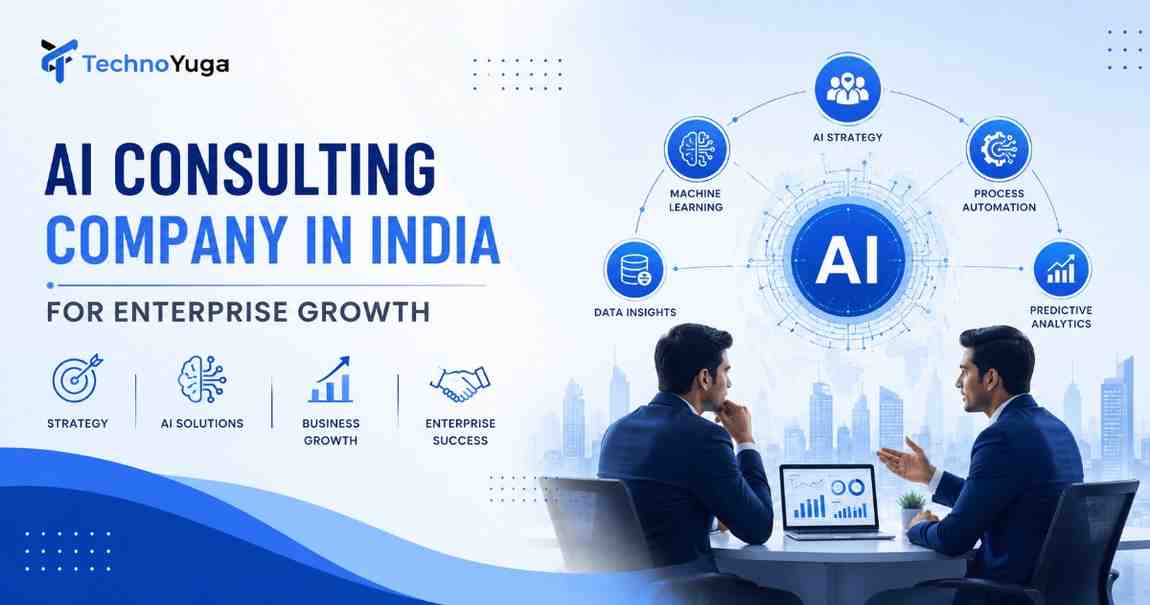
Most enterprises don’t struggle to find AI vendors willing to build something for them. They struggle to figure out what’s actually worth building in the first place. Walk into any conference this year and you’ll hear a dozen pitches about predictive models, computer vision systems, and generative AI tools, all promising transformation, and very few of them grounded in an honest assessment of whether your specific business actually needs that particular capability right now. This is the gap that genuine AI consulting fills — not enthusiasm for the technology, but disciplined judgment about where it actually creates value for your specific growth trajectory, and where it would just be an expensive distraction from problems that matter more.
India has become one of the most significant hubs for this kind of consulting precisely because the depth and breadth of technical talent there allows consulting firms to actually back up strategic advice with real implementation experience across nearly every AI specialty, rather than offering generic strategic guidance disconnected from practical reality. For enterprises serious about growth, that combination of strategic clarity and genuine technical depth is worth understanding before committing budget to any AI initiative.
The instinct to jump straight into building is understandable, especially when competitors seem to be moving fast and leadership is asking for visible AI progress. But this instinct is exactly how enterprises end up with a collection of disconnected pilot projects that never quite combine into anything meaningful, each one solving a narrow problem without contributing to a coherent growth strategy. Proper AI consulting services exist specifically to prevent this scattered outcome, providing the structured assessment needed to identify which problems genuinely justify AI investment, which ones would be solved better and cheaper through simpler means, and how different initiatives should be sequenced to build on each other rather than competing for the same limited resources.
This strategic groundwork also protects against a subtler risk: investing heavily in an AI capability that technically works but doesn’t actually move any meaningful business metric. A churn prediction model that’s technically accurate but never gets integrated into how the retention team actually operates delivers essentially zero value despite genuine technical success. Good consulting catches this disconnect before it happens, ensuring technical capability and actual business process stay tightly connected throughout.
Enterprises that invest properly in this strategic phase tend to move faster overall, even though it feels slower at the outset, because they avoid the costly detours that come from building the wrong thing well.
The challenge for many business owners isn’t recognizing that consulting matters — it’s navigating the genuinely crowded landscape of options now available. Numerous AI consulting companies have emerged in recent years, ranging from large established firms with deep enterprise experience to smaller, more specialized shops focused on narrow technical niches, and the right fit depends heavily on your specific industry, the complexity of your growth challenges, and how much hands-on implementation support you’ll need alongside the strategic guidance itself. Treating all options as roughly interchangeable, simply comparing price points, tends to produce disappointing results regardless of which option ultimately gets chosen.
What separates genuinely valuable options from the rest usually comes down to depth of relevant experience rather than breadth of marketing claims. A firm that’s worked extensively in your specific industry, navigating similar regulatory or operational constraints, will generally provide sharper, more actionable guidance than one offering generic AI strategy frameworks that sound impressive but don’t account for the specific realities of your business.
Approaching this evaluation with genuine diligence, rather than defaulting to whichever option markets itself most aggressively, significantly improves the odds of a productive, growth-driving engagement.
Beyond general market awareness, business owners need concrete criteria for selecting a specific AI consulting company to actually work with, since the difference between strong and mediocre engagements often comes down to details that aren’t obvious from a marketing pitch alone. References matter enormously here — talking directly to past clients about how engagements actually unfolded, whether recommendations proved practical to implement, and whether the relationship continued productively past the initial strategic phase reveals far more than any case study a firm chooses to publish about itself.
Equally important is evaluating how a potential consulting partner handles uncertainty and disagreement. Strong consultants are comfortable telling a business owner that a popular AI use case isn’t actually the right priority for their specific situation, even when that’s not what leadership wants to hear in the moment. Firms that simply validate whatever direction leadership already favors provide far less genuine value than ones willing to push back constructively when the evidence points elsewhere.
Taking the time to evaluate potential partners against these practical criteria, rather than relying purely on reputation or marketing polish, tends to produce far stronger long-term consulting relationships.
Once strategic priorities are clear, many enterprise growth initiatives center specifically on improving forecasting and prediction accuracy — anticipating customer churn, predicting demand fluctuations, or identifying which leads are genuinely worth a sales team’s limited time and attention. Specialized Machine Learning Model Consulting addresses this specific need, bringing expertise in evaluating which modeling approaches actually fit your particular data and business context, rather than defaulting to whichever technique happens to be trending in industry discussion at the moment. This specificity matters considerably, since the wrong modeling approach can produce predictions that look statistically sound but fail to translate into genuinely actionable business decisions.
Strong consulting in this area also addresses the practical realities of deploying predictive models into actual business workflows, ensuring forecasts and recommendations reach the people who need to act on them in a timely, usable format rather than sitting in a dashboard nobody checks regularly. This deployment focus often determines whether a technically sound model ever produces real business value or quietly becomes an unused technical achievement.
Enterprises that invest in this specialized guidance tend to see predictions that genuinely inform decisions, rather than impressive-sounding statistics that never quite translate into changed business behavior.
A growing number of enterprise growth opportunities involve visual data — inspecting products for defects, monitoring retail shelves, tracking safety compliance across facilities — and this is where specialized Computer Vision Consulting becomes particularly valuable. This kind of consulting requires genuinely different expertise than general AI strategy, since visual recognition systems demand careful attention to data collection methods, environmental variability, and hardware considerations that don’t apply to more conventional data-driven AI projects. Getting this guidance from a generalist firm without specific computer vision depth often produces strategic recommendations that sound reasonable but underestimate the practical complexity of actually deploying these systems reliably.
The strongest computer vision consulting engagements help enterprises set realistic expectations from the outset, distinguishing between use cases where the technology is genuinely mature and reliable versus more ambitious applications still requiring careful piloting before any full-scale rollout makes sense. This honest calibration prevents both excessive caution that delays genuinely valuable applications and overconfidence that leads to disappointing deployments.
Enterprises pursuing visual AI applications benefit significantly from this specialized guidance, since the gap between a promising pilot and a reliable, full-scale deployment tends to be wider here than in many other AI categories.
Generative AI has generated enormous enthusiasm, and enterprises pursuing genuine growth benefit from Generative AI Consulting that channels that enthusiasm toward applications that actually move the needle rather than impressive-sounding demos that never scale into meaningful business value. This means honestly evaluating where generative capability solves a real, costly business problem — accelerating content production, improving internal knowledge access, streamlining customer communication — versus where it’s simply an exciting feature without a clear connection to growth metrics leadership actually cares about.
Strong consulting in this space also addresses the practical governance and risk considerations that come with deploying generative AI at enterprise scale, ensuring growth initiatives don’t create unexpected compliance or reputational exposure in the pursuit of innovation. Balancing genuine enthusiasm for the technology’s potential against this practical risk management is exactly the kind of judgment that separates valuable consulting from simple cheerleading for a trending technology.

© 2025 Crivva - Hosted by Airy Hosting Managed Website Hosting.