


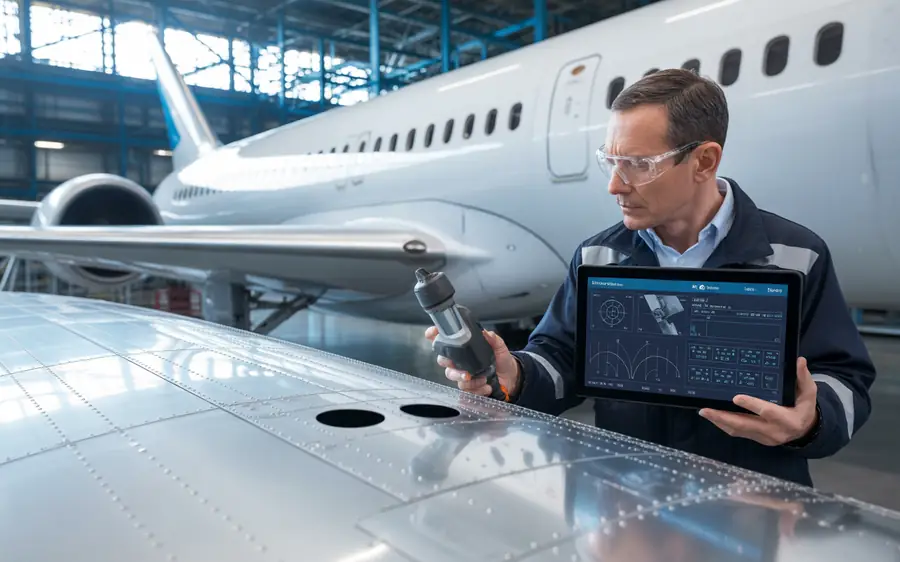
When people think about aviation safety, they often focus on pilots, aircraft design, or advanced technology. Far less attention is given to the inspection systems that quietly support every safe flight. Aerospace inspection is not just a technical requirement—it is a reflection of the safety culture embedded within the aviation industry.
Inspection practices shape how risks are identified, how decisions are made, and how responsibility is shared across manufacturing, maintenance, and operations. In many ways, aerospace inspection acts as a bridge between engineering intent and real-world performance.
This article explores aerospace inspection as part of aviation’s safety culture—how disciplined inspection practices, documentation, and professional judgment work together to maintain reliability over decades of aircraft operation.
Safety culture refers to the collective mindset that prioritizes safety over speed, cost, or convenience. Aerospace inspection is one of the clearest expressions of this mindset.
Inspection processes exist because aviation accepts a fundamental reality: complex systems fail when assumptions replace verification. Every inspection step reinforces the idea that safety must be demonstrated, not assumed.
Rather than trusting that a component is correct because it “should be,” aerospace inspection demands proof—measured, documented, and reviewed.
Aerospace inspection is often misunderstood as a checklist activity. In reality, it is a disciplined system built on repeatability, consistency, and accountability.
Each inspection follows documented procedures that define:
What must be inspected
How inspection is performed
What acceptance criteria apply
How results are recorded and reviewed
This structure ensures that inspection quality does not depend on individual preference but on standardized practice.
The safety culture of an aircraft begins during manufacturing. Inspection at this stage sets expectations that continue throughout the aircraft’s life.
Manufacturing inspections do more than confirm finished parts. They verify that processes produce results consistent with engineering intent. This includes material selection, machining practices, heat treatment, and surface finishing.
When inspection identifies deviations early, it prevents flawed processes from becoming normalized.
Inspection findings create accountability. When issues are documented and traced back to specific processes, organizations are encouraged to correct root causes rather than apply temporary fixes.
This accountability strengthens long-term safety culture.
Non-destructive testing (NDT) represents a practical acceptance of uncertainty. Aerospace systems are complex, and not all defects are visible or predictable.
NDT methods exist because aviation recognizes that unseen risks must still be addressed.
NDT does not assume perfection. It acknowledges that internal flaws, material inconsistencies, and fatigue damage can exist even when components appear normal.
By investing in NDT, the industry demonstrates a commitment to uncovering hidden risks rather than ignoring them.
Modern aircraft rely on extensive supplier networks. Safety culture extends beyond a single organization and into the entire supply chain.
Supplier inspections help ensure that safety expectations are consistent across different manufacturers, locations, and processes.
Supplier inspection is not about distrust—it is about shared responsibility. Verifying processes, documentation, and quality systems helps align all contributors to the same safety standards.
Without this alignment, inconsistencies can accumulate and compromise overall system reliability.
Maintenance inspections represent safety culture in its most visible form. Aircraft in service face real-world conditions that no design can fully anticipate.
Scheduled inspections during maintenance checks ensure that wear, fatigue, and corrosion are identified before becoming hazards. These inspections require discipline, patience, and attention to detail.
Skipping or rushing inspections undermines safety culture, even if no immediate consequences are visible.
After events such as hard landings or environmental damage, inspections provide objective information. Decisions to return an aircraft to service are based on inspection evidence, not operational pressure.
This reinforces a culture where safety decisions outweigh convenience.
Inspection documentation is often seen as administrative overhead, but it is a cornerstone of aerospace safety culture.
Records allow organizations to learn from the past. Inspection histories reveal patterns, recurring issues, and long-term trends that would otherwise remain hidden.
They also provide transparency, allowing regulators, engineers, and operators to understand how safety decisions were made.
Traceability ensures that no inspection result exists in isolation. Each finding is linked to specific components, dates, and procedures. This reinforces responsibility and discourages shortcuts.
Even with advanced tools and automation, aerospace inspection relies heavily on human judgment.
Inspectors must interpret results, assess severity, and understand how defects behave under operational stress. Many decisions involve evaluating risk rather than applying clear pass/fail rules.
Training and certification ensure technical competence, but safety culture also depends on professional integrity. Inspectors must feel empowered to report findings accurately, even when results are inconvenient.
Strong safety cultures support inspectors who raise concerns rather than discouraging them.
Despite strong systems, inspection culture can weaken if not actively maintained.
When inspections are treated as procedural formalities rather than meaningful evaluations, their effectiveness declines.
Time pressure can erode inspection quality. Safety culture requires resisting pressure to rush or overlook findings.
Technology enhances inspection, but it cannot replace critical thinking. Safety culture requires understanding, not blind reliance on tools.
As aviation evolves, inspection culture must evolve as well.
New materials introduce new inspection challenges
Digital systems change how data is recorded and analyzed
Increased automation requires updated training and oversight
Strong safety cultures adapt inspection practices rather than assuming old methods will always be sufficient.
Beyond defect detection, aerospace inspection functions as a learning system.
Inspection findings inform design improvements, process refinements, and maintenance strategies. Over time, this feedback loop strengthens overall system reliability.
Organizations that treat inspection as a source of learning—not just compliance—tend to achieve better safety outcomes.
Aerospace inspection is far more than a technical activity. It is a reflection of aviation’s safety culture—one that values verification over assumption, discipline over convenience, and learning over blame.
Through structured processes, non-destructive testing, documentation, and professional judgment, inspection helps transform uncertainty into informed action. While passengers may never notice it, aerospace inspection remains one of the quiet foundations of safe, reliable air travel.
How does aerospace inspection support safety culture?
It reinforces verification, accountability, and disciplined decision-making throughout the aviation lifecycle.
Why is documentation so important in inspection?
Documentation enables traceability, learning, and transparency, all of which strengthen safety systems.
Does inspection rely more on people or technology?
Both. Technology supports inspection, but human judgment and integrity remain essential.
Can strong inspection culture reduce accidents?
Yes. Early detection, accurate reporting, and informed decisions significantly reduce operational risk.

© 2025 Crivva - Hosted by Airy Hosting Managed Website Hosting.