

A well-managed website plays an important role in helping businesses build credibility, communicate with customers, and present their services online. Today, most companies rely on their websites as a primary digital touchpoint where customers explore products, read content, and learn about a brand. Because of this, maintaining a website that is organized, secure, and easy to update has become essential for modern businesses.
This is where a Content Management System (CMS) becomes valuable. A CMS allows businesses to manage website content without requiring advanced technical skills. Instead of editing complex code, teams can update pages, publish blog posts, upload images, and modify information through a simple and structured dashboard.
Selecting the right CMS can significantly influence how efficiently a website performs and grows over time. The right platform supports scalability, improves website performance, and allows businesses to control content effectively as their digital presence expands.
This guide explains how businesses can evaluate different CMS options and make the right decision based on their goals, technical requirements, and long-term growth strategies.
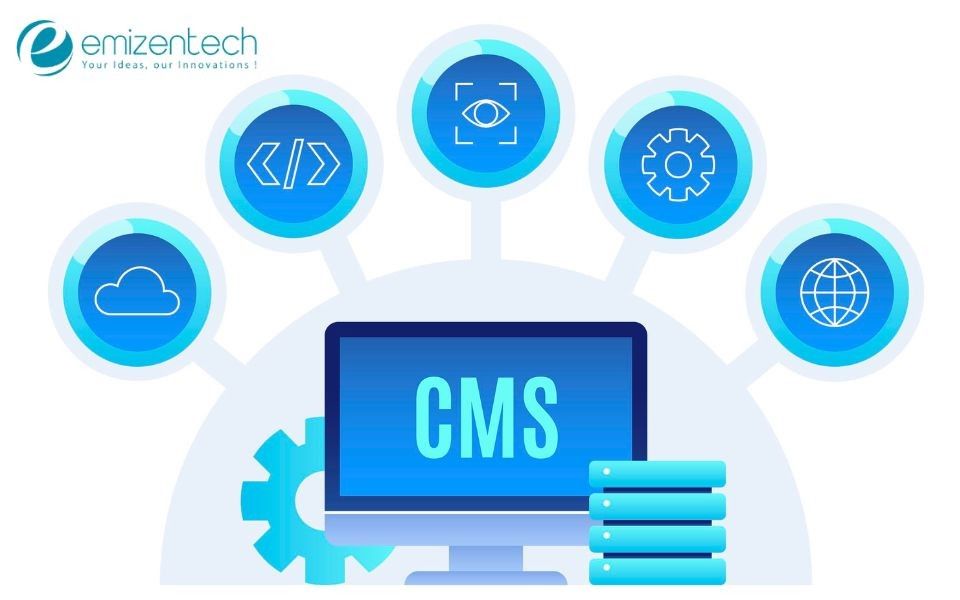
A Content Management System (CMS) is a software platform designed to help users create, manage, and update digital content on a website without needing advanced coding knowledge. It provides a structured interface that allows users to edit pages, publish blog posts, upload media files, and organize website content efficiently.
Most CMS platforms include built-in tools such as content editors, templates, plugins, and user management systems. These features simplify website administration and allow teams to collaborate easily when updating content. Businesses can maintain their websites more efficiently because they do not need to rely on developers for every small change.
Modern CMS platforms also support integration with marketing tools, analytics platforms, and eCommerce systems. With the support of professional CMS development services, businesses can customize CMS platforms to match their specific requirements while ensuring strong performance, scalability, and security.
Selecting the right CMS platform is important because it directly influences website performance, content management efficiency, and long-term growth. A suitable system helps businesses manage digital content smoothly while supporting future expansion.
A CMS impacts page loading speed, system stability, and how efficiently website data is processed. Choosing the right platform helps maintain consistent performance even during high traffic, ensuring visitors experience smooth navigation and reliable website functionality.
Businesses frequently update blog posts, service pages, and product information. A user-friendly CMS provides simple dashboards and visual editing tools that allow teams to update content quickly without relying on complex technical processes.
As businesses expand, their websites often require new features, integrations, and additional pages. A scalable CMS allows developers to extend functionality easily, ensuring the website continues supporting evolving business needs.
Website security is critical for protecting sensitive customer information. A reliable CMS provides built-in security features, regular updates, and strong authentication systems that help businesses maintain website safety and protect valuable data.
Selecting the right CMS requires evaluating several technical and operational factors. Businesses should consider usability, customization capabilities, and long-term scalability before finalizing a platform that supports their digital objectives.
A CMS should offer an intuitive interface that allows users to manage website content easily. Clear dashboards, simple navigation, and visual editors enable teams to publish content, update pages, and upload media without technical complexity.
Every business website has unique requirements. A flexible CMS allows developers to customize layouts, add new features, and integrate tools using themes, extensions, and plugins that enhance website functionality.
Security should always be considered when selecting a CMS platform. Systems that provide frequent updates, secure authentication methods, and strong data protection mechanisms help reduce vulnerabilities and protect websites from cyber threats.
An effective CMS should support search engine optimization by allowing control over metadata, URLs, headings, and content structure. These features help businesses improve search visibility and make their websites easier for users to discover online.
Modern websites often rely on multiple digital tools such as CRM systems, analytics software, payment gateways, and marketing platforms. A CMS that supports smooth integration helps businesses manage their operations efficiently.
Different CMS platforms are designed to meet different business requirements. Understanding the common types of CMS solutions helps organizations choose a platform that best suits their content management needs.
Open-source CMS platforms allow developers to access and modify the source code. This flexibility makes them highly customizable and cost-effective, enabling businesses to build websites tailored to their unique design and functional requirements.
Proprietary CMS solutions are developed and maintained by specific organizations. These systems typically offer dedicated support, structured environments, and controlled features, making them suitable for businesses that prefer managed solutions.
A headless CMS separates the backend content management system from the website’s front-end design. Content is delivered through APIs, allowing businesses to distribute content across multiple platforms such as websites, mobile apps, and digital devices.
Certain CMS platforms are designed specifically for online stores. These systems include features such as product catalog management, payment processing, and order tracking, helping businesses manage digital commerce operations efficiently.
Selecting a CMS without careful evaluation can create challenges later. Many businesses focus on short-term convenience while overlooking critical technical and operational factors during the decision-making process.
Some businesses select CMS platforms based only on current needs. As the website expands, the chosen system may struggle to support additional features or higher traffic levels.
A widely used CMS may not always be the right option for every business. Companies should evaluate their own goals, technical resources, and operational requirements before choosing a platform.
Security is sometimes underestimated when selecting a CMS. Platforms without strong protection measures can increase the risk of cyber threats, data breaches, and website downtime.
Managing a CMS without technical expertise can create long-term challenges. Working with experienced teams offering CMS development services helps businesses maintain secure and scalable websites.
Choosing the right CMS requires a structured evaluation process. Businesses should analyze their requirements carefully and compare different platforms before making a final decision.
The first step involves identifying website goals, content types, and expected features. Understanding whether the site focuses on blogging, services, or eCommerce helps determine the most suitable CMS.
Businesses should analyze hosting requirements, integration needs, and development capabilities before selecting a CMS platform that supports their technical environment.
Different CMS platforms offer varying features and pricing models. Evaluating customization options, plugin availability, and maintenance costs helps businesses select a solution that fits their budget.
Testing a CMS through demo environments or trial versions allows teams to understand how the system works in practice and whether it meets their usability expectations.
Many businesses rely on technical expertise to maximize the potential of their CMS platform. Professional support helps ensure websites function efficiently while meeting both performance and design requirements.
Experienced developers create CMS-based websites that align with business goals. Custom development ensures the structure, design, and functionality support the organization’s digital strategy.
Professional developers enhance website performance by improving loading speed, optimizing code, and managing databases effectively, which contributes to better user experiences.
Businesses often rely on multiple software tools for marketing, analytics, and customer management. Developers ensure smooth integration between these systems and the CMS.
Websites require continuous updates and monitoring. Reliable CMS development services help businesses maintain secure and optimized platforms while adapting to evolving technology.
Choosing the right CMS is an important step for businesses that want to maintain a strong digital presence. The right platform simplifies website management, improves content organization, and supports long-term scalability. By carefully evaluating usability, customization options, security, and integration capabilities, businesses can select a CMS that aligns with their goals.
Working with experienced professionals can make the process easier and ensure the platform is implemented correctly. Technology partners such as EmizenTech help businesses build scalable CMS-based websites that allow teams to manage content efficiently while maintaining performance and reliability.
A CMS allows users to create, edit, and manage website content without requiring advanced coding knowledge.
Popular options include WordPress, Drupal, Joomla, and headless CMS platforms depending on the business requirements.
Businesses should evaluate their content needs, scalability goals, integration requirements, and available technical resources.
Yes. Many CMS platforms include tools that help manage metadata, URLs, and content structure to improve search visibility.
Professional services help businesses customize, secure, and optimize their CMS platforms for better performance and long-term scalability.

© 2025 Crivva - Hosted by Airy Hosting Managed Website Hosting.