

Punjabi culture is rich, expressive, and deeply rooted in tradition. From energetic folk dances to colorful clothing and bold jewelry, every detail reflects pride and heritage. Among these cultural symbols, one accessory stands out for its simplicity and beauty—the paranda. If you have ever admired a classic Punjabi look with paranda, you already know how powerful this small accessory can be.
In this detailed guide, we will explore what is paranda, its origins, cultural significance, evolution, and how it continues to define the traditional Punjabi hairstyle with paranda, especially for the modern panjabi kudi.
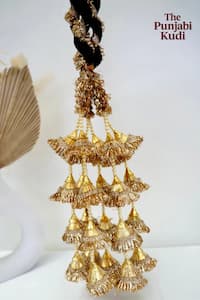
To truly understand Punjabi fashion, one must first understand what is paranda. A paranda is a traditional Punjabi hair accessory made from colorful threads, usually silk or cotton, and often decorated with beads, tassels, mirrors, pearls, or embroidery. It is tied at the end of a braid, enhancing its length, thickness, and visual appeal.
Traditionally, the paranda was handmade at home and used as a functional yet decorative way to secure long hair. Over time, it became a symbol of femininity, elegance, and cultural pride in Punjabi society.
The history of the paranda goes back several centuries. In rural Punjab, women valued long, healthy hair, and braiding it was part of daily life. To protect the braid and keep it neat throughout the day, women began tying threads at the end—this gradually evolved into what we now know as the paranda.
For generations, learning to braid hair and attach a paranda was a skill passed down from mothers and grandmothers. Every panjabi kudi grew up watching elders carefully braid hair before school, festivals, or weddings, making the paranda an emotional and cultural symbol.
The paranda is not just an accessory—it carries deep cultural meaning. In Punjabi households, grooming was closely linked with discipline, self-respect, and tradition. Wearing a neat braid with a paranda symbolized grace and modesty.
For a young panjabi kudi, wearing her first paranda was often a memorable moment. It marked growing up and embracing cultural identity. Even today, many women associate the paranda with nostalgia, warmth, and family traditions.
A Punjabi look with paranda is instantly recognizable. Whether paired with a Patiala suit, salwar kameez, or lehenga, the paranda adds movement, color, and authenticity to the outfit.
Unlike modern hair accessories, the paranda flows naturally with the braid. When a woman walks or dances, the tassels sway gracefully, enhancing the overall presence. This is why parandas are so popular in Punjabi folk dances like Giddha and Bhangra.
The most iconic traditional Punjabi hairstyle with paranda is a long, thick braid, but there are several variations depending on age, occasion, and personal style.
This is the most traditional style, where the hair is neatly braided from the crown and finished with a paranda. It is commonly seen during festivals and religious occasions.
A softer and slightly modern approach, perfect for casual gatherings. This style is especially popular among young panjabi kudi fashion lovers.
Often worn by girls and folk dancers, double braids with matching parandas look playful and energetic.
By adding waves or curls before braiding, the paranda appears fuller and more dramatic, ideal for weddings and stage performances.
Each of these styles shows how versatile a traditional Punjabi hairstyle with paranda can be.
For the modern panjabi kudi, the paranda is more than tradition—it is identity. Wearing a paranda today is a conscious choice to celebrate roots in a fast-changing world.
Many young women proudly style parandas with both traditional and fusion outfits, proving that cultural accessories can evolve without losing their essence.
Earlier parandas were simple and functional, but modern fashion has transformed them into statement pieces. Today, designers experiment with:
Silk and satin threads
Pearl and stone embellishments
Phulkari embroidery
Metallic accents and gota work
Despite these updates, the essence of what is paranda remains unchanged—it still symbolizes Punjabi heritage and elegance.
Punjabi weddings are known for their grandeur, and the paranda plays an important role in bridal and pre-wedding styling. Bridesmaids often wear coordinated outfits with matching parandas, while brides may opt for customized parandas during mehndi or jaggo ceremonies.
A Punjabi look with paranda during weddings adds authenticity and cultural depth that modern accessories cannot replace.
Festivals like Lohri, Baisakhi, and Teej are incomplete without traditional attire. During these celebrations, women of all ages proudly wear a traditional Punjabi hairstyle with paranda, symbolizing joy and cultural unity.
Seeing groups of women dressed in vibrant suits with flowing parandas is a powerful reminder of Punjab’s rich traditions.
Selecting the right paranda depends on the occasion and outfit:
For weddings: Heavily embellished parandas
For festivals: Bright and colorful designs
For everyday wear: Simple cotton or thread parandas
Matching your paranda with your dupatta or suit enhances the overall Punjabi look with paranda.
In an age dominated by fast fashion, traditional accessories like the paranda remain timeless because they carry meaning. Understanding what is paranda helps explain why it still resonates with women today.
For the modern panjabi kudi, the paranda is a way to stay connected to culture while expressing individuality. It represents confidence, grace, and pride in one’s heritage.
Social media has played a huge role in reviving traditional Punjabi fashion. Influencers, dancers, and content creators often showcase their Punjabi look with paranda, inspiring younger audiences to embrace this timeless accessory.
This renewed popularity proves that traditional styles never truly fade—they simply evolve.
To keep your paranda looking beautiful:
Store it properly to avoid tangling
Clean gently if it has embellishments
Avoid excessive pulling while tying
Taking care of your paranda ensures it remains a long-lasting part of your traditional Punjabi hairstyle with paranda.
Now that you clearly understand what is paranda, it’s easy to see why this humble hair accessory holds such a special place in Punjabi culture. From defining a graceful Punjabi look with paranda to completing a stunning traditional Punjabi hairstyle with paranda, the paranda is timeless.
For every proud panjabi kudi, the paranda is more than an accessory—it is a symbol of heritage, beauty, and cultural pride that continues to shine across generations.

© 2025 Crivva - Hosted by Airy Hosting Managed Website Hosting.