

Have you ever moved into a new place only to find out there’s no cable or phone line for internet service? Maybe you’re traveling, living in a rural area, or just trying to avoid costly cable packages. Many people think that internet access always needs a cable or phone line, but that’s not the case anymore.
Thanks to new technology, there are several reliable ways to connect to the internet without using traditional infrastructure. From wireless broadband to satellite connectivity, today’s options let people stay connected almost anywhere. Whether you work from home, stream videos, or just want to browse online, there are flexible choices that don’t need complicated setups or contracts.
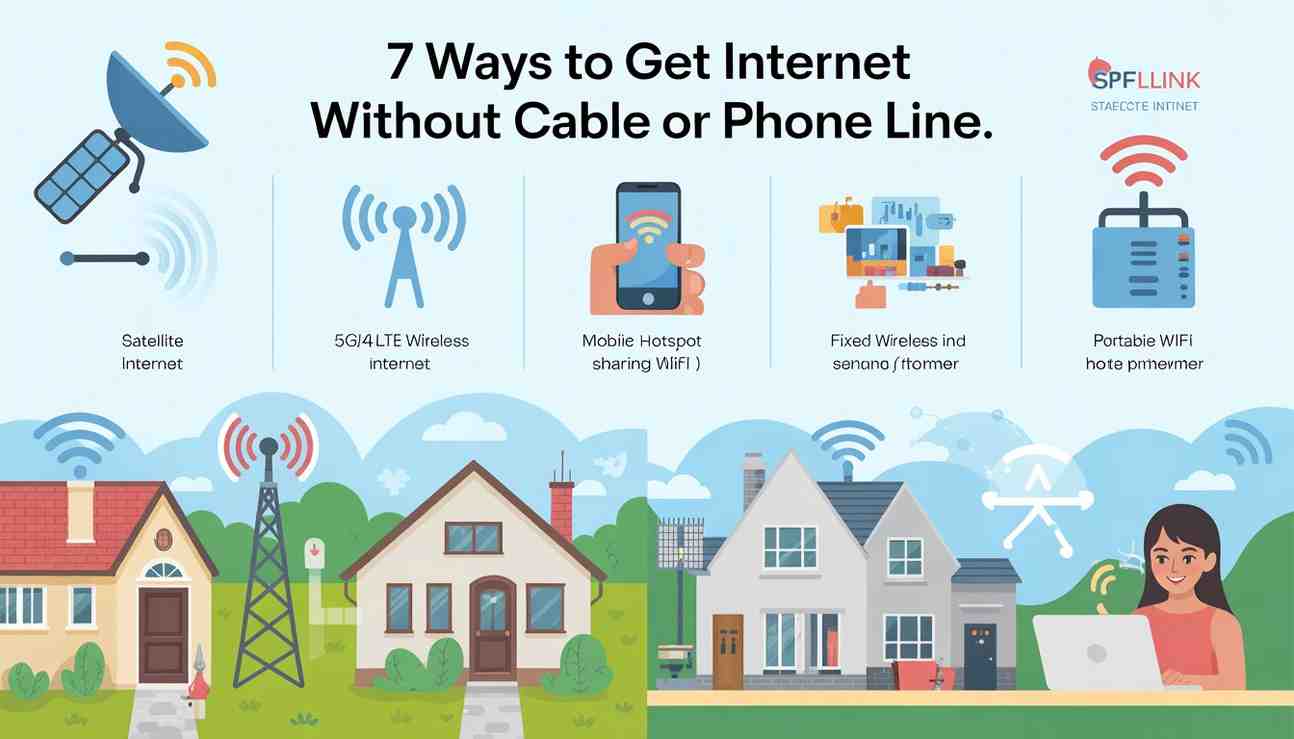
In this guide, we’ll look at seven practical ways to get the internet without a cable or phone line, explain how each option works, and discuss when they are most useful. By learning about these solutions, you can pick the best method for your location, budget, and connectivity needs.
One of the most common ways to access the internet without a cable or phone line is to use a mobile hotspot.
A mobile hotspot uses a cellular data network to create a Wi-Fi signal that nearby devices can connect to. Most modern smartphones have hotspot functionality built in, allowing you to share your mobile data connection with laptops, tablets, and other devices.
Mobile hotspots are especially useful for travelers, students, or people working remotely who need quick internet access without setting up a traditional service.
Fixed wireless internet is a good alternative to cable or phone connections. Instead of using underground cables, fixed wireless providers send internet signals through radio towers to a receiver installed at your home.
This type of connection is commonly used in rural or suburban areas where cable infrastructure may not be available.
A small antenna installed on your home communicates with a nearby wireless tower. The tower connects to a high-speed internet backbone, delivering broadband access to your location.
Despite these limitations, fixed wireless remains a popular choice for people who cannot access traditional broadband services.
Satellite internet connects through communication satellites orbiting the Earth. This option is available almost anywhere, including remote and rural areas.
A satellite dish installed at your home communicates with satellites in space. These satellites send data back and forth between your device and the internet network.
Satellite internet has improved significantly in recent years and can now deliver broadband speeds suitable for streaming, video calls, and remote work.
Public Wi-Fi is another way to access the internet without installing a home connection. Many places offer free or paid Wi-Fi access, including:
These networks allow people to connect to the internet using laptops or smartphones without relying on personal infrastructure.
When using public Wi-Fi, it’s important to take precautions such as using secure websites and avoiding sensitive transactions on unsecured networks.
5G technology has introduced a new way to get high-speed internet without traditional cables. 5G home internet uses cellular networks to provide broadband service to homes through a wireless router.
A 5G router connects to nearby cellular towers and distributes the connection as Wi-Fi throughout the home.
As 5G networks expand, this option is becoming increasingly attractive to people looking to avoid cable internet.
Portable Wi-Fi devices, sometimes called MiFi devices, are dedicated hotspot gadgets that connect to cellular networks and broadcast a Wi-Fi signal.
Unlike smartphone hotspots, these devices are designed specifically for internet sharing and often provide:
Portable devices are popular among frequent travelers, digital nomads, and remote workers who need reliable connectivity on the go.
In some neighborhoods or residential communities, people share internet access through community Wi-Fi networks.
These networks distribute internet connectivity across several homes using wireless routers and mesh technology. This method can lower costs while increasing internet access in areas where traditional providers may be limited.
Community networks are becoming more popular in areas where traditional infrastructure is limited or expensive.
Selecting the best internet solution without cable or a phone line depends on several factors.
Some technologies work better in urban areas, while others are designed for rural environments.
Activities like streaming, gaming, or remote work require faster and more stable connections.
Different internet solutions come with varying equipment costs and monthly fees.
If you travel frequently, portable solutions such as mobile hotspots may be the most convenient choice.
By evaluating these factors, you can choose the internet option that best fits your lifestyle and connectivity needs.
The belief that internet access needs a cable or phone line is becoming outdated. Today, various technologies offer reliable ways to stay connected without traditional infrastructure.
Mobile hotspots, fixed wireless services, satellite internet, public Wi-Fi, 5G home internet, portable devices, and community networks all provide practical alternatives based on where you live and how you use the internet.
As wireless technology continues to improve, these options are becoming faster, cheaper, and more widely available. Whether you live in a rural area, travel often, or want a flexible internet solution, it’s now easier than ever to stay connected without depending on cable or phone lines.
Yes. Several options, such as mobile hotspots, satellite internet, fixed wireless, and 5G home internet, let you access Wi-Fi without a cable or phone line.
Satellite internet and fixed wireless connections are often the most reliable solutions for rural areas where cable infrastructure is limited.
In many cases, yes. If the cellular signal is strong and the data plan supports high speeds, mobile hotspots can handle streaming and video calls.
Satellite internet uses a dish installed at your location to communicate with satellites in orbit, which relay data between your device and the internet.
Public Wi-Fi can be safe if you take precautions such as using secure websites (HTTPS), avoiding sensitive transactions, and using a VPN when possible.
In many areas, 5G home internet can deliver broadband speeds comparable to cable connections, making it a viable alternative for households without wired infrastructure.

© 2025 Crivva - Hosted by Airy Hosting Managed Website Hosting.