


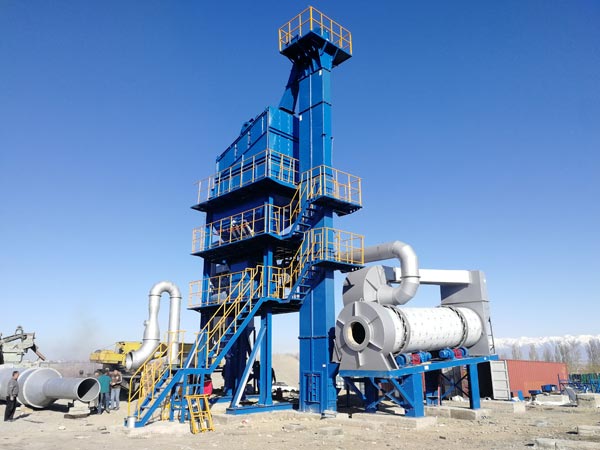
Vietnam continues to invest heavily in provincial road construction. Local governments aim to improve connectivity between rural areas, industrial zones, and national highways. As a result, many contractors face the same question: which asphalt mixing plant capacity can support stable production while still controlling investment cost?
For most provincial road projects, a 120 TPH batch mix asphalt plant often becomes the most balanced choice. It delivers enough output for medium-scale paving projects, yet it remains flexible for contractors who operate multiple projects across different provinces.
However, not all 120 TPH asphalt plants offer the same value. Contractors must evaluate several factors such as production stability, fuel efficiency, adaptability to local aggregates, and long-term maintenance cost. Therefore, choosing the right configuration matters as much as choosing the capacity itself.
In this article, we explore how Vietnamese contractors select a 120 TPH asphalt batch plant, what features matter most for provincial road construction, and which type of plant provides the best long-term performance.
First, it helps to understand why many contractors prefer the 120 TPH range. Vietnam’s provincial road projects usually require steady asphalt supply but rarely demand extremely large output.
In many cases, road contractors must balance three key factors: production capacity, transportation logistics, and project duration. Because of this, a 120 TPH asphalt batch plant fits the scale of most projects.
A typical provincial road construction project in Vietnam may involve:
• Road length: 10 – 40 km
• Road width: 7 – 12 meters
• Asphalt layer thickness: 5 – 10 cm
Based on these parameters, the project may require between 20,000 and 60,000 tons of asphalt mixture.
If the contractor uses a 120 TPH asphalt plant and runs the plant for 8 hours per day, daily production can reach approximately 800 – 900 tons. This means contractors can complete paving within a practical construction timeline.
Therefore, the 120 TPH capacity provides an excellent balance between productivity and equipment investment.
More importantly, contractors can also deploy this plant for multiple smaller projects after finishing the first road project. This flexibility improves equipment utilization.
Although capacity matters, contractors should never select an asphalt plant based on output alone. Instead, they should examine several technical and operational factors.
These features directly influence asphalt quality, fuel consumption, and maintenance costs.
Vietnam has diverse aggregate sources. Some regions use limestone aggregates, while others use basalt or river stone. Because moisture content can vary widely, the drying drum must perform efficiently.
A high-quality 120 TPH asphalt batch plant should include:
• Efficient drying drum design
• High-performance burner system
• Strong heat insulation
This design ensures aggregates reach the correct temperature quickly while minimizing fuel consumption.
For contractors, lower fuel consumption means lower operating cost across long paving projects.
Next, asphalt mixture quality depends heavily on accurate batching. If the plant cannot control aggregate and bitumen proportions precisely, the road surface may suffer from early cracking or deformation.
Therefore, a reliable asphalt batch plant should provide:
• High-precision aggregate weighing system
• Accurate bitumen metering
• Consistent mixing cycle
Most modern 120 TPH plants operate with a 45–50 second mixing cycle. This cycle ensures thorough mixing while maintaining stable production output.
Environmental standards in Vietnam continue to become stricter, especially near urban areas.
As a result, contractors must ensure their asphalt plants meet emission regulations. A good 120 TPH asphalt plant should include:
• Primary cyclone dust collector
• Secondary baghouse dust filter
• Recycled filler recovery system
This design not only reduces environmental impact but also recovers mineral powder for reuse in the mixing process.
Once contractors confirm the capacity and technical features, the next important decision involves plant mobility.
Vietnam’s provincial road projects often spread across different districts or provinces. Because of this, some contractors prefer mobile asphalt plants while others choose stationary systems.
Let’s compare these options.
A mobile 120 TPH asphalt batch plant offers several advantages:
• Faster installation and relocation
• Lower foundation requirements
• Ideal for contractors handling multiple short-term projects
For example, a contractor working on three provincial road sections in different districts can relocate the plant between projects. This mobility reduces asphalt transportation distance and lowers trucking cost.
However, mobile plants sometimes have slightly higher equipment costs due to their modular design.
On the other hand, a stationary asphalt plant may suit contractors who operate a long-term asphalt supply base.
This configuration offers:
• Larger storage capacity
• Stronger structural stability
• Long-term production efficiency
Some contractors in Vietnam build fixed asphalt supply stations near large infrastructure corridors. In this case, a stationary 120 TPH plant becomes a reliable long-term investment.
After evaluating plant type and performance features, contractors should also review the full plant configuration. A well-designed system ensures smooth material flow and stable production.
A standard 120 TPH asphalt batch plant usually includes the following components:
This system stores and meters different aggregate sizes. It typically includes four or five cold bins with belt feeders.
The control system adjusts feeder speed automatically. As a result, the plant maintains consistent aggregate proportions before the drying process.
The drying drum removes moisture from aggregates and heats them to the required mixing temperature.
High-quality burners can operate with diesel, heavy oil, or natural gas. Many Vietnamese contractors prefer diesel burners due to fuel availability.
After heating, aggregates enter a vibrating screen. The screen separates aggregates into several size categories.
Then the plant stores them in hot bins. Accurate screening ensures the mixing system receives correct aggregate proportions.
The twin shaft mixer blends aggregates, bitumen, and mineral filler.
This mixing system produces uniform asphalt mixture and maintains consistent output.
Modern asphalt plants now use fully automatic PLC control systems.
Operators can monitor production data, adjust mix formulas, and track material consumption through a user-friendly interface.
This automation reduces operator errors and improves production efficiency.
Finally, choosing the right plant supplier plays a major role in project success. Even the best equipment requires reliable technical support.
Vietnamese contractors usually evaluate suppliers based on several practical factors.
Asphalt plants require professional installation and commissioning. Contractors prefer suppliers who can send experienced engineers to guide the process.
This support ensures the plant reaches full production quickly.
Road projects often run on tight schedules. If a plant stops due to missing spare parts, the contractor may face project delays.
Therefore, reliable suppliers maintain spare parts inventory or provide fast international shipping.
Contractors also look for suppliers with successful projects in Southeast Asia.
Real project cases demonstrate that the equipment can adapt to local materials, climate conditions, and construction requirements.
In summary, a 120 TPH asphalt batch plant remains one of the most practical choices for contractors building provincial roads in Vietnam. It provides the right balance between production capacity, investment cost, and operational flexibility.
However, contractors should not focus on capacity alone. They must also evaluate drying efficiency, batching accuracy, environmental performance, plant mobility, and supplier reliability.
When these factors work together, the asphalt plant can deliver consistent production, reduce operating costs, and support multiple road construction projects over many years.
If you are planning a provincial road construction project in Vietnam and considering a 120 TPH asphalt batch plant, the right equipment solution can significantly improve both paving efficiency and long-term profitability.
AIMIX provides reliable asphalt batch plants designed for international road construction projects. Our engineering team helps contractors select the most suitable plant configuration based on project scale, production demand, and local conditions.
If you would like to learn more about 120 TPH asphalt plants or receive a customized solution for your project in Vietnam, feel free to contact AIMIX today. Our specialists are ready to help you build roads more efficiently and successfully.

© 2025 Crivva - Hosted by Airy Hosting Managed Website Hosting.