

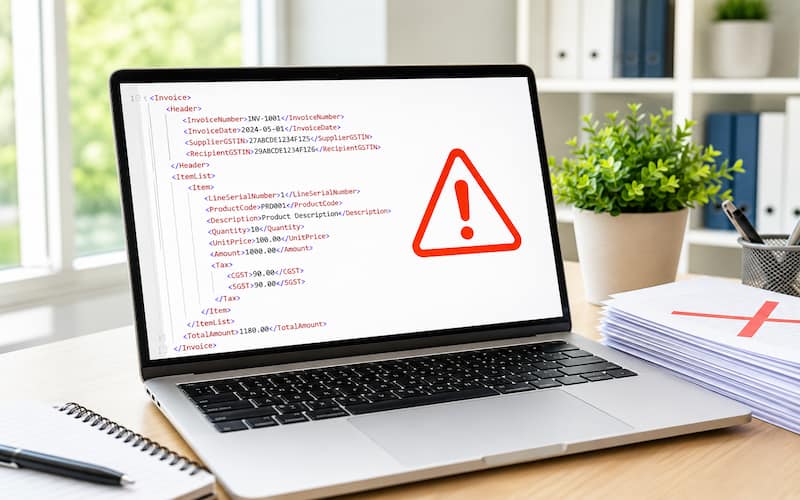
In today’s digital tax environment, E-invoicing in Saudi Arabia is fully structured and strictly enforced under a real-time validation system. Businesses often assume that once an invoice is generated from an ERP system, it is ready to be submitted. However, many invoices fail at the XML schema validation stage, which is the first technical checkpoint before clearance or reporting is accepted.
This failure is not a random system error. It is the result of strict compliance rules defined in the XML Schema Definition (XSD) used by the ZATCA Fatoora platform. Even a minor mismatch in structure, format, or data type can cause rejection. Understanding these issues in depth is critical for developers, ERP consultants, and finance teams responsible for compliance.
Below is a detailed breakdown of the most common and technical reasons why Saudi E-Invoice XML fails schema validation.

The schema defines a fixed structure that must be followed exactly. XML is not flexible in this environment; order and hierarchy matter.
Common structural issues include:
Even when all required data exists, incorrect structure alone is enough to fail validation. The system expects a precise sequence defined in the official schema, not a flexible ERP output.
One of the most frequent causes of failure is missing required fields. The schema includes strict mandatory elements that must appear in every invoice.
Examples include:
A common issue is that ERP systems store this information but fail to map it correctly into XML output. This creates a gap between business data and technical schema requirements.
Each XML field has a defined data type. If the data does not match the expected format, validation fails immediately.
Typical data type errors:
The schema does not attempt to “interpret” values. It strictly validates format consistency.
Tax calculations are extremely sensitive in Saudi invoicing systems. Even small rounding differences can trigger validation errors.
Common problems include:
For example, if line items sum to 115.00 but invoice total is 114.99 due to rounding logic, validation will fail.
The schema uses predefined code lists instead of free-text values. These codes must be exact.
Frequent mistakes include:
These controlled vocabularies are strictly enforced, and any deviation results in rejection.
XML namespaces define which schema version is being used. A mismatch here can invalidate the entire document.
Common issues include:
This problem is common during system upgrades when ERP configurations are not updated alongside regulatory changes.
XML is highly sensitive to encoding rules, and even invisible characters can cause failure.
Common encoding problems:
If encoding is not clean and standardized, the schema parser may reject the entire document.
Schema validation also checks logical consistency, not just structure.
Failures occur when:
Even if XML is technically valid, inconsistent calculations will still result in rejection.
Every invoice must have unique identifiers to ensure traceability.
Common issues include:
These checks are essential for preventing fraud and maintaining audit integrity.
Advanced compliance requires digital stamping and signature validation. Errors in this layer are critical.
Typical problems:
If the signature fails validation, the invoice is automatically rejected regardless of correctness in other areas.
Most schema failures originate before XML is even generated.
Common ERP-related issues:
This is especially common in large ERP systems like SAP and Oracle where customization is extensive.
Middleware often sits between ERP systems and ZATCA APIs, and this layer can introduce unexpected errors.
Common failures include:
Even if ERP output is correct, middleware corruption can still lead to schema rejection.
XML schema validation failures in Saudi e-invoicing systems are almost always caused by precise technical mismatches rather than general system errors. These include structural inconsistencies, missing mandatory fields, incorrect data types, encoding issues, and integration mapping problems.
Successful compliance requires a disciplined approach across the entire invoice lifecycle—from ERP data entry to XML generation, middleware transformation, and final API submission. Businesses that implement strict validation checks at each stage significantly reduce rejection rates and ensure smoother compliance with regulatory requirements.

© 2025 Crivva - Hosted by Airy Hosting Managed Website Hosting.