

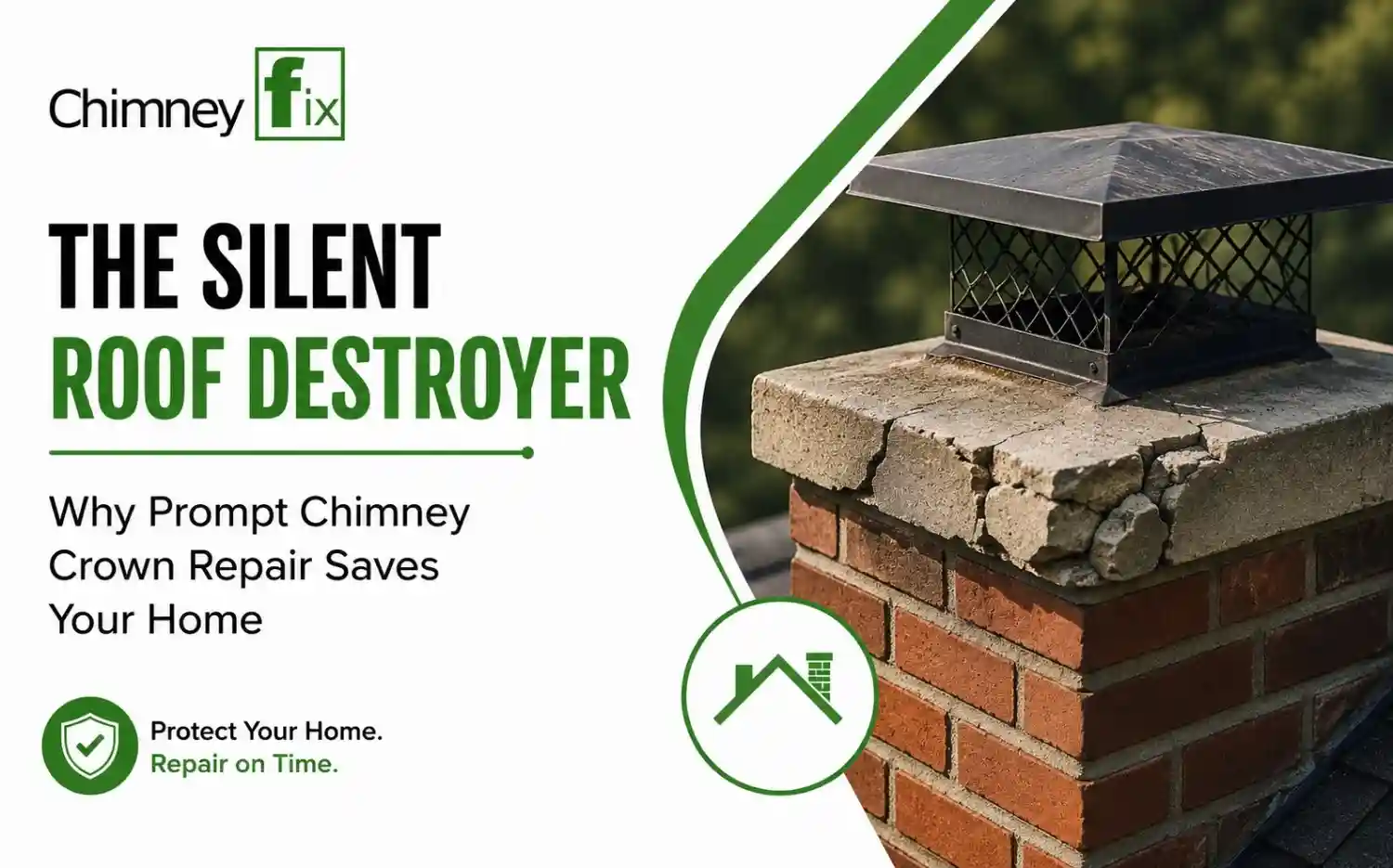
Water constantly attacks the highest point of your roof. While you worry about missing shingles, a cracked concrete cap silently funnels rain straight into your masonry. Ignoring this hidden damage guarantees massive structural rot right above your ceiling. Protect your living room before the next major storm hits.
The top cement layer acts as your absolute first line of defense. It seals the open gap between your clay flue and your exterior bricks. This heavy seal actively sheds water away from the vulnerable masonry below.
Sun bakes this exposed cement all summer long. The rigid material becomes highly brittle over time. Winter then brings freezing rain and heavy snow. These sudden temperature shifts cause tiny surface fractures instantly.
Rainwater finds these microscopic cracks immediately. The water sits inside the porous cement and waits patiently for the next freeze. Ice expands with incredible physical force. This frozen water violently pushes the tiny cracks much wider.
Soon, the cement barrier splits completely open. You now have a massive hole sitting exposed on your roof. Rain pours directly into the soft center of your brick structure. This dark core never sees sunlight, so it never dries out.
Wet bricks turn soft and crumbly fast. You must address severe masonry decay before the entire heavy stack shifts. A shifting stack cracks your interior drywall and ruins your roof shingles.
This internal rotting process takes several months to show on the outside. By then, the internal damage is usually quite severe. The heavy clay bricks rely entirely on that top seal for daily survival.
Without a solid cap, the whole system rots from the inside out. Water dissolves the hard mortar holding the individual bricks together. The cement turns into loose sand and washes away in the rain.
Deep gaps quickly form between your exterior bricks. These open holes invite pests and even more rainwater into your home. A simple crack slowly compromises the entire structural integrity of your fireplace.
The freezing cycle repeats every single winter. Small surface cracks become deep structural craters by spring. Catching these early fractures saves your entire exterior from a sudden collapse.
Climbing a steep, slippery roof is incredibly dangerous. Fortunately, your house gives you plenty of obvious clues down on the ground. Walk outside and look closely at your roofline today.
Bring a pair of binoculars for a closer, safer view. Look for missing chunks of cement at the very top edge. Jagged edges mean the top protective layer is actively falling apart right now.
Pay close attention to the color of your outside bricks. Bright white powder running down the sides is a terrible sign. This powdery stain proves water is traveling entirely through the solid brick.
The moving water leaves natural salts behind on the exterior surface. This staining happens long before you see a single leak inside. Act fast the very moment you spot these chalky marks outside.
Check your yard for broken pieces of red clay. If you find heavy brick faces in your grass, the freezing damage is advanced. The expanding ice literally popped the hard front off your bricks.
Go inside and check your actual firebox. Shine a bright flashlight up past the heavy metal damper. Water dripping down the metal liner causes instant, aggressive rust.
A rusted damper plate strongly indicates a severely broken top seal. Listen closely during the next heavy rainstorm. Hearing steady drips inside your dark firebox confirms a massive leak high above.
Look for ugly brown water stains on your living room ceiling. Water travels down the outside of the hidden brick column silently. By the time it stains your drywall, the attic is fully soaked.
Smell the air right next to your hearth. A damp, musty odor lingering near the floor is a massive red flag. Water mixing with old, dirty soot smells absolutely terrible.
Do not ignore this foul warning sign hoping it just goes away. Getting a professional structural assessment tracks the sneaky moisture back to the roof. Guessing where the water comes from only wastes your money.
Handymen often try fixing this severe damage with cheap silicone caulk. Caulk melts and peels away quickly under the brutal summer sun. It simply cannot survive the extreme temperatures on a hot roof.
Roofing tar is another terrible temporary fix. Thick tar actually traps hidden moisture inside the brick core permanently. The trapped water cannot evaporate during normal dry weather.
This trapped moisture completely destroys the structural integrity faster. The bricks actually melt into soft clay over time. A proper repair requires tearing away all the old, rotten cement entirely.
Expert masons must expose the solid brick underneath first. They build a custom wooden form around the top opening. This sturdy form holds fresh, high-strength concrete perfectly in place.
Good concrete needs a slight overhang past the brick edge. This smart design forces heavy rain to drop safely away from the walls. It works exactly like the eaves on your house roof.
A flat top allows water to pool directly on the cement. A sloped design easily sheds water incredibly fast. Gravity does all the hard work to keep your bricks dry.
Adding a metal drip edge creates another layer of permanent protection. It stops stubborn water from curling backward under the cement overhang. This small detail prevents massive water damage down the road.
Poured concrete creates a solid, unified block of heavy protection. It lacks the weak seams found in cheap mortar patches. This solid block withstands extreme freezing and thawing cycles easily.
Do not trust a basic masonry patch for this critical job. Demand a poured concrete cap designed specifically for extreme weather. This prevents a second, more expensive repair bill next year.
Ignoring the problem remains the most expensive mistake you can make. Water never stops destroying your home once it finally gets inside. Small repairs today prevent disastrous, life-threatening hazards tomorrow.
Take immediate action the very minute you spot strange moisture. Secure your home and your family before the harsh winter weather arrives. You can easily protect your exterior brickwork with proper professional care right now.
Author Bio: chimneyFix provides reliable fireplace maintenance, structural safety inspections, and expert masonry rebuilding. Specializing in identifying hidden water damage, they help local homeowners protect their valuable property from severe leaks and costly rot. Gain total peace of mind before freezing weather destroys your exterior. Reach out to secure a free estimate today and assess your roof safely. Visit chimneyFix to learn more about keeping your structure secure.

© 2025 Crivva - Hosted by Airy Hosting Managed Website Hosting.