


Walk through any chemical manufacturing facility-small or large-and you’ll notice a common pressure point. It’s not output volume. It’s not even raw material cost. It’s stability.
Plants that struggle rarely fail because they lack equipment. They fail because reactions drift, solvents behave unpredictably, or temperature control slips just enough to cause downstream problems. These issues don’t always trigger alarms, but they quietly erode yield, safety margins, and consistency.
In recent years, many manufacturers have learned this lesson the hard way. Scaling production without tightening process control often introduces more risk than reward.
What’s changing now is how engineers think about stability-not as a feature of one machine, but as an outcome of how systems interact.
Chemical reactions are unforgiving. Minor fluctuations in temperature, pressure, or mixing speed can lead to:
In early-stage production, these effects may appear manageable. As throughput increases, they compound.
One plant manager once described it plainly:
“We weren’t losing batches. We were losing predictability. And that cost us more than scrap ever did.”
The challenge is that many facilities focus on output metrics before understanding how fragile reaction environments can be at scale.
Temperature control is often treated as a box to check during procurement. Heat transfer area? Adequate. Cooling medium? Available. Control loop? Installed.
Yet in real operations, temperature control is rarely static. Reaction profiles shift. Solvent compositions change. Exothermic behavior intensifies with volume.
This is where poor thermal planning shows its impact. Overcompensated heating leads to thermal shock. Slow cooling drags cycle times. Uneven heat distribution creates localized hotspots that instrumentation never sees.
Facilities that avoid these pitfalls don’t just buy “better equipment.” They design around thermal behavior from the start.
This often includes systems that allow close observation of reaction dynamics and fast response when conditions begin to drift-especially during development, pilot runs, or specialty production.
There’s a noticeable difference in how engineers behave when they can actually see what’s happening inside a process.
Transparent systems, for example, don’t just offer visual access. They encourage curiosity. Operators notice color changes sooner. Foam formation doesn’t go unseen. Crystallization is observed instead of inferred.
In one specialty chemical facility, visual monitoring reduced troubleshooting time by weeks during scale-up. Engineers stopped guessing. They adjusted in real time.
This mindset shift is one reason many R&D and fine chemical operations continue to rely on platforms that prioritize observation and control over brute-force capacity.
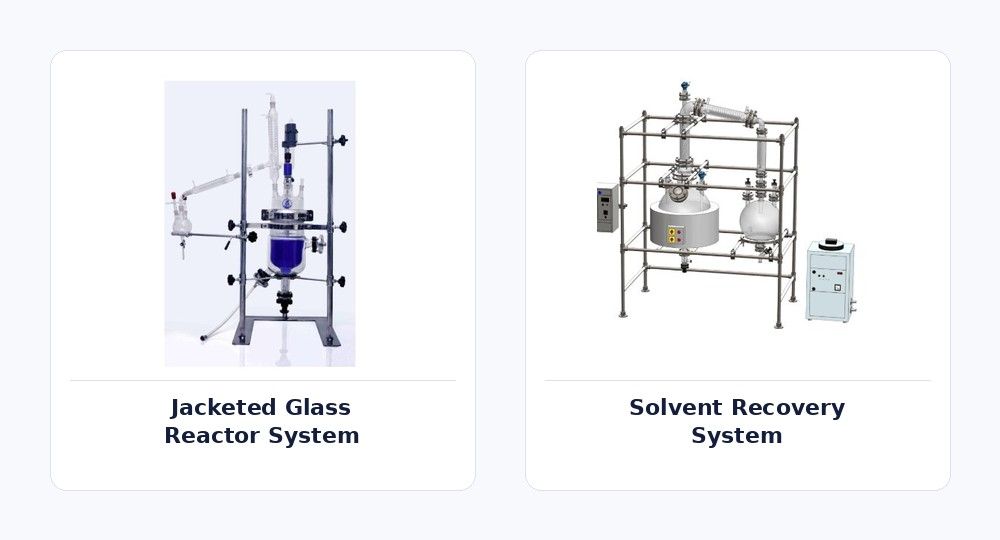
For teams working with sensitive reactions, tools like a jacketed glass reactor are often referenced as part of broader process design discussions-not because of output, but because of the operational clarity they provide.
Solvents rarely attract attention unless something goes wrong. A leak. A compliance issue. A sudden cost spike.
Yet solvent handling is one of the most persistent sources of inefficiency in chemical plants. Losses occur through evaporation, contamination, incomplete recovery, or conservative disposal practices driven by uncertainty.
Many facilities accept these losses as inevitable. They shouldn’t.
The truth is, solvent behavior is highly predictable when systems are designed to respect its properties-boiling points, vapor pressure, and compatibility with reaction residues.
The more predictable solvent handling becomes, the easier it is to close the loop.
There’s a misconception that solvent recovery is primarily a cost-saving exercise. In reality, the bigger gains often come from process discipline.
Consistent recovery means:
Plants that treat recovery as an afterthought tend to oversize disposal systems and undersize control systems.
Those that treat it as part of core process design build tighter operations. They track solvent quality, not just quantity. They understand when recovery efficiency drops and why.
Discussions around deploying an industrial solvent recovery unit often emerge from this mindset-where recovery supports consistency rather than acting as a bolt-on utility.
Ask engineers where most problems originate, and many will point not to individual machines, but to interfaces between them.
Heat transfer meets mixing. Reaction meets separation. Recovery meets reuse.
Each handoff introduces risk if systems are designed in isolation. Temperature mismatches. Flow imbalances. Contaminant carryover.
Integrated process thinking reduces these friction points. It encourages questions like:
Facilities that ask these questions early tend to avoid expensive retrofits later.
Several industry trends are pushing manufacturers toward tighter control and better system visibility:
These pressures reward facilities that invest in understanding processes deeply rather than scaling blindly.
Data sheets matter. Specifications matter. But experience teaches lessons that rarely appear in procurement documents.
It teaches that:
Guest posts like this aren’t about promoting solutions. They’re about sharing patterns seen across plants, projects, and years of trial and error.
Facilities that internalize these patterns tend to make better decisions-often quietly, without dramatic overhauls.
In chemical manufacturing, reliability doesn’t make headlines. It doesn’t impress investors at first glance.
But it keeps customers coming back. It keeps regulators satisfied. It keeps engineers sleeping at night.
Stability is rarely achieved through one purchase or one upgrade. It’s built through deliberate choices-about visibility, control, integration, and respect for process fundamentals.
The plants that understand this don’t chase scale for its own sake. They scale confidence first.
And in an industry where small deviations can create large consequences, that mindset makes all the difference.

© 2025 Crivva - Hosted by Airy Hosting Managed Website Hosting.