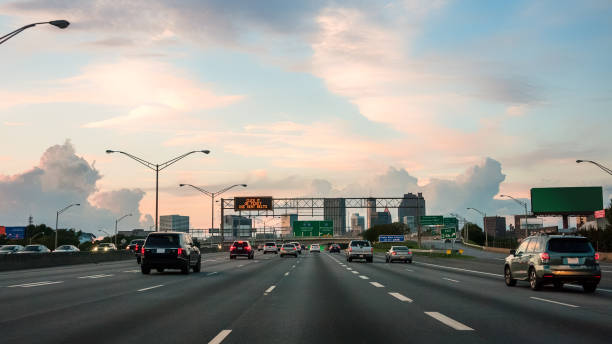
If you’ve lived in Georgia long enough, you know the drill. You hop on I-285 or GA-400, and within five minutes, you’re either dodging a ladder that fell off a truck or sitting dead-still in traffic that shouldn’t exist at 2:00 PM on a Tuesday. It’s chaotic out there. And unfortunately, that chaos is exactly why your insurance agent keeps sending you renewal notices with higher numbers every six months. Everyone is looking for cheap car insurance Georgia residents can actually afford, but to find it, you have to understand the specific local mess we’re dealing with right now.
It’s not just a “you” problem. In 2025, Georgia is seeing double-digit rate increases in many areas. While some of that is inflation, a lot of it is just the reality of life in the South. From the way our cities are built to the specific cars we love to drive, everything is working against the “cheap” insurance dream. But if you know how the insurers are doing the math, you can actually start to push back on those costs.
The biggest thing hitting your wallet right now is traffic density. Georgia is growing fast – too fast for the roads to keep up. When you pack more cars into metro areas like Atlanta, Savannah, or Gwinnett County, you get more accidents. It’s simple math for the insurance companies: more cars in a small space equals a higher chance of a claim. They aren’t just looking at your driving; they’re looking at how many other people are around you who might hit you.
Then there are the accident trends. We aren’t just having more accidents; we’re having worse ones. High-speed wrecks on our interstates lead to massive medical bills and totaled cars, which forces companies to raise everyone’s rates to cover those big payouts. This ties directly into repair cost patterns. Take a look at the front of a new SUV. Behind that plastic bumper are sensors, cameras, and radar systems for your cruise control. A simple “fender bender” that used to cost $500 to fix now costs $3,000 because all that tech has to be replaced and recalibrated.
Finally, you can’t ignore location influence. Your ZIP code is basically your insurance destiny. If you live in an area where car thefts are high or where falling trees are a regular thing during summer storms, you’re going to pay more. Insurers have maps that show exactly where the “risky” neighborhoods are, and moving just across a county line can sometimes save you a few hundred dollars a year.
The way we drive in this state is a huge factor. For many of us, urban commuting is a daily nightmare. Spending two hours a day in stop-and-go traffic on the Downtown Connector is not just bad for your mental health; it’s bad for your insurance rate. That constant idling and frequent braking is a prime environment for rear-end collisions, and insurers charge more for it.
On the other hand, suburban driving has its own set of problems. You’ve got parents rushing to school zones, chaotic grocery store parking lots, and long stretches of 45-mph roads where people are constantly turning in and out of driveways. It’s a different kind of risk. Then you have highway usage. If you live in a place like Forsyth or Henry County and commute long miles every day, you’re on the road longer. More miles means more exposure to risk, plain and simple.
We also deal with seasonal travel. Georgia is a hub. Whether it’s people driving down to Florida for spring break or fans heading to a big game in Athens on a Saturday, our roads get flooded with out-of-towners who don’t know where they’re going. That influx of “confused” drivers creates spikes in accidents during certain times of the year, and those spikes are baked into our annual premiums.
What you choose to park in your driveway is a massive piece of the puzzle. Popular vehicle types in Georgia – think full-size pickups like the F-150 or heavy SUVs – often cost more to insure. They’re great for hauling trailers, but they do a lot of damage to other cars in a wreck. Because they can cause more “liability” damage, the insurance company charges more to cover them.
However, modern safety features are your best tool for lowering that bill. If your car has automatic emergency braking or blind-spot alerts, you’re less likely to have those expensive accidents. But there’s a catch: repair availability. If you buy a fancy European import or a niche electric vehicle, there might only be a few shops in the whole state that can fix it properly. Insurers know these shops charge a premium, so they pass that cost on to you.
Then there is the vehicle age impact. A brand-new car is expensive to replace if it’s totaled, but it has the best safety ratings. An old “beater” is cheap to replace, but it lacks the tech that keeps you out of the hospital. Most experts say a car that is about five years old is the “sweet spot” for Georgia – it’s lost its initial value, but it still has the safety tech that keeps your insurance company happy.
So, how do you actually lower the bill? The most effective move is deductible selection. If you’ve got a thousand dollars sitting in an emergency fund, raise your deductible. Moving from $500 to $1,000 can take a huge chunk out of your monthly payment. You’re basically telling the company, “I’ll handle the small scratches myself,” and they’ll reward you for it.
Next, do a coverage alignment check. If your car is 15 years old and worth less than $2,000, why are you still paying for “collision” coverage? You might be paying more in premiums over two years than the car is actually worth. You also need to do a usage evaluation. Since 2020, a lot of people have started working from home or hybrid schedules. If you’re only driving 5,000 miles a year now instead of 15,000, your insurance company needs to know. Lower mileage almost always equals a lower rate.
Finally, watch your policy timing. Don’t wait until the day your bill is due to shop around. Start looking three weeks before your current policy expires. Rates in Georgia fluctuate constantly, and being early gives you the leverage to walk away if a company tries to hike your rate for no reason.
At the end of the day, Georgia is just an expensive state to drive in. We’ve got the traffic, the heat, and the high repair costs. But that doesn’t mean you have to just accept whatever bill they send you. Most people set their insurance to “autopay” and never look at it again. That is exactly what the big companies want you to do.
If you take twenty minutes to actually look at your limits and your deductible, you might find out you’re paying for “roadside assistance” or “rental car coverage” that you don’t even need. Or maybe you haven’t updated your mileage since you started that new job. In Georgia, where everything else is getting more expensive, those small tweaks are the only way to keep your hard-earned money in your own pocket. It’s your money – don’t give the insurance companies more of it than you have to.

© 2025 Crivva - Hosted by Airy Hosting Managed Website Hosting.