The shipping industry is at a turning point. With global pressure to cut carbon emissions and regulators tightening environmental rules, shipping companies are being forced to think far ahead. Among the many alternatives being explored, E-fuel stands out as one of the most promising options for decarbonizing the global fleet, not because it is the easiest path, but because it fits how ships actually work.
E-fuels, also called electrofuels or synthetic fuels, are produced by combining green hydrogen with carbon dioxide or nitrogen using renewable electricity. The result is a fuel that works much like conventional marine fuel, but with significantly lower carbon emissions over its lifecycle.
For shipping, this matters more than it might in other industries. Ships are large, complex machines that operate for 20 to 30 years. Replacing an entire engine system is not a realistic short-term option for most fleet owners. E-fuels can be used in existing engines with minimal modification, which makes them a practical bridge between where the industry is today and where it needs to go.
Battery-electric propulsion works well for short-sea ferries and harbor vessels. Hydrogen has potential, but requires cryogenic storage and completely new infrastructure. Ammonia is being studied seriously, but it is toxic and poses handling challenges at scale.
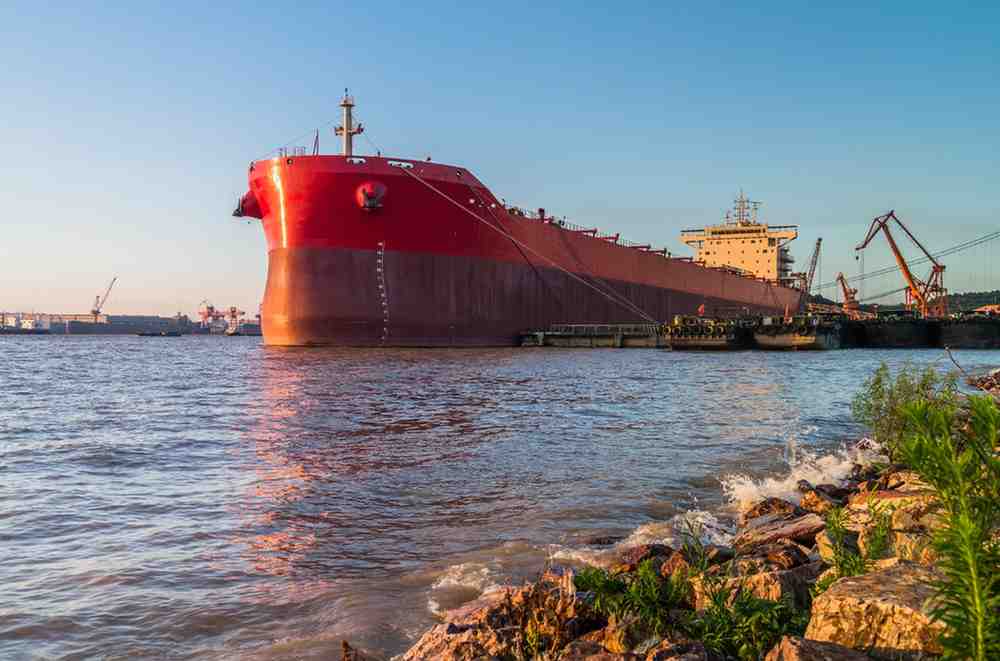
E-fuels do not carry most of these complications. They are energy-dense, easy to store and transport through existing infrastructure, and compatible with port facilities worldwide. For long-haul deep-sea shipping, which accounts for a large share of global maritime emissions, e-fuels offer a scalability that competing technologies currently struggle to match.
Maersk, one of the world’s largest container shipping companies, has already ordered a series of vessels capable of running on green methanol, which falls within the broader e-fuel category. By 2025, the company had received its first methanol-enabled container ships and was actively building out a supply chain for the fuel. Maersk has publicly committed to reaching net-zero emissions by 2040, and green methanol is central to that strategy. This real-world investment shows that the conversation around e-fuels is not theoretical. It is already shaping fleet decisions at the highest levels of the industry.
The global conversation about marine fuels is shifting fast. The International Maritime Organization has set a target to reduce total shipping emissions by at least 50 percent by 2050 compared to 2008 levels, with ambitions for net zero close to that date. Within that framework, no single fuel is expected to dominate. But e-fuels are increasingly seen as the category most likely to serve the largest and most fuel-hungry vessels that cannot easily electrify.
In Europe, a group of ports, fuel producers, and shipping companies launched a green corridor initiative connecting ports in Scandinavia and northern Europe. The project involves trialing e-fuel supply chains across real trade routes to understand cost structures, logistics, and regulatory requirements. Early findings confirmed that e-fuels could be integrated into existing port operations with manageable adjustments. These pilot projects are building the practical knowledge base that will support wider adoption.
No honest article on this topic should avoid the cost question. At present, producing e-fuels costs more than manufacturing traditional fossil fuels. That gap is real, but it is also narrowing. As renewable energy costs fall and production scales up, the price of green hydrogen and synthetic fuels is expected to drop considerably over the next decade.
Governments and international bodies are also introducing carbon pricing mechanisms and fuel standards that will effectively raise the cost of continuing to burn conventional fuels. When both trends are considered together, the long-term economics of e-fuels look considerably more competitive than current spot prices suggest.
The shipping industry runs on reliability, long planning cycles, and infrastructure that takes years to build. E-fuels respect those realities. They do not require a wholesale reinvention of how ships are built or how ports operate. They work within the existing system while steadily reducing the carbon intensity of global trade.
The path to zero-emission shipping will not be a straight line. It will involve a mix of fuels, technologies, and policy changes, many of which are still being tested. But among the options currently available, e-fuels offer something rare: a solution that is technically mature enough to deploy, commercially viable enough to invest in, and flexible enough to work across the full range of vessel types and trade routes. Events such as the Sustainable Marine Fuels Conference reflect how seriously the global shipping community is taking this transition, with e-fuels consistently appearing near the top of the agenda. For shipping companies thinking 10 to 20 years ahead, the question may not be whether to include e-fuels in their strategy, but how quickly they can get there.
Q 1. What exactly is e-fuel and how is it made?
E-fuel is a synthetic fuel produced using renewable electricity, green hydrogen, and captured carbon dioxide or nitrogen. The process, called power-to-X, converts these inputs into liquid or gaseous fuels that can power engines in a way similar to conventional fuel.
Q 2. Can existing ships use e-fuels without major modifications?
In most cases, yes. One of the key advantages of e-fuels is that they can be used in or blended with conventional engines with relatively minor adjustments, making them attractive for existing fleets that cannot afford complete overhauls.
Q 3. Are e-fuels genuinely carbon neutral?
Their carbon footprint depends heavily on the energy source used to produce them. When made using fully renewable electricity and sustainably captured carbon, e-fuels can achieve very low or near-zero lifecycle emissions.
Q 4. Why are e-fuels more expensive than conventional fuels right now?
The production process is energy-intensive and the technology is not yet at full industrial scale. As renewable electricity becomes cheaper and production volumes grow, costs are expected to fall significantly.
Q 5. Which types of ships would benefit most from e-fuels?
Deep-sea container ships, bulk carriers, and tankers that travel long distances and carry large fuel loads are the best candidates. These are precisely the vessel types where battery-electric options are least practical, making e-fuels a logical fit.

© 2025 Crivva - Hosted by Airy Hosting Managed Website Hosting.