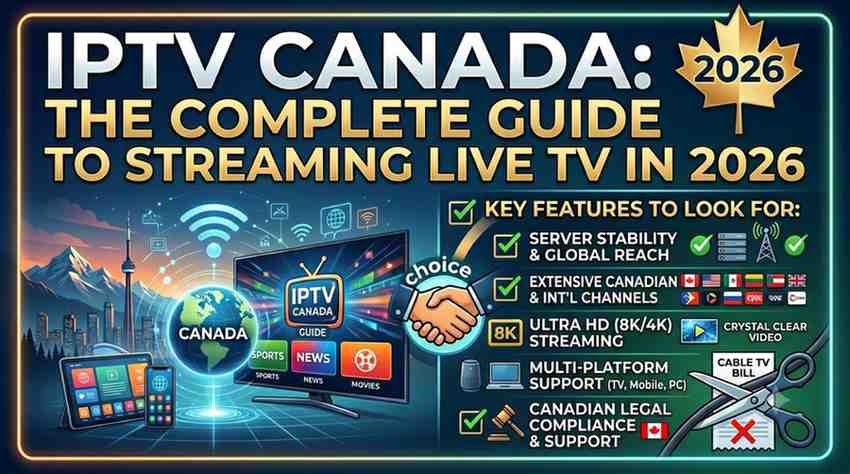
Canadians are cutting the cord faster than ever. Rising cable bills, rigid contracts, and limited channel options have pushed millions of households toward a smarter alternative — IPTV. But if you’ve been searching for IPTV Canada and feel overwhelmed by the options, the jargon, or simply don’t know where to start, you’re in the right place.
This guide breaks down exactly what IPTV is, how it works in Canada, what to look for in a provider, and why thousands of Canadians — from Vancouver to Halifax — are making the switch in 2026.
IPTV stands for Internet Protocol Television. Unlike traditional cable or satellite TV, which delivers content through physical cables or satellite signals, IPTV streams television content directly over your internet connection.
Think of it like Netflix — but instead of on-demand movies only, you get live TV channels, sports, news, international content, and on-demand libraries all in one place.
The technology itself isn’t new, but the quality, affordability, and variety available through IPTV services in Canada have improved dramatically in recent years, making it a genuine mainstream option for Canadian households.
Canada has some of the highest cable TV costs in the world. A basic cable package from a major Canadian provider can easily run $80–$120 per month — and that’s before sports add-ons or premium channels.
IPTV services, by contrast, typically offer:
For Canada’s large and growing South Asian community — particularly in cities like Surrey, Brampton, Toronto, Calgary, and Edmonton — IPTV is especially valuable. It provides access to channels in Hindi, Punjabi, Tamil, Telugu, Malayalam, and Bengali that Canadian cable providers simply don’t carry comprehensively.
IPTV works by converting TV signals into internet data packets and streaming them to your device in real time. Here’s how the process looks from a user perspective:
The whole setup process typically takes under 10 minutes. Most good IPTV providers in Canada offer device-specific setup guides to walk you through it.
This is one of the most common questions for Canadians considering IPTV. Here’s a quick breakdown:
| Stream Quality | Recommended Speed |
|---|---|
| SD (Standard Definition) | 5 Mbps |
| HD (720p / 1080p) | 10–25 Mbps |
| 4K Ultra HD | 25–50 Mbps |
| Multiple screens at once | 50 Mbps+ |
Most Canadian urban homes with a standard internet plan are well within range for HD and even 4K streaming.
One of the biggest advantages of IPTV is its flexibility across devices. Canadian users can stream on:
If you’re new to IPTV, the Amazon Fire Stick is often the recommended starting point for Canadian users — it’s affordable, widely available, and easy to set up with most IPTV providers.
This varies by provider, but a quality IPTV service in Canada should offer:
Canadian Channels:
Expect access to major Canadian networks including CBC, CTV, Global, TSN, Sportsnet, City TV, and regional local news channels from provinces like Ontario, British Columbia, Alberta, and Quebec.
US Channels:
Top US networks including ABC, NBC, CBS, FOX, ESPN, CNN, and major sports networks are typically included.
International & South Asian Channels:
For Canada’s diverse communities, this is often the biggest draw. Look for providers offering:
Sports:
Premium IPTV services include sports packages covering IPL cricket, NHL, NFL, NBA, Premier League football, and PPV events — giving sports fans significantly more than what’s typically bundled in a standard Canadian cable plan.
Not all IPTV services are created equal. Here’s what to evaluate before committing:
1. Channel Count and Quality
More channels isn’t always better. Focus on whether the provider carries the specific channels you actually watch — especially regional Canadian channels and your preferred international content.
2. Server Stability and Uptime
Buffering is the #1 complaint among IPTV users. Look for providers that advertise high uptime (99%+) and have redundant server infrastructure.
3. Free Trial Availability
Any reputable IPTV provider in Canada should offer a free trial — typically 24 to 48 hours — so you can test channel quality, buffering performance, and app compatibility before paying.
4. Customer Support
Look for providers with responsive support via live chat or ticket systems. Setup issues happen, and having access to fast support makes a big difference.
5. Subscription Flexibility
Month-to-month plans are ideal if you’re new to IPTV. Avoid providers that only offer annual commitments upfront.
6. Multi-Connection Support
If your household has multiple TVs or devices, check how many simultaneous streams your subscription includes.
This is an important question and the answer depends on the provider. IPTV technology itself is completely legal — it’s simply a method of delivering TV content over the internet.
However, some IPTV services carry channels without proper licensing agreements, which puts them in a legal grey area. Choosing a provider that operates transparently, with clear terms of service and a professional setup, is the recommended approach for Canadian subscribers who want to watch without concerns.
For most Canadian households — especially those paying $80–$120/month for cable with limited international content — IPTV represents a smarter, more flexible, and more affordable way to watch television in 2026.
Whether you’re a sports fan in Calgary wanting full NHL and IPL access, a Punjabi family in Surrey looking for South Asian channels, or a household in Toronto tired of cable bills, IPTV Canada delivers more content, more control, and more value.
The best way to find out if it’s right for you? Start with a free trial — exp

© 2025 Crivva - Hosted by Airy Hosting Managed Website Hosting.