


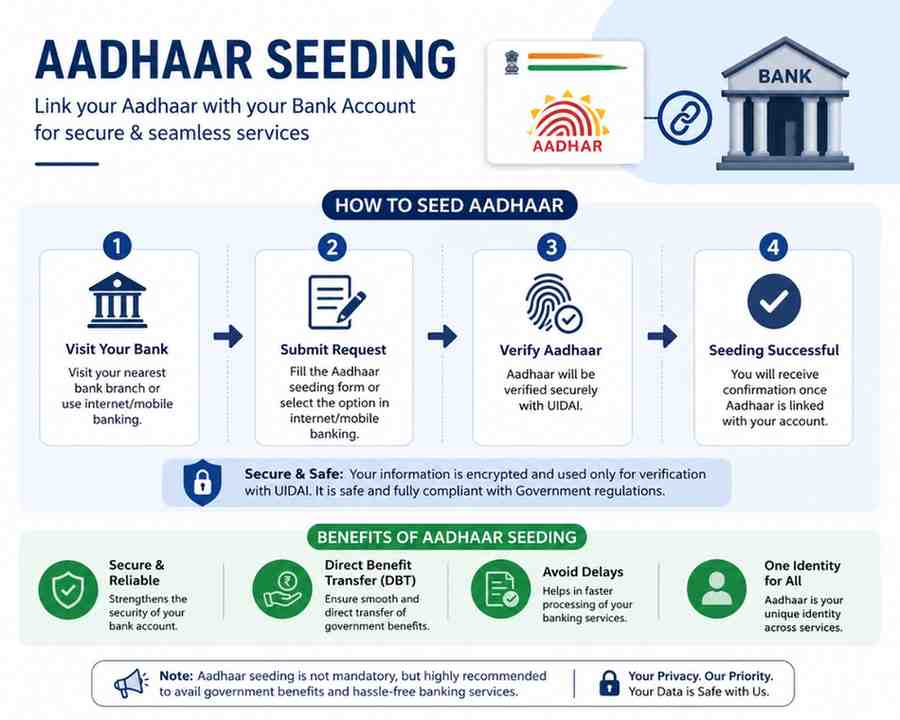
In India’s rapidly expanding digital economy, Aadhaar has become one of the most important identity systems for citizens. Whether it is opening a bank account, applying for government schemes, receiving subsidies, or completing digital verification processes, Aadhaar plays a central role in simplifying financial and administrative services. Among the many Aadhaar-related services, one term that often appears in banking and financial discussions is Aadhaar seeding.
Many people hear about Aadhaar seeding while opening a bank account or applying for subsidy schemes, but they may not fully understand its importance. Aadhaar seeding is much more than simply linking a number to a bank account. It is a process that helps create a secure, transparent, and efficient financial ecosystem where government benefits can be transferred directly to eligible citizens without delays or middlemen.
Understanding Aadhaar seeding is essential because it directly affects how individuals receive benefits, complete KYC verification, and access digital banking services. In addition, regularly checking your bank Aadhaar link status ensures that your account remains properly connected and eligible for various financial services and government programs.
What Is Aadhaar Seeding?
Aadhaar seeding refers to the process of linking an individual’s Aadhaar number with their bank account or other financial services. Once the Aadhaar number is linked and verified, the bank account becomes connected to the user’s digital identity in the banking system.
In simple words, Aadhaar seeding means adding your Aadhaar number to your bank account records so that banks and government agencies can authenticate your identity electronically. This linkage helps banks verify account holders quickly and securely while enabling smooth financial transactions and benefit transfers.
The process is commonly used for:
Direct Benefit Transfers (DBT)
Government subsidy payments
Pension schemes
LPG subsidy credits
Scholarship disbursements
KYC verification
Digital banking authentication
After successful Aadhaar seeding, your Aadhaar acts as a verified identity reference that supports secure banking and financial operations.
Why Aadhaar Seeding Is Important
Aadhaar seeding has become a key part of India’s digital financial infrastructure. Linking Aadhaar with a bank account offers several important benefits that improve convenience, transparency, and security.
1. Direct Benefit Transfers (DBT)
One of the biggest advantages of Aadhaar seeding is the Direct Benefit Transfer system. Under DBT, government subsidies and welfare payments are transferred directly into the beneficiary’s bank account.
This includes benefits such as:
LPG gas subsidies
Pension payments
Scholarship funds
PM-Kisan installments
MNREGA wages
Welfare scheme payments
Because the money is transferred directly to the linked bank account, Aadhaar seeding reduces delays, eliminates intermediaries, and minimizes corruption.
2. Faster Identity Verification
Banks use Aadhaar for quick electronic verification of customers. Instead of submitting multiple physical documents, customers can complete verification processes digitally using Aadhaar authentication.
This helps reduce paperwork during:
Opening bank accounts
Applying for loans
Updating KYC details
Activating banking services
The verification process becomes faster, simpler, and more efficient.
3. Improved Financial Security
Aadhaar is unique to every individual. Linking it with bank accounts helps prevent identity duplication and fraudulent activities. Since biometric and OTP-based authentication are used in many Aadhaar-linked services, unauthorized access becomes more difficult.
This improves overall banking security and reduces risks of fake accounts or identity misuse.
4. Simplified KYC Process
Know Your Customer (KYC) procedures are mandatory for banking and financial services. Aadhaar serves as a widely accepted KYC document that contains both identity and address details.
With Aadhaar seeding, banks can complete customer verification quickly without requiring multiple supporting documents.
5. Better Access to Digital Services
Many online financial services now depend on Aadhaar-linked verification systems. Aadhaar seeding enables users to access:
Mobile banking services
Online account updates
Digital payment systems
Government portals
Financial apps and e-wallets
As digital banking grows in India, Aadhaar seeding continues to support easier access to modern financial services.
How Aadhaar Seeding Works
The Aadhaar seeding process involves linking your Aadhaar number with your bank account in the bank’s database. Once submitted, the bank verifies the Aadhaar details with UIDAI before activating the linkage.
The process generally includes:
Submission of Aadhaar number
Verification through OTP or biometric authentication
Validation with UIDAI records
Updating bank records
Activation of Aadhaar-bank linkage
After successful verification, your account becomes eligible for Aadhaar-based services and benefit transfers.
How to Link Aadhaar with Bank Account
There are multiple ways to complete Aadhaar seeding with your bank account. Most banks provide both online and offline methods for customer convenience.
1. Internet Banking
Many banks allow Aadhaar linking through internet banking portals.
Steps:
Log in to your bank’s net banking account
Go to the “Aadhaar Linking” or “Update Aadhaar” section
Enter your Aadhaar number
Verify using OTP sent to your registered mobile number
Submit the request
After verification, the bank processes the linkage request.
2. Mobile Banking App
Most banks also support Aadhaar seeding through mobile banking applications.
Steps:
Open the bank’s mobile app
Navigate to profile or service settings
Select the Aadhaar linking option
Enter Aadhaar details
Complete OTP verification
Submit the request
This is one of the fastest and most convenient methods.
3. ATM Facility
Some banks provide Aadhaar linking services through ATMs.
Steps:
Insert your debit card
Enter ATM PIN
Select “Aadhaar Seeding” or “Aadhaar Registration”
Enter Aadhaar number
Confirm details
The request is then processed by the bank.
4. Visiting the Bank Branch
Customers can also complete Aadhaar seeding offline by visiting the branch.
Required Steps:
Fill out Aadhaar linking form
Submit photocopy of Aadhaar card
Provide original Aadhaar for verification
Complete bank verification process
Final Thoughts
Understanding Aadhaar seeding is essential for every bank account holder in India. Linking your Aadhaar with your bank account simplifies financial transactions, improves security, and ensures uninterrupted access to government subsidies and welfare schemes.
From faster KYC verification to direct benefit transfers, Aadhaar seeding provides numerous advantages that make banking more efficient and transparent. Regularly checking your bank Aadhaar link status helps confirm that your account remains properly connected and eligible for important financial services.
As India continues moving toward a digitally connected economy, Aadhaar seeding will remain a crucial tool for secure banking,

© 2025 Crivva - Hosted by Airy Hosting Managed Website Hosting.