


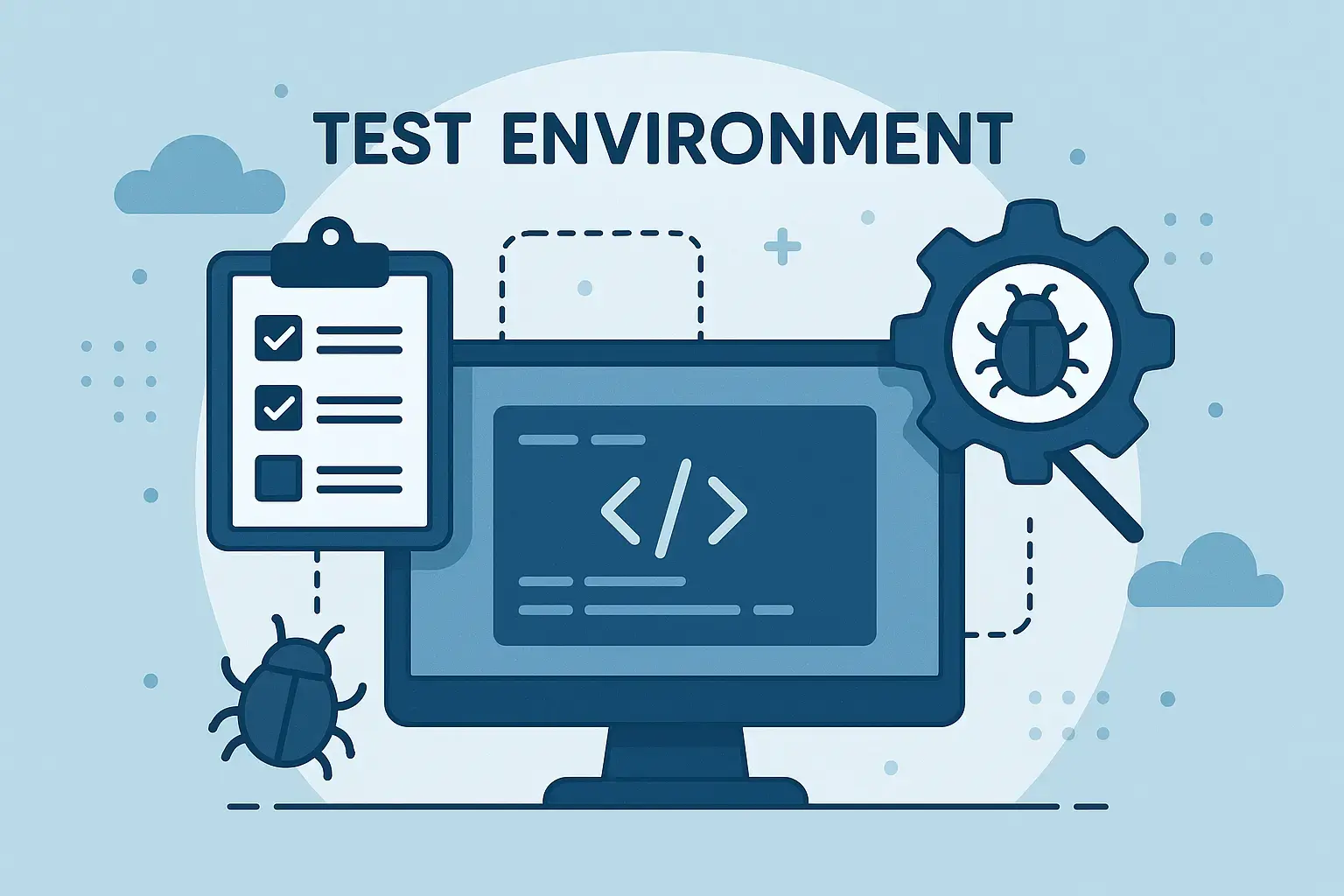
When building software, writing code is only half the job. The real challenge lies in ensuring that the application performs reliably in real-world conditions. No matter how well your code is written, it must be tested thoroughly before it reaches end users. Even a small bug can lead to performance issues, security risks, or poor user experience. This is where a test environment plays a critical role.
A test environment is not just a technical requirement—it’s a foundation for delivering stable and high-quality software. It provides a safe and controlled space where developers and testers can validate features, identify issues, and ensure that everything works as expected before deployment. Whether you’re working on a startup product or an enterprise-level system, having a proper test environment can significantly improve your development process.
A test environment is a dedicated setup where software applications are tested before being released to production. It includes all the necessary components required to run the application in a controlled manner, such as servers, databases, operating systems, configurations, test data, and testing tools.
In simple terms, it acts as a practice ground. Instead of testing directly on live systems—which can be risky—teams use test environments to simulate real-world scenarios and evaluate how the application behaves.
This controlled setup ensures that developers and testers can experiment freely, run multiple test cases, and fix issues without impacting real users. If you want to explore this concept in more depth, you can check this detailed guide on what is test environment.
Many teams underestimate the importance of a proper test environment until something goes wrong in production. A well-structured test environment helps avoid costly mistakes and ensures smoother releases.
One of the biggest advantages of a test environment is that it allows teams to catch bugs early in the development cycle. Fixing issues early is much easier and less expensive than dealing with them after deployment.
A good test environment closely mirrors the production setup. This means that the results observed during testing are more accurate and reliable, reducing the chances of unexpected failures.
Testing directly in production can lead to serious problems such as data corruption, downtime, or security breaches. A separate test environment eliminates these risks.
Modern development practices like CI/CD rely heavily on automated testing. A stable test environment ensures that automated tests run smoothly and consistently.
A test environment is made up of several interconnected components. Each plays an important role in ensuring accurate and effective testing.
This includes physical machines or cloud infrastructure where the application runs. It can range from local systems to scalable cloud servers.
Operating systems, databases, APIs, and other dependencies required for the application to function properly.
Simulating real-world network conditions—such as latency, bandwidth limitations, and firewalls—is essential for performance testing.
Test data should be realistic and cover a wide range of scenarios, including edge cases. It helps validate how the application behaves under different conditions.
Automation frameworks, debugging tools, and monitoring systems help streamline testing and improve efficiency.
Different stages of software development require different types of test environments. Each serves a specific purpose.
This is where developers write and test code locally. It is flexible and allows quick changes but may not fully replicate production conditions.
Used by quality assurance teams to execute test cases and validate application functionality.
A near replica of the production environment used for final testing before deployment. It helps identify issues that might not appear earlier.
The live environment where end users interact with the application. This is where stability and performance matter the most.
Although they may appear similar, test and production environments serve very different purposes.
A test environment is designed for experimentation and validation, while a production environment is meant for real users and business operations. Test environments use sample or masked data, whereas production environments handle real user data. The level of risk is also significantly different—testing environments are safe for experimentation, while production environments require stability and reliability.
Setting up a test environment requires careful planning and execution. A poorly configured environment can lead to inaccurate test results.
Start by identifying what needs to be tested—functionality, performance, security, or integrations.
Try to match the production environment as closely as possible. This includes configurations, databases, and system architecture.
Use realistic or anonymized data to simulate real-world scenarios while maintaining security and compliance.
Set up testing frameworks, automation tools, and monitoring systems to streamline the process.
Run initial tests to ensure that everything is working correctly before starting full-scale testing.
Managing test environments is not always easy. Teams often face several challenges.
Over time, test environments may differ from production environments, leading to inconsistent results.
Maintaining multiple environments requires infrastructure and can increase costs.
Handling realistic test data while ensuring privacy and compliance is a complex task.
Keeping environments updated with the latest configurations and dependencies requires continuous effort.
To maximize the effectiveness of your test environment, follow these best practices.
The closer your test environment is to production, the more reliable your testing results will be.
Using containers and infrastructure-as-code helps create consistent environments quickly.
Avoid shared environments to prevent conflicts between teams.
Ensure that configurations and dependencies are always up to date.
Track system behavior during testing to identify bottlenecks early.
Consider an e-commerce platform introducing a new checkout feature. Before releasing it, the team tests the feature in a dedicated test environment.
This setup includes simulated payment gateways, test user accounts, product catalogs, and realistic traffic conditions. By testing in this controlled environment, the team can identify issues such as failed transactions or slow response times before users encounter them.
Without a proper test environment, such issues could lead to lost revenue and poor user experience.
With advancements in technology, test environments have evolved significantly.
Cloud platforms allow teams to create and scale environments on demand, reducing setup time and cost.
Tools like Docker ensure consistency across different systems, making environments portable and reliable.
Test environments are now integrated with CI/CD pipelines, enabling continuous testing and faster releases.
A test environment is a critical part of the software development lifecycle. It provides a safe and controlled space where applications can be tested, validated, and improved before reaching users.
By investing in a well-structured test environment, teams can reduce bugs, improve reliability, and speed up development cycles. It not only minimizes risks but also builds confidence in the software being delivered.
If you want to explore more insights and practical details, you can read this guide on what is test environment.

© 2025 Crivva - Hosted by Airy Hosting Managed Website Hosting.