

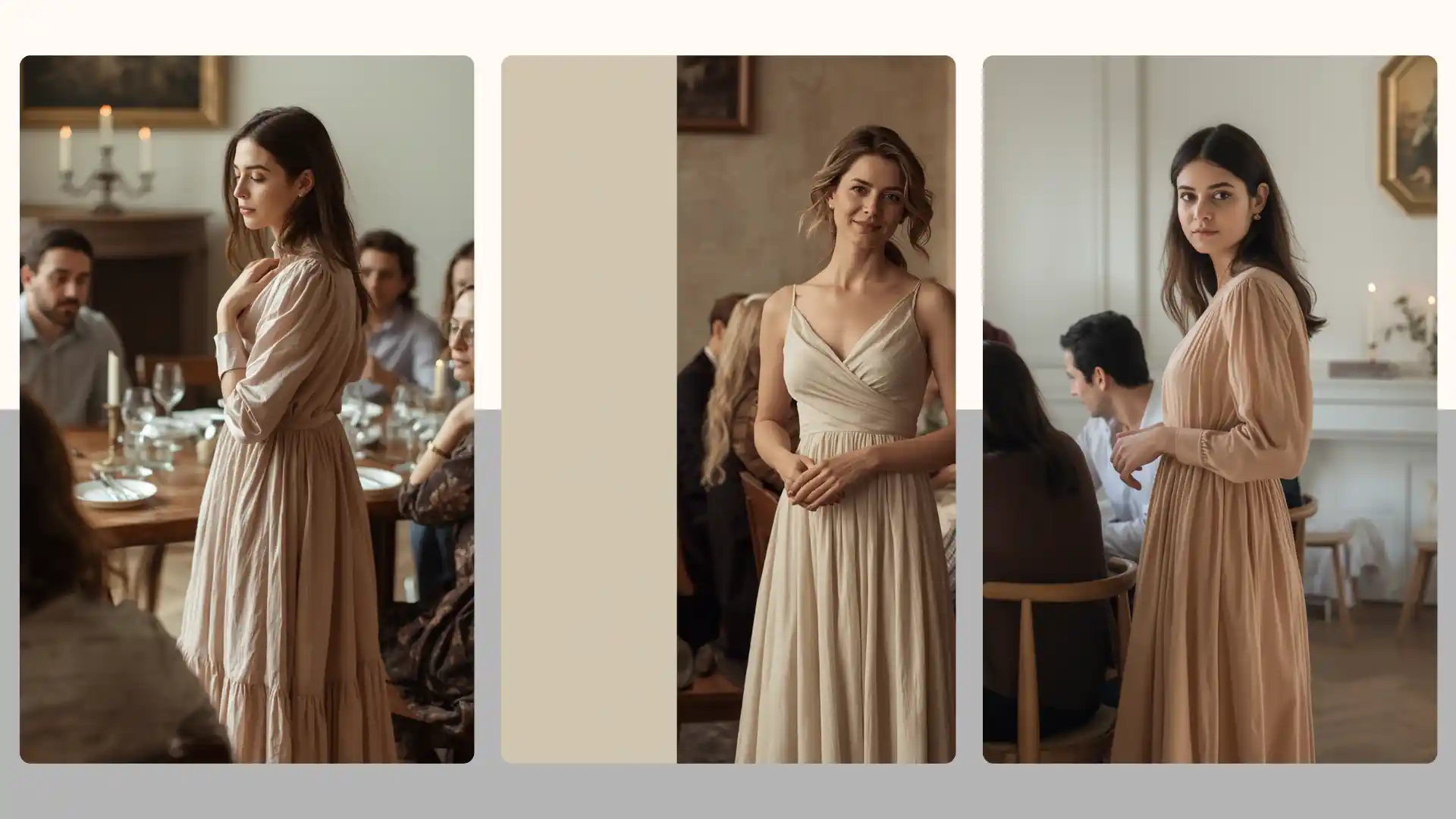
The first time I attended a bat mitzvah, I stood in front of my closet for nearly an hour.
Not because I didn’t have options—but because none of them felt right.
It wasn’t just about choosing a dress. It was about understanding a space I didn’t fully grow up in, navigating expectations I couldn’t quite define, and trying to show respect without losing my sense of self.
Was the dress too short? Too bold? Too casual? Would it feel appropriate in a synagogue setting—and still work for the celebration afterward?
No one hands you a guidebook for these moments. And yet, the pressure to “get it right” feels very real.
Jewish life is filled with meaningful milestones—baby namings, bar and bat mitzvahs, holiday gatherings, community celebrations. Each one carries its own emotional weight and cultural significance.
But what often goes unspoken is how much what we wear becomes part of that experience.
Clothing, in these moments, isn’t just about style. It reflects:
For many women—especially those entering these spaces through marriage, friendships, or evolving community ties—figuring this out can feel like decoding an unspoken language.
I found myself turning to platforms like Kveller.com https://www.kveller.com/, not just for parenting insights or cultural context, but to better understand the feeling behind these events. Because once you understand the emotional tone, the outfit decisions become less overwhelming.
Everything shifted for me at a baby naming ceremony.
It wasn’t a large event. There was no elaborate setup. Just a room filled with close family, quiet conversations, and a sense of something deeply meaningful unfolding.
And in that moment, I realized something surprising:
No one was paying attention to what I was wearing.
What mattered was presence. Respect. Being part of something intimate and important.
That realization didn’t make clothing irrelevant—but it reframed it.
Instead of asking, “Does this look right?”
I started asking, “Does this feel right for the moment?”
One of the most interesting aspects of Jewish events today is how they blend tradition with modern life.
You’ll see it everywhere:
And within all of that, there’s space—more than you might expect—for individuality.
You don’t have to disappear into the crowd to be respectful.
You can:
The goal isn’t to erase yourself. It’s to show up thoughtfully.
Let’s be honest—beyond the emotional and cultural layers, there’s also a very practical challenge.
Many of these events require one outfit to do a lot.
A typical bar or bat mitzvah might involve:
That means your outfit needs to:
That’s not always easy to balance.
This is where having access to curated fashion inspiration can genuinely help—not to dictate your choices, but to simplify them. Some Brands, like BTK Collections, offer occasion-based outfit ideas, helping women navigate exactly these kinds of scenarios with less stress and more clarity.
Because sometimes, the hardest part isn’t the event—it’s the decision fatigue before it.
Jewish holidays bring a different kind of experience altogether.
They’re often:
And dressing for them carries its own set of considerations.
A Passover seder might call for something light, comfortable, and easy to move in—especially with long hours around the table.
High Holidays, on the other hand, often feel more formal and reflective, influencing more polished outfit choices.
But across all of these moments, one thing remains consistent: intention matters more than perfection.
Early on, I thought “appropriate” meant following a strict set of rules.
Cover this. Avoid that. Stay within certain boundaries.
But over time, I realized it’s much more nuanced.
Yes, there are general guidelines—especially in religious settings:
But within those guidelines, there’s flexibility.
And more importantly, there’s context.
What’s appropriate at a synagogue service might differ from what works at a family holiday dinner or a reception.
Learning to read the room—and trust your instincts—becomes more valuable than following any rigid checklist.
What surprised me most wasn’t the dress codes or the expectations.
It was how emotional these events can feel—even as a guest.
You’re witnessing milestones:
And in those moments, your outfit becomes part of how you experience it.
If you’re uncomfortable, self-conscious, or constantly adjusting what you’re wearing, it pulls you out of the moment.
But when you feel at ease—when your outfit supports you rather than distracts you—you’re able to be fully present.
And that’s what actually matters.
After attending enough of these events, here’s what I’ve learned:
No one remembers your outfit the way you think they will.
They remember:
Your clothing plays a role—but it’s a supporting one.
The real focus is always the moment itself.
Dressing for Jewish milestones isn’t about achieving some perfect balance between tradition and style.
It’s about awareness.
It’s about respect—for the space, the people, and the meaning behind the event.
And it’s about staying connected to yourself in the process.
Because when you feel comfortable in what you’re wearing, you stop overthinking—and start experiencing.
And in the end, that’s what these moments are really about.
Elena is an SEO and content strategist with over 4 years of experience helping eCommerce and lifestyle brands grow through high-quality content. He works with fashion-focused platforms to create practical style guides that help women confidently dress for every occasion.
Because when you feel comfortable in what you’re wearing, you’re free to focus on what truly matters:
Being there.

© 2025 Crivva - Hosted by Airy Hosting Managed Website Hosting.