

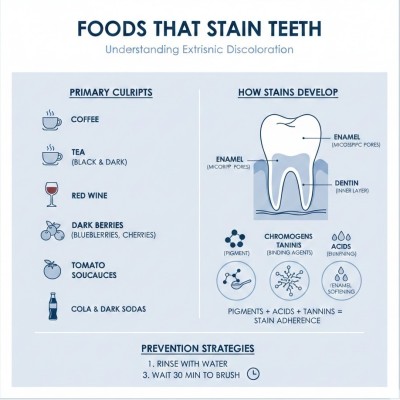
Tooth discoloration is one of the most common aesthetic concerns reported in general and cosmetic dental practice. Patients frequently ask what foods stain your teeth the most and whether those stains are permanent. While tooth color naturally varies from person to person, dietary habits play a substantial role in extrinsic staining, which affects the outer enamel surface.
Understanding how and why stains develop allows individuals to make informed dietary and oral hygiene choices. It also helps clarify when professional intervention—such as whitening treatments or restorative procedures—may be appropriate.
How Do Foods Actually Stain Teeth?
To understand what foods stain your teeth the most, it is helpful to first review the structure of enamel.
Enamel is the highly mineralized outer layer of the tooth. Although it appears smooth, it contains microscopic pores. Darkly pigmented compounds, known as chromogens, can adhere to these pores. When combined with acids that soften enamel or tannins that increase pigment binding, discoloration becomes more pronounced.
There are three primary contributors to staining:
Chromogens – Deeply pigmented molecules found in dark beverages and foods
Tannins – Plant-based compounds that enhance stain adherence
Acids – Substances that temporarily soften enamel, making it easier for pigments to penetrate
Over time, repeated exposure leads to visible yellowing or darkening, particularly along the gumline and between teeth.
What Foods Stain Your Teeth the Most?
Coffee
Coffee remains one of the leading contributors to tooth discoloration worldwide. It contains both chromogens and tannins, which together make staining highly likely with frequent consumption. Black coffee poses the greatest risk, though lighter roasts can still contribute.
Adding milk may slightly dilute pigments but does not eliminate staining potential. Regular professional cleanings at a dental office often remove superficial deposits before they become deeply embedded.
Tea
Many patients are surprised to learn that certain teas stain more than coffee. Black tea, in particular, contains high levels of tannins. Herbal and green teas may stain less, but darker varieties remain a concern.
For individuals undergoing teeth whitening Orlando patients often ask about, limiting dark tea consumption during and after treatment helps maintain results.
Red Wine
Red wine contains chromogens, tannins, and acidity—a triple effect that promotes staining. The acidic nature softens enamel temporarily, allowing pigments to penetrate more easily.
White wine, although lighter in color, is still acidic and may indirectly contribute to staining by weakening enamel.
Dark Berries
Blueberries, blackberries, cherries, and pomegranates are rich in antioxidants but also deeply pigmented. Smoothies made from these fruits can coat teeth for prolonged periods, especially if sipped slowly.
Rinsing with water afterward can reduce pigment contact time.
Tomato-Based Sauces
Tomato sauces used in pasta and other dishes are highly pigmented and acidic. The red color easily adheres to enamel, particularly when consumed frequently.
This is commonly observed in family and cosmetic dentistry settings, where long-term dietary habits often correlate with gradual discoloration.
Cola and Dark Sodas
Cola beverages combine dark coloring agents with phosphoric acid. The acid softens enamel while artificial coloring contributes to staining.
Even clear sodas pose enamel risks due to acidity, which increases susceptibility to pigment uptake from other foods.
Soy Sauce and Balsamic Vinegar
These condiments are concentrated and deeply pigmented. Frequent exposure, especially without rinsing, can lead to surface staining over time.
Lifestyle Factors That Increase Staining
Beyond specific foods, several additional factors influence stain severity:
-
Inadequate brushing technique
-
Irregular professional cleanings
-
Tobacco use
-
Enamel thinning due to age
-
Orthodontic appliances that trap plaque
Patients using Invisalign for adults or Invisalign for teens may experience localized staining if oral hygiene is not meticulous. Although Invisalign Orlando providers emphasize removability, aligners can trap pigments if teeth are not cleaned before reinsertion.
Extrinsic vs Intrinsic Stains
It is important to distinguish between extrinsic and intrinsic discoloration.
Extrinsic stains occur on the enamel surface and are often caused by diet. These are typically manageable with professional cleaning or whitening.
Intrinsic stains develop within the dentin layer beneath enamel. Causes may include trauma, certain medications, or developmental conditions. In these cases, treatments such as dental crowns Orlando specialists provide, veneers, or bonding may be considered depending on severity.
Prevention Strategies Supported by Evidence
While it is unrealistic to eliminate all staining foods, moderation and proper oral hygiene significantly reduce impact.
Rinse After Consumption
Rinsing with water after consuming staining foods helps dilute pigments and neutralize acids.
Use a Straw for Dark Beverages
This reduces direct contact with anterior teeth.
Wait Before Brushing
After acidic foods or drinks, wait approximately 30 minutes before brushing. Brushing immediately may damage softened enamel.
Professional Cleanings
Routine visits to a dentist near me search often reveal that many patients delay preventive care. Regular cleanings remove surface stains before they become embedded.
Whitening Options
For persistent extrinsic stains, professional whitening under supervision of an Orlando dentist may be appropriate. Over-the-counter products vary widely in efficacy and safety.
Patients frequently inquire about teeth whitening dentist near me options. Clinically supervised whitening remains more predictable and reduces risk of sensitivity compared to unsupervised use.
Staining During Orthodontic Treatment
Clear aligner systems, including Invisalign for adults in Orlando and Invisalign for teens in Orlando, offer aesthetic advantages over traditional braces. However, aligners must be removed during meals. Reinserting trays without brushing allows pigments to remain trapped against enamel, increasing risk of staining and decalcification.
Education at a dental clinic or practice is essential to prevent uneven coloration once orthodontic treatment is complete.
When Staining Becomes a Clinical Concern
While staining is primarily cosmetic, it may also signal deeper issues:
-
Heavy plaque accumulation
-
Poor oral hygiene
-
Enamel erosion
-
Dry mouth conditions
In some cases, patients presenting for affordable emergency dentist near me searches are actually experiencing structural damage or enamel fractures that appear discolored.
Severe discoloration can also be associated with older restorations such as dental implants in Orlando FL or orlando dentures and implants that may require maintenance or replacement over time.
The Role of Professional Assessment
An individualized assessment remains essential. What appears to be staining may sometimes be calculus buildup or early decay.
During a comprehensive examination at a dental office such as Mosaic Dental Center, clinicians evaluate enamel integrity, existing restorations, dietary habits, and oral hygiene techniques before recommending treatment.
Patients exploring affordable dentistry options should understand that preventive care typically reduces the need for more complex procedures like crowns, dentures in Orlando, or implant-supported restorations.
Clinical Takeaway
Understanding what foods stain your teeth the most empowers patients to balance dietary enjoyment with enamel preservation. Coffee, tea, red wine, dark berries, tomato sauces, and acidic beverages are among the most common contributors to extrinsic staining.
However, staining is rarely caused by a single food. It reflects cumulative exposure, oral hygiene habits, and enamel health over time.
With mindful dietary practices, consistent brushing and flossing, and routine professional evaluation, most surface discoloration can be prevented or safely managed. A calm, evidence-based approach remains the most effective way to maintain both oral health and natural tooth brightness.










