


A strong brand builds trust, loyalty, and market presence. In India’s fast growing economy, trademarks play a central role in protecting this brand value. Yet, many businesses overlook the risks linked with trademarks until a dispute arises. This often leads to financial loss, legal battles, and reputational harm.
Understanding trademark risks in India is not only a legal need. It is a strategic step for long term business growth. This article explains key risks, common mistakes, and how companies can safeguard their intellectual property under Indian law.
A trademark refers to any sign capable of distinguishing goods or services of one enterprise from others. It may include names, logos, symbols, colours, or even sounds. In India, trademarks are governed by the Trade Marks Act, 1999.
Registration grants exclusive rights to the owner. It also provides legal remedies in case of infringement. However, mere registration does not eliminate all risks. Businesses must remain cautious at every stage, from selection to enforcement.
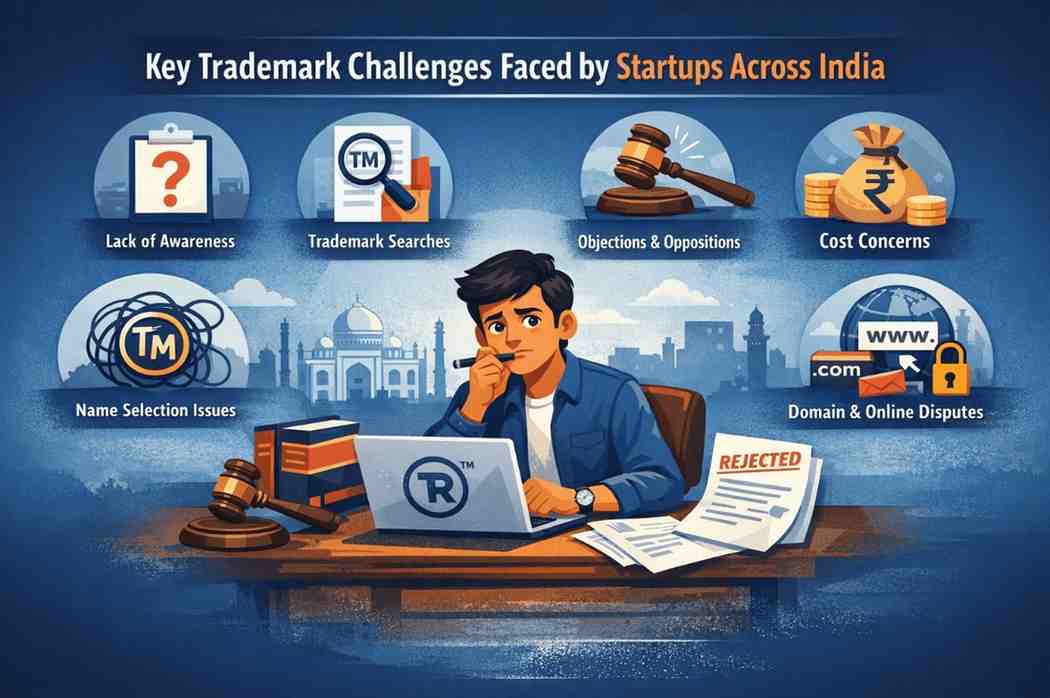
One of the most common risks arises at the very beginning. Many companies choose a name without conducting a proper trademark search. This leads to conflicts with existing registered or pending marks.
If a chosen mark is similar to an existing one, the application may face objection or rejection. Worse, the company may face legal action for infringement. This can result in forced rebranding, which is costly and disruptive.
A detailed clearance search is essential before adopting any mark. It helps identify potential conflicts early and avoids future disputes.
Not all trademarks are equally strong. Marks which are generic or descriptive lack distinctiveness. For example, using common words related to the product category may not offer strong protection.
Weak trademarks face higher chances of refusal during registration. Even if registered, enforcing rights becomes difficult. Competitors may use similar terms without violating the law.
Companies should aim for unique and creative marks. Invented words or arbitrary terms offer stronger legal protection and easier enforcement.
Trademark infringement occurs when a mark is used without permission and creates confusion among consumers. In India, infringement actions can lead to injunctions, damages, and seizure of goods.
Businesses often face infringement claims due to lack of awareness. Even unintentional use of a similar mark can attract legal consequences. This is especially common in industries with high competition such as fashion, food, and technology.
Conducting due diligence before launching a product or service reduces this risk significantly.
Apart from registered trademarks, India also recognises the concept of passing off. This protects unregistered marks based on goodwill and reputation.
A company may face passing off claims if its branding misleads consumers into believing a connection with another business. Unlike infringement, passing off relies on proof of reputation and misrepresentation.
This expands the scope of risk. Even if a mark is not registered, it may still be protected under common law principles.
Trademark protection is not permanent without use. Under Indian law, a registered trademark can be removed if it is not used for a continuous period of five years.
Many companies register marks but fail to use them in commerce. This creates vulnerability. Competitors may file for cancellation on grounds of non use.
Regular and genuine use of the trademark is essential. Maintaining evidence such as invoices, advertisements, and packaging helps defend against cancellation claims.
Indian companies often expand beyond domestic markets. However, trademark rights are territorial. A mark registered in India does not grant protection in other countries.
This creates a risk of conflicts in foreign jurisdictions. Another entity may already own a similar mark in the target country. This can block market entry or lead to disputes.
Businesses should plan international trademark protection early. Filing applications in key markets prevents such challenges.
Trademarks can be licensed or assigned. However, improper agreements may dilute brand value or lead to legal issues.
Uncontrolled licensing can harm reputation if the licensee maintains poor quality standards. Similarly, unclear assignment agreements may create ownership disputes.
Companies must ensure all agreements are clear, compliant, and well documented. Legal guidance is crucial in such transactions.
The rise of e commerce and digital platforms has increased trademark misuse. Domain names, social media handles, and online listings often infringe brand rights.
Cybersquatting is a growing concern. This involves registering domain names similar to well known brands with an intent to profit.
Monitoring online platforms is essential. Swift action against infringement helps protect brand identity and consumer trust.
Even with strong rights, delay in enforcement can weaken a trademark. Courts may deny relief if the owner fails to act promptly against infringement.
Delay may also signal acquiescence, allowing infringers to continue their use. This affects the strength of the claim.
Timely legal action is necessary. Companies should have a clear enforcement strategy to address violations quickly.
Trademark registration in India involves multiple stages. These include examination, publication, opposition, and registration. Errors at any stage may lead to delays or rejection.
Improper classification of goods or services is a common mistake. Filing under the wrong class limits protection and creates gaps in coverage.
Professional assistance ensures compliance with procedural requirements. It improves chances of successful registration.
Businesses seeking expert guidance often consult a Trademark Law Firm in Mumbai to navigate complex procedures and reduce compliance risks.
A well planned registration strategy reduces overall risk. This includes selecting appropriate classes, filing for logos and word marks, and protecting variations.
Companies should also consider future expansion while filing applications. Registering a mark in multiple classes ensures broader protection.
For startups and growing businesses, securing tm registration in india at an early stage provides a strong legal foundation and builds investor confidence.
Trademark protection does not end with registration. Continuous monitoring is essential to detect unauthorised use.
Companies should watch trademark journals, online platforms, and market activity. Early detection allows quick action and prevents damage.
Maintaining a trademark portfolio and updating records also helps in effective management.
Trademark law involves both statutory provisions and judicial interpretation. Navigating this landscape requires expertise.
Legal professionals assist in conducting searches, filing applications, handling objections, and enforcing rights. Their role becomes crucial in complex disputes and international matters.
Relying on experienced counsel reduces errors and strengthens brand protection.
Trademark risks in India are diverse and often underestimated. From selection of a mark to its enforcement, each stage presents unique challenges. Ignoring these risks can lead to serious legal and financial consequences.
Companies must adopt a proactive approach. This includes thorough research, timely registration, consistent use, and active monitoring. Legal guidance plays a key role in managing these risks effectively.
In a competitive market, a protected trademark is more than a legal asset. It is a symbol of trust and business identity. Safeguarding it should remain a priority for every company operating in India.

© 2025 Crivva - Hosted by Airy Hosting Managed Website Hosting.