


So you’ve got these veins showing up on your legs. Maybe they’ve been there awhile. Maybe they just appeared one day and you keep staring at them wondering what the heck this is about.
The legs feel heavy by evening. Sometimes they ache. You might notice your ankles looking puffier than they used to. And eventually you get around to thinking okay I should probably do something about this.
Then comes the part where you have to figure out who actually deals with this stuff. Is that a regular doctor thing? Is there a vaeicose vein doctor? Do you just Google it and hope for the best?
I’ve been there with different health stuff. The confusion is real. So let’s just talk through it.
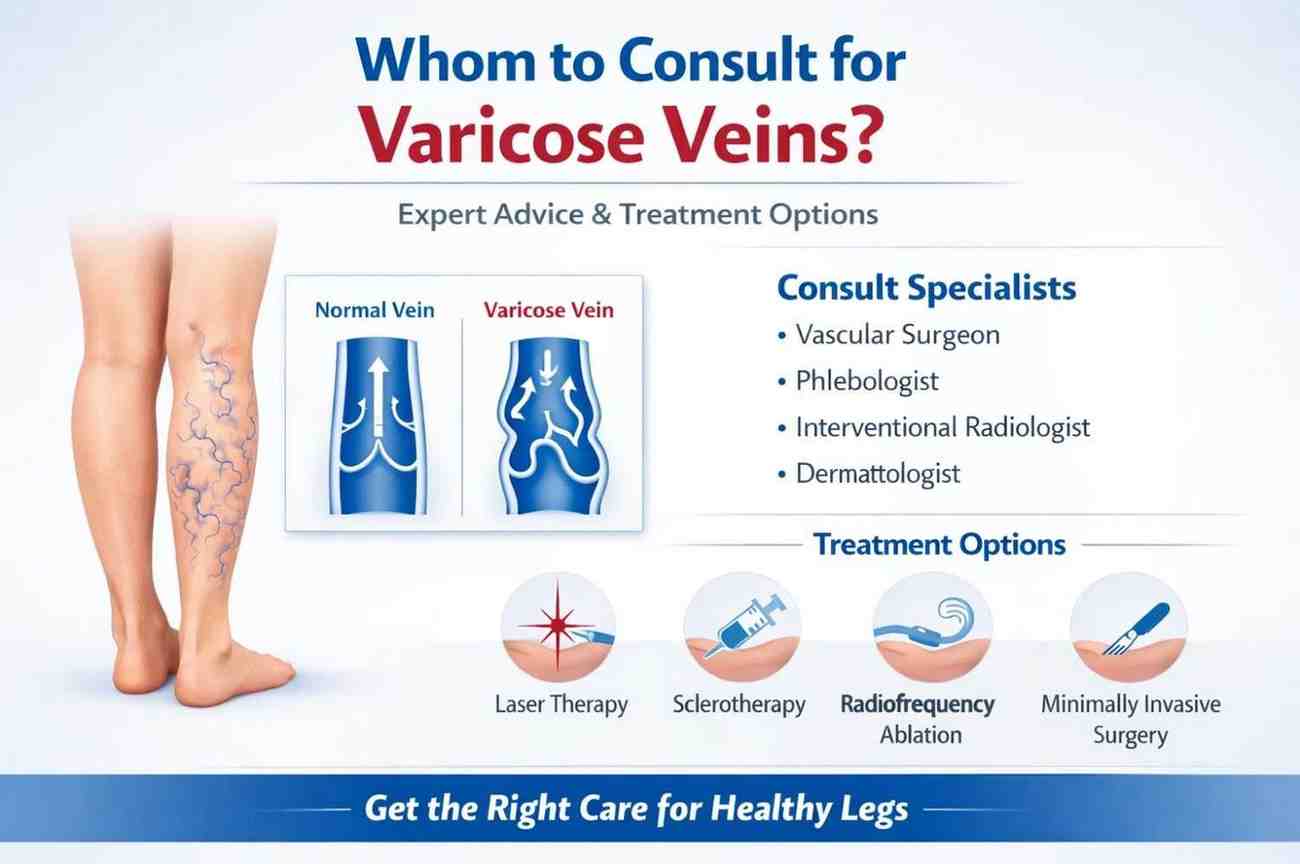
Inside your legs your veins have these little flaps that work like one-way doors. Blood comes up, door opens, blood passes through, door closes. Keep everything moving toward your heart like it should.
Over time those flaps get worn out. They don’t close all the way anymore. So blood starts leaking backward and just sits there pooling up in your veins. That pooling makes the veins stretch and bulge outward.
That’s why your legs feel like lead weights at night. That’s why you catch yourself rubbing them or propping them up without thinking. The blood is literally just hanging out down there instead of moving along.
Sometimes the skin around your ankles gets itchy or looks different. Sometimes you get cramps in bed at night. It’s all connected to those worn out little doors.
If you’re totally lost about who to call, just go see your family doctor. This is the easiest way to start.
Your regular doctor already knows your history. They know if you’ve had blood clots before, what medications you take, all that background stuff. They can look at your legs and tell you whether this is definitely veins or maybe something else going on.
And if it is veins, they’ll know which specialists in your area actually know their stuff. They’ll write a referral if your insurance wants one. You walk out with a name and a number and a plan.
This step takes like twenty minutes. Then you know where you’re going.
For most people with real varicose veins, not just little tiny spider ones, you’ll end up seeing a vascular surgeon at some point.
Now I know that word surgeon sounds intense. It makes you think of getting cut open and recovering for weeks. But that’s really not how it works anymore.
A good varicose veins doctor, like Dr. Sandeep Sharma who’s been doing this for years, will start with an ultrasound right there in their office. They put some gel on your leg, run this little wand over it, and suddenly they can see exactly what’s happening inside. They watch the blood moving on a screen and figure out which valves aren’t working right.
Then they talk options with you. Maybe you just need compression stockings if things aren’t too bad. Maybe they recommend a quick procedure where they close the vein with laser or heat. You walk in, they numb the area, do the thing, and you walk out. No hospital stay. No long recovery. Just better legs.
The nice thing about vascular surgeons is they handle everything. If it’s simple they do the simple thing. If it’s more complicated they handle that too. You don’t get passed around to different doctors.
You’ve seen the ads I’m sure. Vein clinics are popping up everywhere with nice waiting rooms and friendly staff and comfy chairs.
These places are run by doctors called phlebologists, which just means they specialise in veins. Lots of them started as dermatologists or regular internal medicine doctors and did extra training.
If your veins are moderate, like they bulge but don’t really hurt, or you’ve got spider veins you want gone, these clinics are perfectly fine. They see vein patients all day every day so they’re good at what they do.
Just check who’s actually doing the treating. Make sure it’s a real doctor with proper training, not someone who took a weekend course somewhere. The good clinics have ultrasound machines right there and actual medical credentials on the wall.
There’s also a type of doctor called an interventional radiologist. These are the people who spend their whole careers using imaging to guide tiny instruments through the body.
They’re really good at the laser and catheter stuff. They don’t do surgery at all, just the minimally invasive procedures. For regular varicose veins they’ll get you the same result as a vascular surgeon.
The difference is mostly just their background and training. Both can help you just fine.
Dermatologists treat spider veins sometimes, the small ones. They inject stuff that makes the veins collapse and fade away. They’re really good at that part.
But if you’ve got the big ropy veins, a dermatologist will probably send you somewhere else first. The deeper veins need to be checked before anyone starts injecting things. Otherwise you might fix the little ones while missing the real problem.
Podiatrists can help with foot and ankle symptoms, but they’ll also point you toward a vein doctor for the main issue. So they’re helpful but not the main person you need.
Here’s the simple version without all the medical talk.
If your legs feel fine and you just want spider veins gone, go to a dermatologist or a reputable vein clinic. They do this stuff constantly.
If you’ve got moderate veins that bulge but don’t hurt much, a vein clinic or interventional radiologist can handle it with quick in-office stuff.
If you’ve got pain, swelling, skin changes, or a family history of blood clots, go to a vascular surgeon. They’re trained for complicated cases and won’t miss anything.
If you’re completely lost, start with your regular doctor. They’ll send you the right way.
Here’s something nobody tells you. Vein problems don’t fix themselves. They just slowly get worse over time. The weak valves keep getting weaker. The blood keeps pooling. The veins keep stretching.
People put this off for years. They wear pants in summer even when it’s hot. They avoid standing in lines at the store. They blame the achiness on getting older or being on their feet too much. But you don’t have to do that.
The treatments now are not what they used to be. No general anesthesia. No hospital stay. No weeks off work. Most procedures take less than an hour. You’re awake the whole time. You walk out when it’s done. They tell you to go for a walk afterward, not lie in bed.
When you look at it that way, the question becomes less about finding a reason to go and more about finding a reason to wait. And honestly there aren’t many.
If you’ve never been to a vein person, here’s what happens so you’re not nervous about it.
You sit in a room and talk with the doctor about your symptoms. When did you first notice the veins? Do your legs hurt or swell? What makes it better or worse? Any family history of this stuff? Normal questions.
Then they have you stand up. Veins fill best when you’re standing so they need to see them at their worst. They might take some photos for your medical record.
Then comes the ultrasound. This doesn’t hurt at all. They put warm gel on your leg and run a small probe over it. You can watch the screen if you want. The doctor points out what they’re seeing, where the valve is leaking, where the blood is pooling up.
Then you talk about next steps. Some people need treatment right away. Some just need to be watched. Some do fine with compression stockings. The doctor explains everything and answers whatever questions you have.
Then you decide. Maybe you schedule a procedure. Maybe you go home and think about it. Nobody’s going to pressure you into anything.
Finding out who to see for varicose veins really just comes down to matching your situation with the right doctor. Start with your family doctor if you’re unsure. Go straight to a vascular surgeon if your veins are painful or complicated. Consider a vein clinic for moderate stuff.
The main thing is to actually do something. Make the call. Book the appointment. Your legs have been carrying you around your whole life. They deserve some attention. And you deserve to feel comfortable without pain dragging you down at the end of every day.
The doctors are out there. The treatments work. The whole process is way easier than most people think. You just have to take that first step and show up.

© 2025 Crivva - Hosted by Airy Hosting Managed Website Hosting.