

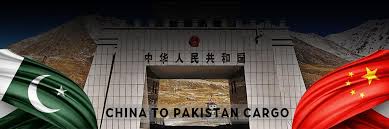
The China–Pakistan Economic Corridor (CPEC) has become much more than a bilateral infrastructure project — it represents a logistical revolution that is transforming Pakistan’s role in global trade. Once known primarily as an import-dependent economy, Pakistan is now emerging as a transit and logistics hub, connecting Asia’s largest manufacturing centers in China with high-consumption markets in the Middle East, Africa, and Europe.
This transformation — often described as the “CPEC Cargo Revolution” — is changing how goods move across continents. With new air, land, and sea routes, Pakistan is no longer a bystander in international trade networks but an active bridge linking supply chains between East and West.
Launched in 2015 as a flagship project under China’s Belt and Road Initiative (BRI), CPEC is a massive infrastructure program that integrates transportation, energy, and industrial development. Its most visible achievement has been the establishment of multi-modal cargo routes that connect Kashgar in China’s Xinjiang province to Gwadar Port on Pakistan’s southwestern coast.
Reduce trade distance and costs between China, the Middle East, and Africa.
Strengthen Pakistan’s trade competitiveness by modernizing transport corridors.
Integrate regional supply chains through industrial zones and logistics hubs.
Enhance connectivity across South Asia, Central Asia, and the Gulf.
CPEC’s cargo infrastructure — including new highways, railways, dry ports, and special economic zones (SEZs) — is at the heart of Pakistan’s re-entry into global logistics.

The corridor’s cargo transformation is visible across three main dimensions — land, air, and sea — all interlinked to create an integrated trade ecosystem.
The Karakoram Highway and the Khunjerab Pass have become critical arteries for land-based cargo between Pakistan and China. Recent advancements have made it possible to move goods from Kashgar to Karachi in less than 10 days, compared to 30–35 days via traditional sea routes.
The adoption of the TIR (Transports Internationaux Routiers) system has streamlined cross-border trade, allowing trucks to move seamlessly under a single customs transit document. This has significantly reduced border delays and improved supply-chain reliability.
In a groundbreaking achievement, Pakistan and China launched a multimodal trade route linking Kashgar to Dubai via Pakistan in 2024. The route integrates road and sea transport, enabling cargo to move from western China to the Gulf in record time. This corridor represents a fundamental shift toward regional value-chain integration.
Air cargo routes have added a new dimension to CPEC’s logistics revolution. The Urumqi–Islamabad air freight service, inaugurated in early 2025, symbolizes the growing trade in high-value, time-sensitive goods.
These air corridors facilitate:
Export of Pakistani perishables, such as fruits, seafood, and flowers.
Import of Chinese electronics, machinery, and industrial components.
Growth of e-commerce logistics, catering to both retail and B2B markets.
With multiple Chinese cities — including Nanning, Chengdu, and Kunming — now connected to Pakistani hubs like Karachi and Lahore, Pakistan is becoming a vital air logistics partner in Asia’s emerging cargo landscape.
The Gwadar Port, once a remote coastal town, is now being transformed into a deep-sea shipping and transshipment hub. Its proximity to the Persian Gulf and key global sea lanes makes it a strategic anchor point for CPEC’s cargo operations.
Gwadar allows China and other regional traders to bypass longer and riskier maritime routes like the Strait of Malacca. The port’s modernization — including free-zone facilities, logistics parks, and energy terminals — is paving the way for Pakistan to handle large-scale regional cargo operations.
Gwadar’s expansion means Pakistan can now play an integral role in re-export trade, allowing goods to move from Chinese manufacturing centers to Middle Eastern markets — and vice versa — at a fraction of the previous cost.
CPEC’s cargo revolution is not merely about infrastructure; it is fundamentally changing how Pakistan participates in global trade.
Bilateral trade between China and Pakistan exceeded $23 billion in 2024, an increase of over 11% year-on-year. Improved logistics have boosted export competitiveness, enabling Pakistan to ship agricultural, textile, and mineral products to Chinese markets more efficiently.
Furthermore, Pakistan’s position as a bridge for trade between China, the Gulf, Central Asia, and Africa creates immense spillover potential. Transit fees, customs duties, and logistics services are expected to generate billions in additional revenue annually.
CPEC’s Special Economic Zones (SEZs) — such as Rashakai, Allama Iqbal Industrial City, and Gwadar Free Zone — are attracting manufacturing and logistics investments. These zones not only boost exports but also generate massive employment opportunities in transportation, warehousing, and supply-chain management.
Through CPEC, Pakistan is connecting to global manufacturing value chains. For instance:
Raw materials can be imported from China and processed in Pakistan’s SEZs.
Finished goods can then be shipped to markets in the Middle East and Africa.
This model creates a regional production loop, driving industrialization and reducing dependence on imports.
The CPEC cargo routes carry immense strategic value for both countries:
For China: It provides secure access to energy imports and global markets via Pakistan’s ports.
For Pakistan: It strengthens economic sovereignty by reducing reliance on maritime routes controlled by other powers.
For the Region: It fosters interconnected trade among South Asia, Central Asia, and the Middle East, turning Pakistan into a central hub for Eurasian commerce.
This shift also enhances China’s westward trade diversification, ensuring supply-chain resilience amid global geopolitical uncertainties.
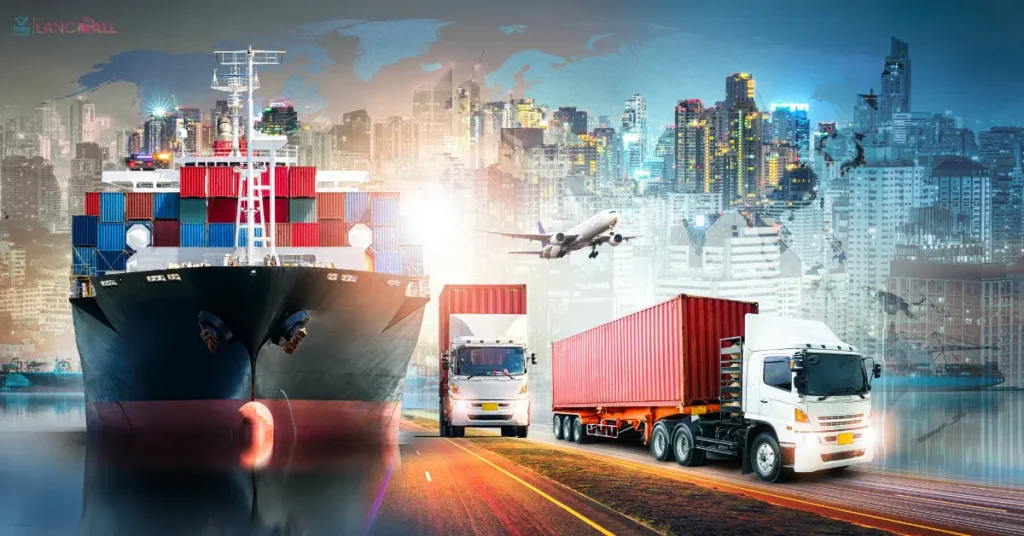
Despite major gains, several challenges could hinder the full realization of CPEC’s cargo potential.
While new highways and ports are operational, railway modernization remains slow. Many segments of Pakistan’s logistics network require upgrades in cold-chain storage, freight handling, and digital tracking systems.
Inefficient customs procedures continue to delay cross-border shipments. Harmonizing customs documentation, digital systems, and inspection protocols between China and Pakistan is essential to optimize trade flow.
Security concerns, particularly in Balochistan and Gilgit-Baltistan, can pose risks to cargo convoys. Sustained peace, political stability, and community engagement are key to maintaining uninterrupted trade.
As cargo volumes grow, so do environmental concerns. Implementing green logistics solutions, such as fuel-efficient vehicles, renewable-energy-powered ports, and waste management systems, will be crucial for sustainable growth.
Mountainous terrain along the Karakoram Highway is vulnerable to landslides, snowfall, and flooding. Developing all-weather transport alternatives and investing in disaster-resilient infrastructure will help maintain year-round trade continuity.
The next phase of CPEC will focus on transforming Pakistan from a transit route into a fully integrated logistics ecosystem. Here’s how:
The introduction of AI-driven tracking, blockchain-based customs, and e-commerce logistics hubs will increase efficiency and transparency across the cargo network.
Plans are underway to link Pakistan’s Main Line-1 (ML-1) railway with China’s western rail network, providing a fast, cost-effective alternative to trucking.
By connecting with Central Asia, Iran, and Turkey, Pakistan can transform CPEC into a pan-Eurasian trade corridor, linking five major regions through one unified network.
With improved logistics, Pakistan can diversify its export basket — focusing on processed foods, textiles, pharmaceuticals, and technology products destined for global supply chains.
The CPEC Cargo Revolution is redefining Pakistan’s economic identity and positioning it at the heart of global supply chains. By linking China’s industrial might with Pakistan’s strategic geography and the world’s fastest-growing markets, CPEC is laying the foundation for a new era of regional integration.
However, to fully realize this potential, Pakistan must address infrastructure, regulatory, and environmental challenges with urgency and vision. Investments in digital logistics, green transportation, and cross-border efficiency will determine whether CPEC becomes a truly transformative trade corridor.
If executed effectively, CPEC will not only connect Pakistan to global supply chains but also make it a key player in shaping the future of Eurasian commerce — turning the country into the beating heart of the new Silk Road.

© 2025 Crivva - Hosted by Airy Hosting Managed Website Hosting.