


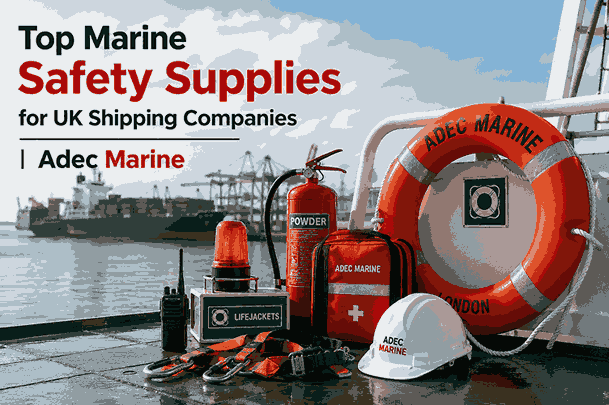
For UK shipping companies, the right marine safety equipment is not just a box-ticking exercise. It is part of keeping crews safe, protecting cargo, and staying ready for inspections, emergencies, and rough-weather operations. The same is true for marine safety supplies across ferries, offshore vessels, fishing fleets, ports, and rescue services: the gear must suit the vessel, the voyage, and the risk.
If you manage vessels in the UK, marine safety supplies should be viewed as operational essentials, not optional extras. Strong safety kits help crews respond faster to man-overboard incidents, fire, flooding, loss of communication, medical emergencies, and abandon-ship situations.
For shipping companies, the commercial upside is just as clear. Good marine safety equipment supports smoother audits, fewer delays, better crew confidence, and more consistent risk control. For buyers, the most useful question is not “What is the cheapest item?” but “What combination of marine safety supplies fits the vessel, the crew, and the route?” That is exactly how the best UK marine guides and supplier pages tend to frame the topic: start with compliance, then build a practical checklist around real onboard use.
A well-prepared vessel should begin with the basics. In most commercial settings, the core marine safety equipment stack includes:
ADEC Marine’s own safety category structure reflects this practical mix, with product groups that include EPIRBs, SARTs and VHF radios, radar reflectors, fire-fighting equipment, lifejackets, inflatable liferafts, lifebuoys, medical supplies, distress flares, safety harnesses, and recovery systems.
Among all marine safety supplies, lifejackets are one of the most important. They are the first layer of protection in cold water, poor visibility, and emergency evacuation scenarios. For shipping companies, the key is not just buying enough units; it is making sure the right type is available for crew size, passenger profile, and work environment. UK guidance for recreational boating highlights the importance of checking and servicing lifejackets, which reinforces a simple truth: safety gear only works when it is fit for purpose and maintained properly.
When choosing lifejackets, look for:
For companies serving ferries, offshore oil and gas, ports, and rescue teams, the best marine safety equipment is the equipment that crew members can use instinctively in seconds. Adec Marine’s range includes adult and child lifejackets as well as commercial marine lifejackets, which is the kind of product spread buyers usually want from a supplier serving mixed maritime audiences.
Every shipping operator should treat liferafts and lifebuoys as non-negotiable marine safety supplies. These are the items that matter most when a vessel must be abandoned or when immediate flotation support is needed during an emergency. The IMO notes that life-saving appliances include survival craft such as liferafts and lifeboats, rescue boats, and related launching and embarkation equipment, with requirements varying by vessel size, activity, and voyage.
For UK shipping companies, this means selecting marine safety equipment based on operation rather than appearance. A coastal ferry does not need the same setup as an offshore support vessel, and a fishing vessel will have different risk profiles again. The best supplier advice usually focuses on capacity, servicing, storage, and deployment speed. That is exactly the logic Adec Marine’s product structure follows through its liferafts, lifebuoys, and servicing categories.
Modern marine safety equipment should help rescuers find the vessel quickly. That is why distress beacons and communication tools are central to any serious marine safety plan. The IMO includes visual aids and communication-related systems within the life-saving appliance framework, and Adec Marine lists EPIRBs, SARTs and VHF radios as part of its core safety range.
For shipping companies, marine safety supplies in this category are especially valuable because they reduce response time and improve coordination during an incident.
A good onboard communications set usually includes:
In high-traffic UK waters, that combination can be decisive. It is one of the clearest examples of why marine safety supplies are about operational resilience as much as compliance.
Fire risk on vessels deserves special attention. Fuel systems, electrical faults, galley equipment, machinery spaces, and cargo-related hazards can all create dangerous situations very quickly. That is why fire-fighting gear belongs near the top of every marine safety equipment checklist. Adec Marine’s range includes fire-fighting equipment, and supplier-led safety guides commonly treat this as one of the core categories alongside lifejackets and signalling gear.
For UK shipping companies, the goal is to make fire response immediate and structured. Your marine safety supplies should support:
Good practice is to check extinguishers, alarms, and other fire-related marine safety supplies on a scheduled basis and record the results. Safety gear that cannot be found, reached, or operated under stress is not really safety gear at all. That is why routine inspection matters just as much as purchase selection.
No marine safety program is complete without visibility and recovery items. This category includes distress flares, radar reflectors, lights, recovery lines, safety harnesses, and MOB tools. The IMO lists parachute flares, hand flares, buoyant smoke signals, and other visual aids as part of the life-saving appliance landscape, which shows how important signalling is in a real rescue scenario.
Adec Marine’s safety categories also include pyrotechnics, radar reflectors, safety lines, safety harnesses, and MOB recovery items. That matters because a strong marine safety equipment plan should not stop at flotation. It should also help rescuers see the casualty, locate the vessel, and complete the recovery safely.
In the UK, marine equipment placed on board UK ships must be UK-approved and carry the Red Ensign conformity mark. GOV.UK also notes that the Red Ensign became mandatory on 1 January 2023 for equipment previously subject to the EU Wheel Mark. The broader regulatory direction is clear: choose marine safety supplies that meet the correct UK conformity assessment requirements and match the ship’s operating profile.
Even the best marine safety supplies can fail if they are ignored. The UK Coastguard advises regular checks and servicing of safety equipment, and the IMO says life-saving appliances have specific requirements for manufacturing, testing, maintenance, and record keeping. That makes maintenance a core part of any procurement decision, not an afterthought.
A practical inspection rhythm for shipping companies might include:
This is one reason marine safety equipment should be bought from a supplier that supports servicing as well as sales. Adec Marine’s site highlights liferaft and lifejacket servicing, which is exactly the kind of support that helps marine safety supplies stay operational long after the initial purchase.
The best buyers do not shop category by category in isolation. They build a vessel-specific safety list. For example:
Focus on UK-approved lifejackets, communication gear, fire-fighting equipment, and servicing schedules.
Prioritize personal flotation, distress signalling, and easy-access emergency kits.
Add tough, weather-resistant marine safety supplies that support long shifts, rough conditions, and deck risk.
Choose higher-spec marine safety equipment with strong recovery, signalling, and emergency response capability.
Look for fast deployment, durability, visibility, and multi-user compatibility.
Think passenger flow, evacuation efficiency, and compliance visibility.
Use training-friendly equipment that mirrors real onboard conditions and supports drills.
For UK shipping companies, marine safety equipment and marine safety supplies are not simply items on a checklist. They are the backbone of safe operation, legal readiness, and crew confidence. The smartest buyers look for UK-approved products, maintain them carefully, and choose suppliers who understand the demands of commercial marine work. That is where Adec Marine fits naturally: a practical source for life-saving, signalling, recovery, and fire-safety categories that matter on real vessels.

© 2025 Crivva - Hosted by Airy Hosting Managed Website Hosting.







