


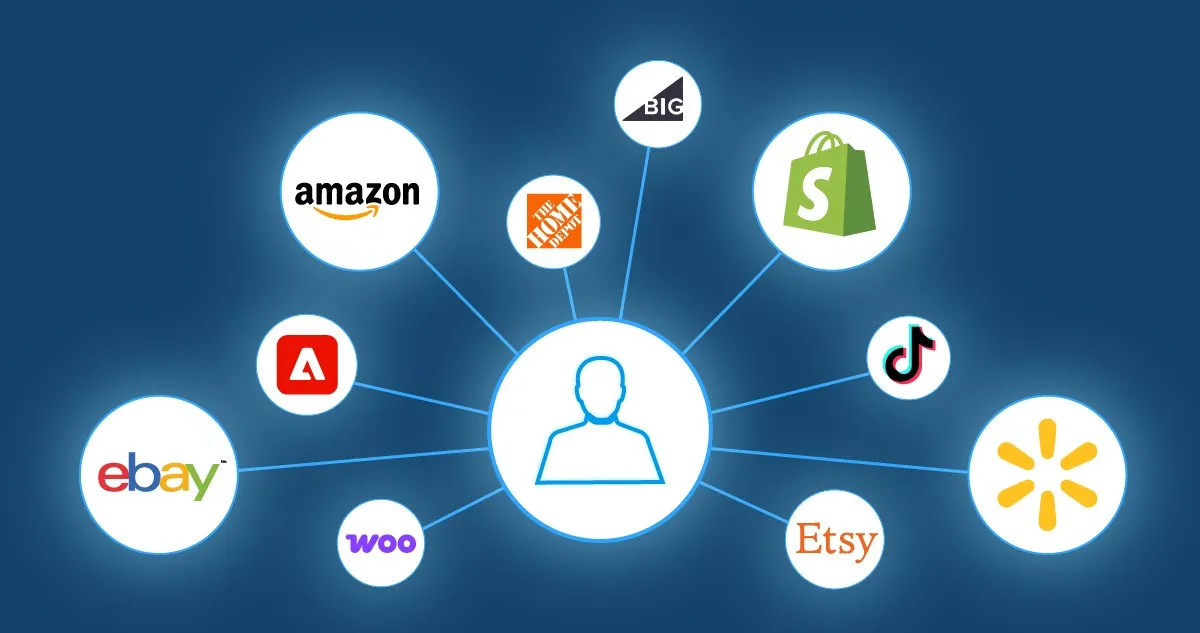
If you’re selling on more than one marketplace, you already know the pain. Update a price on Amazon, then hop over to eBay to do the same thing, then Walmart, then your Shopify store. Multiply that by a few hundred SKUs, and suddenly you’re spending more time on data entry than actually growing your business.
That’s where multichannel listing software comes in. These tools let you manage your entire product catalog from one place and push updates to all your sales channels at once. Change a title, adjust inventory, update an image, and it syncs everywhere without you logging into five different seller portals.
The real value shows up when things get complicated. Every marketplace has its own rules about product attributes, character limits, image requirements, and category structures. Walmart wants different fields than Amazon. Etsy has its own quirks. Trying to keep all that straight manually is a recipe for listing errors, rejected uploads, and wasted hours.
Here’s a look at five tools that tackle this problem, starting with the most comprehensive option and working through alternatives that might fit different needs.
Willow Commerce takes a different approach than most listing tools. Instead of just syncing your products across channels, it connects listing management to everything else in your operation: inventory, orders, warehouse workflows, and shipping. The idea is that your listings shouldn’t live in a silo when they’re directly tied to what’s actually in stock and how orders get fulfilled.
The platform connects to over 80 marketplaces and shopping carts. You’ve got the big ones covered (Amazon, Walmart, eBay, Etsy, Target, Wayfair) plus social commerce channels like TikTok Shop. On the backend, it integrates with Shopify, BigCommerce, WooCommerce, and Magento if you’re running your own store alongside marketplace sales.
What makes Willow Commerce stand out is how listing workflows tie into the rest of your operations. When you create or update a product, you’re working with the same data that drives your inventory counts, your warehouse picking lists, and your shipping decisions. That integration matters when you’re running a real operation and can’t afford disconnects between what your listings say and what you can actually ship.
Willow Commerce makes the most sense for sellers who’ve outgrown basic tools and need their listing management connected to inventory and fulfillment. If you’re running your own warehouse, managing an extensive catalog, or need to see profitability by channel and SKU, the integrated approach pays off. It’s also worth looking at if you’re an agency or 3PL managing multiple brands.
This isn’t a lightweight tool. If you just need to cross-post products to a few marketplaces, you might end up paying for features you won’t use. Pricing starts at $499 per month for up to 2,000 orders, so it’s aimed at established sellers rather than someone just testing the multichannel waters.
Linnworks has been around for a while and has built a good reputation among multichannel sellers. The platform handles listings, inventory, orders, and shipping across more than 100 channels. It’s particularly popular with UK and European sellers, though it works fine for US operations too.
Linnworks works well for established sellers with decent order volume who want to automate repetitive tasks. If you’re already comfortable with marketplace operations and looking to reduce manual work as you scale, it’s a solid choice.
There’s a learning curve, especially if you’re new to this category of software. Initial setup takes time to get right. Some of the more advanced features require technical comfort to configure correctly.
Rithum (ChannelEngine) positions itself as the fastest way to expand into new marketplaces. The platform connects to over 1,300 channels worldwide, which is significantly more than most competitors. If your growth strategy involves entering new markets or testing niche platforms, that breadth matters.
Rithum suits brands focused on geographic expansion or on adding many new channels quickly. It also works for companies already running ERP or PIM systems that need a bridge to marketplaces without building custom integrations.
The platform focuses on marketplace connectivity rather than end-to-end operations. You might need additional tools for warehouse management or shipping. Pricing targets mid-market and enterprise sellers, so smaller operations may find it expensive for their needs.
Sellbrite, now owned by GoDaddy, keeps things simple. It’s designed for smaller sellers who want to list products across a handful of major marketplaces without wading through complex configuration. Connect your channels, import your products, and start selling.
Sellbrite fits sellers who want straightforward listing and inventory sync without extensive setup. If you’re selling on Amazon, eBay, Etsy, and maybe Walmart, and you don’t need advanced automation, it handles the basics well. The FBA integration is beneficial if you’re already using Amazon’s fulfillment.
Fewer integrations than enterprise tools. Lower-tier plans have order volume limits, so costs increase as you grow. Sellers with complex catalogs or advanced needs may outgrow it.
Zentail focuses on automation to reduce manual listing work. The platform connects to major US marketplaces while keeping listings optimized without constant manual intervention.
Zentail works for sellers on major US marketplaces who prioritize automation. It suits brands with growing catalogs that need to maintain listing quality across channels without manually updating each one.
Integration options are more limited than those of some competitors. The platform targets sellers with established operations rather than beginners.
| Feature | Willow Commerce | Linnworks | Rihum | Sellbrite | Zentail |
| Marketplace Integrations | 80+ | 100+ | 1,300+ | ~15 | ~10 |
| Centralized Catalog | Yes | Yes | Yes | Yes | Yes |
| Bulk Listing Tools | Yes | Yes | Yes | Yes | Yes |
| Real-Time Inventory Sync | Yes | Yes | Yes | Yes | Yes |
| Warehouse Management | Yes | Yes | Limited | No | Limited |
| Shipping Optimization | Yes | Yes | Via Partners | Basic | Limited |
| AI-Powered Features | Yes | Limited | Yes | No | Yes |
| FBA Integration | Yes | Yes | Yes | Yes | Yes |
| Analytics Depth | Advanced | Good | Good | Basic | Good |
| Target Seller Size | Mid to Enterprise | Enterprise | Enterprise | Small to Mid | Small to Mid |
The right tool depends on what problem you’re actually trying to solve. If you need tight integration between listings, inventory, and fulfillment, Willow Commerce’s connected approach makes sense. If rapid marketplace expansion is the priority, ChannelEngine’s breadth of integrations stands out. For simpler needs, Sellbrite handles the basics without overcomplicating things.
Your catalog size matters too. Managing 50 SKUs across three channels is a different challenge than managing 5,000 SKUs across ten channels with multiple warehouses. The simpler tools work well at a smaller scale, but as sellers grow, operational complexity tends to push them toward more integrated platforms.
There’s no single answer here. The goal is finding software that matches how your business actually operates today while giving you room to grow into what comes next.

© 2025 Crivva - Hosted by Airy Hosting Managed Website Hosting.