Missing teeth affect more than just your smile—they can impact chewing, speech, jawbone health, and overall confidence. In a city like London, Ontario, where access to advanced dental care is growing rapidly, dental implants have become the gold standard for tooth replacement.
This guide explains everything patients need to know about dental implants, including how they work, who qualifies, and why they are considered one of the most reliable restorative dental treatments available today.
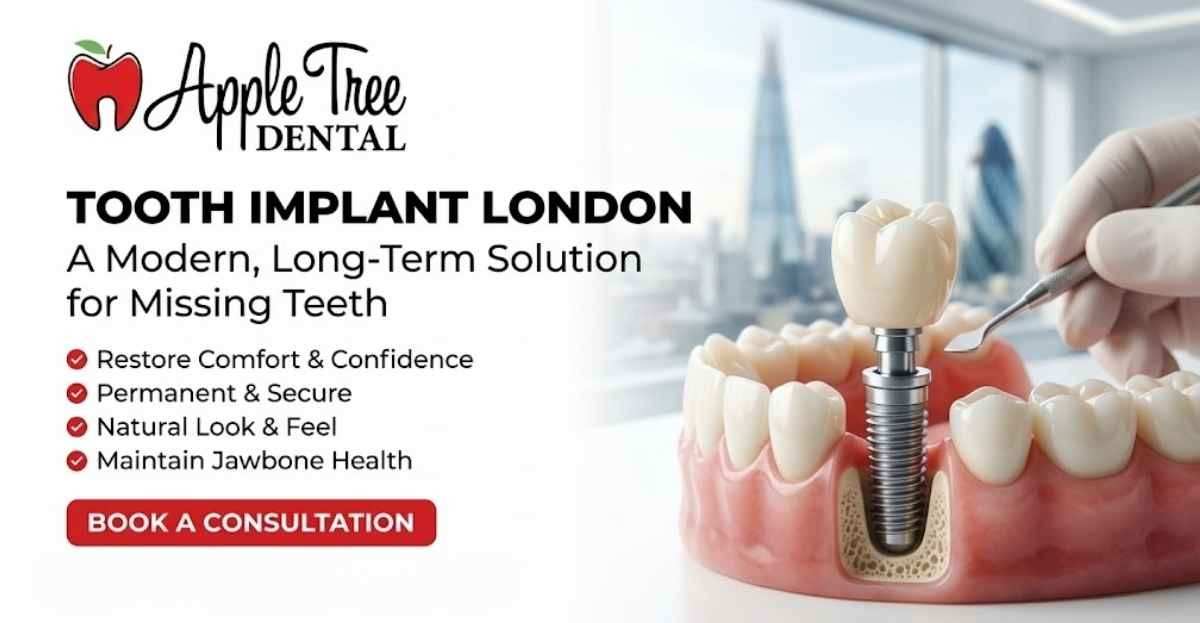
A dental implant is a titanium post surgically placed into the jawbone to act as an artificial tooth root. Once healed, it supports a custom-made crown that looks and functions like a natural tooth.
Unlike dentures or bridges, implants are designed to integrate with your bone through a process called osseointegration. This creates a stable, long-lasting foundation.
Dental implants are not just about aesthetics—they provide structural and functional benefits that other options cannot match.
When a tooth is lost, the jawbone begins to shrink due to lack of stimulation. Implants mimic natural roots, helping preserve bone density.
You can eat, speak, and smile confidently without worrying about movement or discomfort.
With proper care, implants can last decades—often a lifetime.
Unlike bridges, implants do not require grinding down healthy neighboring teeth.
Most healthy adults can qualify for dental implants, but certain conditions improve success rates.
If bone loss is present, procedures like bone grafting can often make implants possible.
Understanding the process helps reduce anxiety and sets realistic expectations.
Your dentist evaluates your oral health using X-rays or 3D scans and creates a personalized treatment plan.
The titanium post is surgically inserted into the jawbone under local anesthesia.
Osseointegration takes 3–6 months, allowing the implant to fuse with the bone.
A custom crown is attached, completing the restoration.
Recovery varies depending on individual healing and whether additional procedures (like bone grafting) are required.
Most patients resume daily activities within a few days after surgery.
| Feature | Dental Implants | Bridges | Dentures |
|---|---|---|---|
| Longevity | 20+ years | 5–10 years | 5–8 years |
| Bone Preservation | Yes | No | No |
| Stability | High | Moderate | Low |
| Maintenance | Low | Moderate | High |
Dental implants consistently outperform alternatives in durability, comfort, and long-term oral health.
Consider a working professional in London, Ontario who lost a molar due to decay. A removable denture may feel inconvenient and unstable during meetings or meals. A bridge would require altering healthy adjacent teeth.
A dental implant, however, restores full function without compromising surrounding teeth—making it the most practical long-term solution.
Yes, dental implants have a success rate of over 95% when performed by experienced professionals. They are one of the most researched and predictable procedures in modern dentistry.
Dental implants require care similar to natural teeth.
Proper maintenance significantly increases implant lifespan.
The procedure is typically performed under local anesthesia, and most patients report minimal discomfort.
Adults of all ages can benefit, provided they meet health criteria.
They integrate into your normal oral hygiene routine.
Selecting a qualified dental clinic is crucial for long-term success.
If you’re exploring options, this detailed guide on tooth implant London provides insights into treatment approaches, candidacy, and care standards.
Dental implants have transformed restorative dentistry by offering a permanent, natural-looking solution for missing teeth. For residents of London, Ontario, access to high-quality implant care means you no longer have to compromise on function, appearance, or confidence.
Choosing the right provider and understanding the process can make all the difference in achieving long-term success.

© 2025 Crivva - Hosted by Airy Hosting Managed Website Hosting.