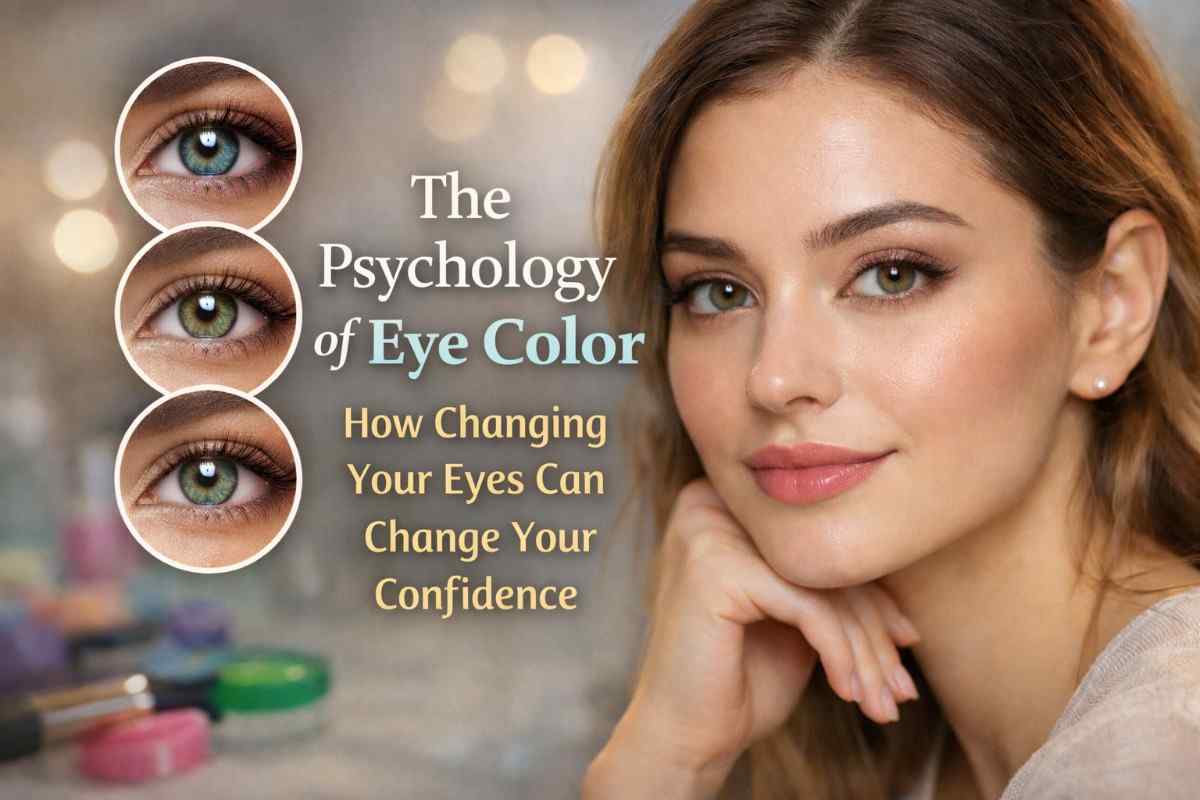
Have you ever looked into someone’s eyes and immediately formed an impression about them?
Without a single word spoken, eyes communicate warmth, confidence, curiosity, mystery, or calmness. They are often called “the windows to the soul” for a reason. Eye contact builds trust, expresses emotion, and creates a connection faster than language ever could.
So what happens when you change your eye color?
In today’s beauty landscape, colored contact lenses allow people to experiment with their appearance in ways that were once impossible without permanent change. But this trend isn’t just about aesthetics. For many, it’s about self-expression, confidence, and exploring identity.
Changing your eye color may seem like a small shift — but psychologically, it can feel transformative.
Let’s explore why.
Unlike hairstyles, makeup, or clothing, eye color is typically permanent. Most people grow up identifying strongly with their natural shade — whether it’s deep brown, bright blue, soft hazel, or rare green.
Because it rarely changes, eye color becomes part of how we define ourselves.
It influences:
Childhood memories
Compliments we’ve received
Cultural perceptions
Family resemblance
Personal identity
When you alter something that feels “fixed,” even temporarily, it creates a new visual narrative. That new reflection in the mirror can feel refreshing — even empowering.
It’s not about becoming someone else. It’s about unlocking another version of yourself.
Throughout history, cultures have attached personality traits to eye colors. While these associations aren’t scientifically proven, they influence how we perceive others — and ourselves.
Brown is the most common eye color worldwide. It’s often associated with trustworthiness, strength, and warmth. People with brown eyes are frequently perceived as grounded and dependable.
Wearing brown-enhancing lenses can intensify warmth and natural charm.
Blue eyes are commonly linked to serenity, clarity, and approachability. In many cultures, they are seen as striking and memorable.
Switching to blue lenses can create an immediate visual contrast, especially on darker complexions, giving off a bold yet fresh impression.
Green eyes are among the rarest naturally occurring shades. They’re often associated with intrigue, creativity, and individuality.
Green lenses tend to create a captivating, almost cinematic effect.
Grey lenses have become increasingly popular because they balance boldness with subtlety. They feel contemporary, polished, and versatile.
Grey can look soft in natural lighting and dramatic under artificial light — making it ideal for both everyday wear and special occasions.
Confidence often begins with self-perception.
When you change your eye color, even temporarily, you become more aware of your facial expressions. You notice how your makeup complements your new shade. You observe how others respond during conversations.
Many people report:
Holding eye contact longer
Feeling more expressive
Standing taller
Smiling more intentionally
It’s not the lens itself that creates confidence — it’s the renewed self-awareness.
That shift in perception can be surprisingly powerful.
Beauty today is less about conformity and more about customization.
People want:
Temporary changes
Flexible options
Expression without permanence
Control over how they present themselves
Colored contact lenses align perfectly with this shift. They allow experimentation without long-term commitment. You can wear soft hazel for daily elegance, grey for sophistication, or bold blue for a creative photoshoot — all within the same month.
This flexibility makes eye color a dynamic style element rather than a fixed trait.
While experimentation is exciting, balance is key.
Here are a few factors to consider:
Warm undertones pair beautifully with honey, hazel, and olive shades.
Cool undertones complement grey, icy blue, and ash green.
Neutral undertones can explore almost any color.
Darker eyes often require opaque lenses for noticeable transformation.
Lighter eyes may achieve beautiful enhancement with subtle tints.
If you plan to wear lenses daily, natural shades tend to feel more versatile. For events or content creation, bolder shades may create stronger visual impact.
Smaller diameters look natural.
Larger diameters create a “doll-eye” or dramatic effect.
Choosing thoughtfully ensures the result feels intentional rather than overwhelming.
There are two main approaches when selecting colored lenses:
These intensify your existing eye color. They are subtle, professional-friendly, and perfect for everyday confidence boosts.
These completely alter your eye color, even on dark brown irises. They create noticeable contrast and are ideal for bold aesthetic statements.
Understanding your goal helps narrow your choice.
Eye color doesn’t exist in isolation. It interacts with your makeup choices.
Grey lenses pair beautifully with mauve and taupe tones.
Green lenses glow with bronze and copper eyeshadow.
Blue lenses pop against warm browns.
Hazel lenses shine with gold and peach shades.
Even eyeliner thickness can amplify or soften the effect.
Changing eye color often encourages creativity — and creativity enhances confidence.
For some, trying a new eye color is deeply personal.
It may represent:
A new chapter
A style evolution
A creative experiment
A confidence reset
A simple curiosity
Because eye color is so emotionally tied to identity, altering it can feel symbolic. It’s a small external change that reflects internal growth.
In a world where people are constantly redefining themselves, colored lenses become another tool for expression.
While the aesthetic benefits are exciting, eye health must always come first.
Colored contact lenses are medical devices, even if they are cosmetic.
Always:
Purchase from reputable brands
Follow proper hygiene
Use recommended cleaning solutions
Replace lenses as instructed
Remove them immediately if discomfort occurs
Healthy eyes are non-negotiable.
Confidence should never come at the cost of safety.
The growing popularity of colored contact lenses isn’t just a passing phase. It reflects broader shifts in beauty culture:
Individuality over uniformity
Expression over imitation
Temporary change over permanence
Confidence through customization
People want options — and eye color is one of the most visually impactful yet reversible changes available.
Your natural eye color is already part of your story.
But exploring a different shade doesn’t erase who you are — it reveals a new dimension.
Whether you choose warm hazel for everyday glow, sophisticated grey for modern elegance, or bold green for intrigue, the true transformation isn’t just visual.
It’s emotional.
Changing your eye color may only take seconds — but the way it makes you feel can last much longer.
Sometimes, seeing yourself differently is all it takes to feel differently too.

© 2025 Crivva - Hosted by Airy Hosting Managed Website Hosting.